- BPM
- 135
- Key
- A♭ Major
- Camelot
- 4B
Intermezzo Op 72: Symphonic Interlude, Reverie by the fireplace by Richard Strauss, Thomas Rösner, Borusan Istanbul Philharmonic Orchestra Song Details
"Intermezzo Op 72: Symphonic Interlude, Reverie by the fireplace" by Richard Strauss, Thomas Rösner, Borusan Istanbul Philharmonic Orchestra had its release date on December 1, 2023. Since This song is still less than 10 minute long, it is still considered a pretty long duration song compared to the average song length. This song does not appear to be explicit due to the lack of the "E" tag. Since R. Strauss: Intermezzo Op. 72, Symphonic Interlude: Reverie by the fireplace only contains only one song in the album, we like to consider this song as a single. Furthermore, we believe that the track originated from Switzerland. Based on our statistics, Intermezzo Op 72: Symphonic Interlude, Reverie by the fireplace's popularity is unknown right now. In our opinion, the overall tone is not very danceable and projects negative sounds, such as being sad, depressed, or angry.
BPM and Tempo
With Intermezzo Op 72: Symphonic Interlude, Reverie by the fireplace by Richard Strauss, Thomas Rösner, Borusan Istanbul Philharmonic Orchestra having a BPM of 135 with a half-time of 68 BPM and a double-time of 270 BPM, we would consider this track to have a Allegro (fast, quick, and bright) tempo marking. Because of this, we believe that the song has an overall fast tempo. Looking at the BPM of this song, this song might go great with walking. The time signature for this track is 4/4.
Music Key
This song has a musical key of A♭ Major. Or for those who are familiar with the camelot wheel, this song has a camelot key of 4B. So, the perfect camelot match for 4B would be either 4B or 5A. While, 5B can give you a low energy boost. For moderate energy boost, you would use 1B and a high energy boost can either be 6B or 11B. Though, if you want a low energy drop, you should looking for songs with either a camelot key of 4A or 3B will give you a low energy drop, 7B would be a moderate one, and 2B or 9B would be a high energy drop. Lastly, 1A allows you to change the mood.
Want to find the BPM and music key for other songs? Check out our BPM and Key Finder page!
- Popularity
- 0%
- Loudness
- -16.579 dB
- Acousticness
- 97%
- Danceability
- 16%
- Energy
- 17%
- Instrumentalness
- 83%
- Liveness
- 18%
- Loudness
- 72%
- Speechiness
- 4%
- Valence
- 4%
Recommendations
| Track | Artist | Key | Energy | Camelot | BPM | ||
|---|---|---|---|---|---|---|---|
 | Macbeth, Act III: Ballet Music | Giuseppe Verdi, Berliner Philharmoniker, Claudio Abbado | F Major | 1 | 7B | 102 BPM | |
 | Serenade for String Orchestra in C Minor, Op. posth.: VI. Andante sostenuto | Max Bruch, George Hanson, Sinfonieorchester Wuppertal | E♭ Major | 0 | 5B | 87 BPM | |
 | Concerto for Orchestra, Sz. 116: IV. Intermezzo interrotto (Allegretto) | Béla Bartók, Chicago Symphony Orchestra, Pierre Boulez | D Major | 1 | 10B | 73 BPM | |
 | Carmen Suite No. 1 (Arr. E. Guiraud): III. Intermezzo | Georges Bizet, Orquestra Simfònica de Barcelona i Nacional de Catalunya, Pablo González | E♭ Major | 0 | 5B | 81 BPM | |
 | Symphony No. 6 in D Major, Op. 104: IV. Allegro molto - Allegro assai - Doppio più lento | Jean Sibelius, Santtu-Matias Rouvali, Gothenburg Symphony Orchestra | G Major | 3 | 9B | 110 BPM | |
 | Pelléas et Mélisande, CD 93, Suite (Arr. Leinsdorf): I. Act I. Opening - Interlude 1 - Interlude 2 | Claude Debussy, Berliner Philharmoniker, Claudio Abbado | D Minor | 0 | 7A | 141 BPM | |
 | Strauss, R: Ein Heldenleben, Op. 40: II. Des Helden Widersacher | Richard Strauss, Sir Simon Rattle, Berliner Philharmoniker, Guy Braunstein | E♭ Major | 0 | 5B | 83 BPM | |
 | Elgar: Cello Concerto in E Minor, Op. 85: II. Lento - Allegro molto | Edward Elgar, Jacqueline du Pré, London Symphony Orchestra, Sir John Barbirolli | G Major | 2 | 9B | 87 BPM | |
 | Symphonie fantastique, H. 48: IV. Marche au supplice | Hector Berlioz, Chicago Symphony Orchestra, Claudio Abbado | G Minor | 2 | 6A | 166 BPM | |
 | Fauré: Pavane, Op. 50 | Gabriel Fauré, San Francisco Symphony, Michael Tilson Thomas | F♯ Minor | 0 | 11A | 62 BPM | |
 | Symphony No. 2: II. Allegro molto | Sergei Rachmaninoff, Valery Gergiev, London Symphony Orchestra | F Major | 1 | 7B | 146 BPM | |
 | Symphony No. 3 In C Minor, Op. 78 "Organ Symphony": 2b. Maestoso - Più allegro - Molto allegro | Camille Saint-Saëns, Simon Preston, Berliner Philharmoniker, James Levine | C Major | 3 | 8B | 106 BPM | |
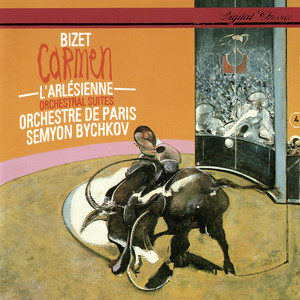 | L'Arlésienne Suite No. 1, WD 40: 3. Adagietto | Georges Bizet, Orchestre de Paris, Semyon Bychkov | F Major | 0 | 7B | 92 BPM | |
 | Elektra: Xiii. Orest! Orest ist tod! | Hugo von Hofmannsthal, Richard Strauss, Laila Andersson-palme, Anita Soldh, Royal Swedish Opera Orchestra, Siegfried Köhler | E♭ Major | 3 | 5B | 81 BPM | |
 | Mathis der Maler Symphony: I. Engelkonzert | Paul Hindemith, Berliner Philharmoniker, Claudio Abbado | D Major | 1 | 10B | 106 BPM | |
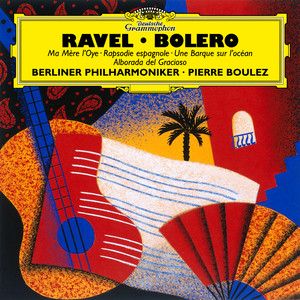 | Ma mère l'oye, Ballet, M. 62: XI. Apothéose. Le jardin féerique | Maurice Ravel, Berliner Philharmoniker, Pierre Boulez | C Major | 0 | 8B | 83 BPM | |
 | Symphony in E Minor, Op. 32, "Gaelic Symphony": I. Allegro con fuoco | Amy Beach, Nashville Symphony Orchestra, Kenneth Schermerhorn | E Minor | 1 | 9A | 111 BPM | |
 | Delius: Irmelin Prelude | Frederick Delius, Sir John Barbirolli, London Symphony Orchestra | D Major | 1 | 10B | 87 BPM | |
| Pelléas et Mélisande, CD 93, Suite (Arr. Leinsdorf): II. Act II. Opening - Interlude 3 - Interlude 4 | Claude Debussy, Berliner Philharmoniker, Claudio Abbado | B♭ Minor | 0 | 3A | 111 BPM | |
 | Pan Voyevoda, Op. 59: III. Nocturne: Clair de lune | Nikolai Rimsky-Korsakov, Moscow Symphony Orchestra, Igor Golovschin | E♭ Major | 1 | 5B | 138 BPM | |
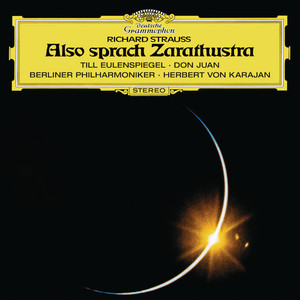 | Also sprach Zarathustra, Op. 30: II. Von den Hinterweltlern | Richard Strauss, Berliner Philharmoniker, Herbert von Karajan | A♭ Major | 0 | 4B | 78 BPM | |
| Le carnaval romain, Overture, H. 95 | Hector Berlioz, Berliner Philharmoniker, Claudio Abbado | A Major | 2 | 11B | 83 BPM | |
 | Symphonic Dances, Op. 45: II. Andante con moto (Tempo di valse) | Sergei Rachmaninoff, Berliner Philharmoniker, Lorin Maazel | C Minor | 0 | 5A | 83 BPM | |
 | Chanson de nuit, Op.15 No.1 | Edward Elgar, Hallé, Sir Mark Elder | G Major | 0 | 9B | 80 BPM | |
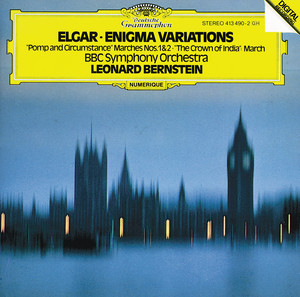 | Enigma Variations, Op. 36: Theme. Andante | Edward Elgar, BBC Symphony Orchestra, Leonard Bernstein | G Minor | 0 | 6A | 113 BPM |
- ISRC
- CHE272301911
- Label
- L-M Records/RCA Records