- BPM
- 114
- Key
- E Major
- Camelot
- 12B
Apollo e Dafne, HWV 122: XIX. Cara pianta by George Frideric Handel, Francesco Corti, Il Pomo D'oro, John Chest Song Details
On April 2, 2022, the song "Apollo e Dafne, HWV 122: XIX. Cara pianta" was released by George Frideric Handel, Francesco Corti, Il Pomo D'oro, John Chest. This song is about six minutes long, preciously at 5:34, making this song fairly long compared to other songs. The track order of this song in George Frideric Handel, Francesco Corti, Il Pomo D'oro, Kathryn Lewek, John Chest's "Handel: Apollo e Dafne & Armida abbandonata" album is number 28 out of 34. On top of that, Netherlands appears to be the country where this track was created. In terms of popularity, Apollo e Dafne, HWV 122: XIX. Cara pianta is currently unknown. The overall mood can be danceable to some, especially with it's high amount of postive energy.
BPM and Tempo
We consider the tempo marking of Apollo e Dafne, HWV 122: XIX. Cara pianta by George Frideric Handel, Francesco Corti, Il Pomo D'oro, John Chest to be Moderato (at a moderate speed) because the track has a tempo of 114 BPM, a half-time of 57BPM, and a double-time of 228 BPM. Based on that, the speed of the song's tempo is moderate. The time signature for this track is 4/4.
Music Key
This song is in the music key of E Major. This also means that this song has a camelot key of 12B. So, the perfect camelot match for 12B would be either 12B or 1A. While, 1B can give you a low energy boost. For moderate energy boost, you would use 9B and a high energy boost can either be 2B or 7B. Though, if you want a low energy drop, you should looking for songs with either a camelot key of 12A or 11B will give you a low energy drop, 3B would be a moderate one, and 10B or 5B would be a high energy drop. Lastly, 9A allows you to change the mood.
Want to find the BPM and music key for other songs? Check out our BPM and Key Finder page!
- Popularity
- 0%
- Loudness
- -15.6 dB
- Acousticness
- 58%
- Danceability
- 51%
- Energy
- 32%
- Instrumentalness
- 44%
- Liveness
- 7%
- Loudness
- 74%
- Speechiness
- 4%
- Valence
- 95%
Recommendations
| Track | Artist | Key | Energy | Camelot | BPM | ||
|---|---|---|---|---|---|---|---|
 | Ouverture in E Minor: II. Les plaisirs | Johann Bernhard Bach, L'Achéron, François Joubert-Caillet | D Minor | 2 | 7A | 114 BPM | |
 | Orfeo ed Euridice, Wq. 30: Dance of the Blessed Spirits "Melody" (Arr. Sgambati for Piano) | Christoph Willibald Gluck, Yuja Wang | D Minor | 0 | 7A | 70 BPM | |
 | Lo frate 'nnamorato: II. Andante | Giovanni Battista Pergolesi, Orchestra da Camera di Napoli, Enzo Amato | E Minor | 5 | 9A | 165 BPM | |
 | Pygmalion: Overture | Jean-Philippe Rameau, Les Talens Lyriques, Christophe Rousset | E♭ Minor | 1 | 2A | 136 BPM | |
 | Purcell: Chacony in G Minor, Z. 730 | Henry Purcell, Sir Neville Marriner, Academy of St. Martin in the Fields | B♭ Major | 4 | 6B | 113 BPM | |
 | Concerto No. 2 In G Minor RV 578: II. Allegro (Vivaldi) | Accademia Bizantina | F♯ Minor | 3 | 11A | 120 BPM | |
 | Symphony No. 1 in B-Flat Major, Op. 2: I. Allegro | William Boyce, Aradia Ensemble, Kevin Mallon | A Major | 1 | 11B | 86 BPM | |
 | Miserere, ZWV 57: I. Miserere I | Jan Dismas Zelenka, Accademia Barocca Lucernensis, Javier Ulises Illán | B Minor | 3 | 10A | 75 BPM | |
 | Concerto grosso in B minor, Op. 6, No. 12: 3. Larghetto, e piano | George Frideric Handel, Michel Schwalbé, Hanns-Joachim Westphal, Ottomar Borwitzky, Edith Picht-Axenfeld, Herbert von Karajan, Karl Scheit, Friedrich Fischer, Berliner Philharmoniker | G Major | 2 | 9B | 85 BPM | |
 | Fauré: Pavane, Op. 50 | Gabriel Fauré, San Francisco Symphony, Michael Tilson Thomas | F♯ Minor | 0 | 11A | 62 BPM | |
 | Dixit Dominus, ZWV 66: Sicut erat in principio - After Psalm 109 | Jan Dismas Zelenka, Adam Viktora, Ensemble Inégal, Prague Baroque Solists | A♭ Major | 2 | 4B | 61 BPM | |
 | Concerto Grosso in B-Flat Major, Op. 3, No. 2, HWV 313: II. Largo | George Frideric Handel, Royal Northern Sinfonia, Bradley Creswick | G Minor | 1 | 6A | 77 BPM | |
 | Albinoni: Adagio in G Minor | Tomaso Albinoni, Sir Neville Marriner, Academy of St. Martin in the Fields | C Minor | 1 | 5A | 90 BPM | |
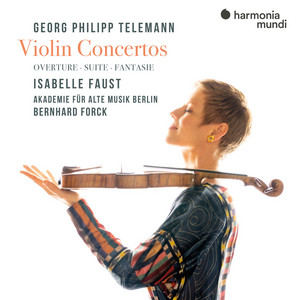 | Violin Concerto in A Major, TWV 51:A4 "Die Relinge": I. Allegro | Georg Philipp Telemann, Isabelle Faust, Akademie für Alte Musik Berlin, Bernhard Forck | D♭ Major | 3 | 3B | 140 BPM | |
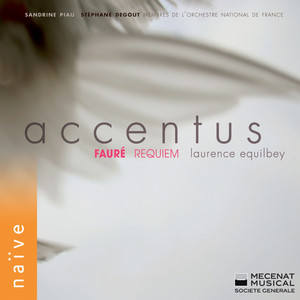 | Requiem, Op. 48: VIII. In Paradisum | Gabriel Fauré, Laurence Equilbey, Accentus, Orchestre National De France, La Maîtrise de Paris | D Major | 1 | 10B | 74 BPM | |
 | Suite No. 3, P. 172: I. Italiana: Andantino | Ottorino Respighi, RTÉ National Symphony Orchestra | B♭ Major | 1 | 6B | 94 BPM | |
 | Les Boréades, RCT 31, Acte IV, Scène IV: Entrée pour les Muses, les Zéphyres, les Saisons, les Heures et les Arts | Jean-Philippe Rameau, Teodor Currentzis | D♭ Major | 1 | 3B | 130 BPM | |
 | Oboe Concerto in C Major on Themes of Pergolesi: III. Andantino | Anthony Camden, City of London Sinfonia, Nicholas Ward | C Minor | 0 | 5A | 48 BPM | |
 | Oboe Concerto in E Minor, TWV 51:e1: I. Andante | Georg Philipp Telemann, Musica Bohemica, Jaroslav Krcek, Gabriela Krčková | E Minor | 2 | 9A | 74 BPM | |
![Water Music, Suite No. 2, HWV 349: XI. [Allegro] by George Frideric Handel, Akademie für Alte Musik Berlin](https://i.scdn.co/image/ab67616d00001e020467d27cbc2ac9ea30779a5d) | Water Music, Suite No. 2, HWV 349: XI. [Allegro] | George Frideric Handel, Akademie für Alte Musik Berlin | D♭ Major | 2 | 3B | 121 BPM | |
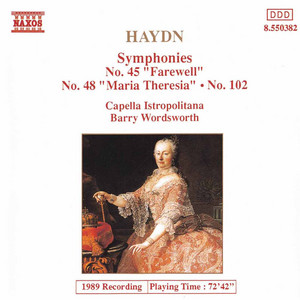 | Symphony No. 45 in F-Sharp Minor, Hob.I:45, "Farewell": I. Allegro assai | Joseph Haydn, Capella Istropolitana, Barry Wordsworth | F♯ Minor | 2 | 11A | 156 BPM | |
 | "Marche de triomphe et Second air de trompette" in D Major: I. Marche de triomphe | Marc-Antoine Charpentier, Musica Antiqua Köln, Reinhard Goebel | D♭ Major | 6 | 3B | 87 BPM | |
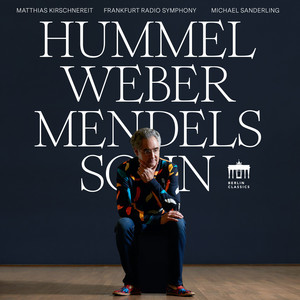 | Capriccio brillant, Op. 22: Andante | Felix Mendelssohn, Matthias Kirschnereit, Michael Sanderling, Frankfurt Radio Symphony Orchestra | B Major | 0 | 1B | 91 BPM | |
 | Armide: Passacaille | Jean-Baptiste Lully, Véronique Gens/Les Talens Lyriques/Christophe Rousset, Christophe Rousset, Les Talens Lyriques | F Minor | 1 | 4A | 122 BPM | |
 | Ancient Airs & Dances, Suite III, P. 172: I. Italiana (Anonymous) | Ottorino Respighi, Filarmonica della Scala, Riccardo Chailly | B♭ Major | 1 | 6B | 172 BPM |
- ISRC
- NLE422105528
- Label
- L-M Records/RCA Records