- BPM
- 64
- Key
- F♯ Minor
- Camelot
- 11A
Don Quichotte à Dulcinée: I. Chanson Romanesque by Maurice Ravel, Roderick Williams, Roger Vignoles Song Details
"Don Quichotte à Dulcinée: I. Chanson Romanesque" by Maurice Ravel, Roderick Williams, Roger Vignoles had its release date on January 21, 2022. With This song being less than two minutes long, at 1:56, we are fairly confident that this song is not explicit and is safe for all ages. Based on the duration of this song, this song duration is much smaller than the average song duration. The track order of this song in Roderick Williams, Roger Vignoles's "Mirages: The Art of French Song" album is number 15 out of 32. On top of that, United Kingdom appears to be the country where this track was created. Don Quichotte à Dulcinée: I. Chanson Romanesque is not that popular right now. In our opinion, the overall tone is not very danceable and projects negative sounds, such as being sad, depressed, or angry.
BPM and Tempo
We consider the tempo marking of Don Quichotte à Dulcinée: I. Chanson Romanesque by Maurice Ravel, Roderick Williams, Roger Vignoles to be Larghetto (rather broadly) because the track has a tempo of 64 BPM, a half-time of 32BPM, and a double-time of 128 BPM. Based on that, the speed of the song's tempo is slow. The time signature for this track is 5/4.
Music Key
This song is in the music key of F♯ Minor. This also means that this song has a camelot key of 11A. So, the perfect camelot match for 11A would be either 11A or 10B. While, a low energy boost can consist of either 11B or 12A. For moderate energy boost, you would use 8A and a high energy boost can either be 1A or 6A. However, if you are looking for a low energy drop, finding a song with a camelot key of 10A would be a great choice. Where 2A would give you a moderate drop, and 9A or 4A would be a high energy drop. Lastly, 2B allows you to change the mood.
Want to find the BPM and music key for other songs? Check out our BPM and Key Finder page!
- Popularity
- 1%
- Loudness
- -22.946 dB
- Acousticness
- 99%
- Danceability
- 31%
- Energy
- 3%
- Instrumentalness
- 0%
- Liveness
- 7%
- Loudness
- 62%
- Speechiness
- 5%
- Valence
- 4%
Recommendations
| Track | Artist | Key | Energy | Camelot | BPM | ||
|---|---|---|---|---|---|---|---|
 | Carnival of the Animals, R. 125: XIII. The Swan | Camille Saint-Saëns, Marian Lapsansky, Peter Toperczer, Slovak Radio Symphony Orchestra, Ondrej Lenard | G Major | 0 | 9B | 79 BPM | |
 | Rêverie, L. 68: Rêverie | Claude Debussy, Jean-Yves Thibaudet | G Minor | 0 | 6A | 69 BPM | |
 | Sure on This Shining Night, Op. 13 No. 3 (Arr. Parkin for Cello and Piano) | Samuel Barber, Sheku Kanneh-Mason, Isata Kanneh-Mason | B♭ Major | 0 | 6B | 113 BPM | |
 | Etude in F Minor | Felix Mendelssohn, Benjamin Frith | B♭ Major | 0 | 6B | 75 BPM | |
 | 14 Romances, Op. 34: No. 14 Vocalise (Arr. Kocsis for Piano) | Sergei Rachmaninoff, Yuja Wang | D♭ Minor | 0 | 12A | 62 BPM | |
 | Au bord d'une source | Franz Liszt, André Laplante | A♭ Major | 2 | 4B | 70 BPM | |
 | Tune from the Film by Lana Gogoberidze: When Almonds Blossomed | Giya Kancheli, Khatia Buniatishvili | D Minor | 0 | 7A | 65 BPM | |
 | Fauré: Pavane, Op. 50 (Instrumental Version) | Gabriel Fauré, Sir Neville Marriner, Academy of St. Martin in the Fields | F♯ Minor | 1 | 11A | 70 BPM | |
 | 7 Preludes, Op. 17: No. 3 in D-Flat Major | Alexander Scriabin, Maria Lettberg | B Major | 0 | 1B | 72 BPM | |
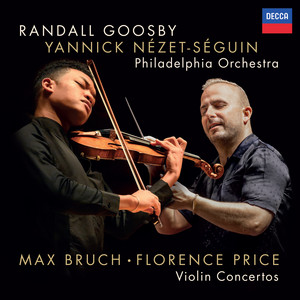 | Adoration (Arr. Gray for Violin & Orchestra) | Florence Beatrice Price, Randall Goosby, Philadelphia Orchestra, Yannick Nézet-Séguin | D Major | 3 | 10B | 74 BPM | |
 | Romance "O pourquoi donc" in E Minor, S. 169 | Franz Liszt, Lang Lang | E Minor | 0 | 9A | 67 BPM | |
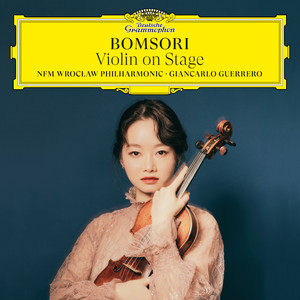 | Thaïs: Méditation | Jules Massenet, Bomsori, NFM Wrocław Philharmonic, Giancarlo Guerrero | D Major | 0 | 10B | 84 BPM | |
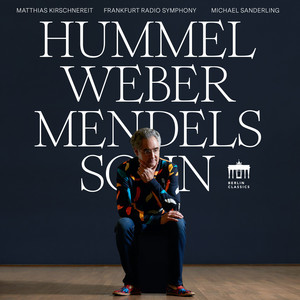 | Capriccio brillant, Op. 22: Andante | Felix Mendelssohn, Matthias Kirschnereit, Michael Sanderling, Frankfurt Radio Symphony Orchestra | B Major | 0 | 1B | 91 BPM | |
 | Schumann, Clara: 3 Romances, Op. 11: No. 1 in E-Flat Minor | Clara Schumann, Sophie Pacini | E♭ Minor | 0 | 2A | 60 BPM | |
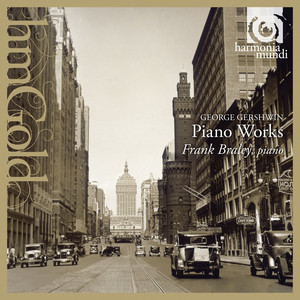 | Song Book: The Man I Love. Slow and in singing style | George Gershwin, Frank Braley | F Minor | 0 | 4A | 69 BPM | |
 | Bach: Adagio (After Violin Concerto No. 2, BWV 1042) | Johann Sebastian Bach, Gabriela Montero | F♯ Minor | 0 | 11A | 73 BPM | |
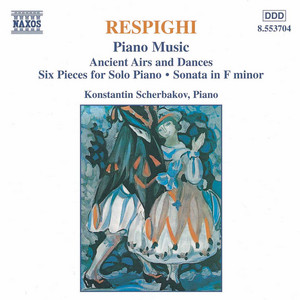 | 6 Pezzi, P. 44: No. 4. Minuetto | Ottorino Respighi, Konstantin Scherbakov | G Major | 0 | 9B | 132 BPM | |
 | Prelude in G Major | Víkingur Ólafsson | G Major | 0 | 9B | 102 BPM | |
 | Ancient Airs & Dances, Suite III, P. 172: I. Italiana (Anonymous) | Ottorino Respighi, Filarmonica della Scala, Riccardo Chailly | B♭ Major | 1 | 6B | 172 BPM | |
 | Gaspard de la nuit, M. 55: I. Ondine | Maurice Ravel, Martha Argerich | D♭ Major | 0 | 3B | 72 BPM | |
 | Myrthen, Op. 25 - Version for Cello and Piano: XXIV. Du bist wie eine Blume | Robert Schumann, Kian Soltani, Aaron Pilsan | F Major | 0 | 7B | 116 BPM | |
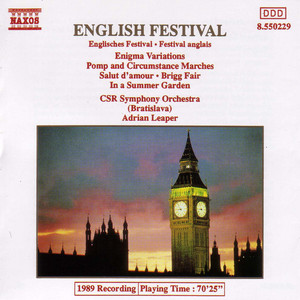 | Salut d'amour, Op. 12 (version for orchestra) | Edward Elgar, Slovak Radio Symphony Orchestra, Adrian Leaper | B♭ Major | 1 | 6B | 82 BPM | |
| 2 Pieces for the Left Hand, Op. 9: No. 2, Nocturne in D-Flat Major | Alexander Scriabin, Maria Lettberg | A♭ Major | 0 | 4B | 74 BPM | |
 | 13 Preludes, Op. 32: No. 5 in G Major. Moderato | Sergei Rachmaninoff, Idil Biret | G Major | 0 | 9B | 74 BPM | |
 | Adagio in D Minor, BWV 974: II. Adagio | Johann Sebastian Bach, Alexandre Tharaud | D Minor | 0 | 7A | 65 BPM |
- ISRC
- GB4ZK2115915
- Label
- L-M Records/RCA Records