- BPM
- 68
- Key
- B Major
- Camelot
- 1B
Das Rheingold (Arr. Solo Piano by Greef): Entrance into Valhalla - Welte-Mignon 1181 by Richard Wagner, Peter Phillips, Arthur De Greef Song Details
"Das Rheingold (Arr. Solo Piano by Greef): Entrance into Valhalla - Welte-Mignon 1181" by Richard Wagner, Peter Phillips, Arthur De Greef had its release date on May 28, 2024. With this song being around four minutes long, at 4:08, the duration of this song is pretty average compared to other songs. This track is safe for children and doesn't appear to contain any foul language, since the "Explicit" tag was not present in this track. There are a total of 17 in the song's album "Rondo. Heritage Haydn & Mozart". In this album, this song's track order is #15. Furthermore, we believe that the track originated from Germany. Das Rheingold (Arr. Solo Piano by Greef): Entrance into Valhalla - Welte-Mignon 1181 is not that popular right now. In our opinion, the overall tone is not very danceable and projects negative sounds, such as being sad, depressed, or angry.
BPM and Tempo
With Das Rheingold (Arr. Solo Piano by Greef): Entrance into Valhalla - Welte-Mignon 1181 by Richard Wagner, Peter Phillips, Arthur De Greef having a BPM of 68 with a half-time of 34 BPM and a double-time of 136 BPM, we would consider this track to have a Adagio (slowly with great expression) tempo marking. Because of this, we believe that the song has an overall slow tempo. The time signature for this track is 3/4.
Music Key
This song has a musical key of B Major. Or for those who are familiar with the camelot wheel, this song has a camelot key of 1B. So, the perfect camelot match for 1B would be either 1B or 2A. While, 2B can give you a low energy boost. For moderate energy boost, you would use 10B and a high energy boost can either be 3B or 8B. Though, if you want a low energy drop, you should looking for songs with either a camelot key of 1A or 12B will give you a low energy drop, 4B would be a moderate one, and 11B or 6B would be a high energy drop. Lastly, 10A allows you to change the mood.
Want to find the BPM and music key for other songs? Check out our BPM and Key Finder page!
- Popularity
- 1%
- Loudness
- -19.554 dB
- Acousticness
- 98%
- Danceability
- 28%
- Energy
- 10%
- Instrumentalness
- 94%
- Liveness
- 8%
- Loudness
- 67%
- Speechiness
- 4%
- Valence
- 3%
Recommendations
| Track | Artist | Key | Energy | Camelot | BPM | ||
|---|---|---|---|---|---|---|---|
 | Rusalka, Op. 114 / Act 1: Hou, hou, hou, stojí mésic nad vodou! | Antonín Dvořák, Dana Buresova, Hana Minutillo, Livia Aghova, Czech Philharmonic Orchestra, Sir Charles Mackerras | A Major | 2 | 11B | 135 BPM | |
 | La damnation de Faust, Op. 24, H. 111 / Pt. I: Marche hongroise | Hector Berlioz, Orchestre Lamoureux, Igor Markevitch | A Minor | 4 | 8A | 102 BPM | |
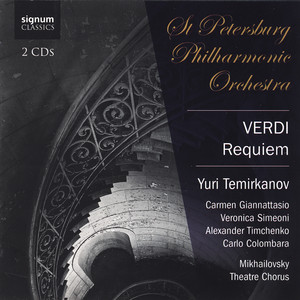 | Liber scriptus | Giuseppe Verdi, Carmen Giannattasio, Veronica Simeoni, Alxander Timchenko, Carlo Colombara, Yuri Temirkanov, St. Petersburg Philharmonic Orchestra | D Major | 1 | 10B | 79 BPM | |
 | Symphony No. 7 in A Major, Op. 92: III. Presto. Trio I und II. Assai meno presto | Ludwig van Beethoven, Berliner Philharmoniker, Kirill Petrenko | D Major | 2 | 10B | 105 BPM | |
 | Symphony No.8 In G, Op.88, B. 163: 4. Allegro ma non troppo | Antonín Dvořák, Berliner Philharmoniker, Rafael Kubelík | G Major | 2 | 9B | 141 BPM | |
 | Das Lied von der Erde: Das Trinklied vom Jammer der Erde | Gustav Mahler, Michael Schade, Wiener Philharmoniker, Pierre Boulez | G Minor | 2 | 6A | 78 BPM | |
 | Parsifal Wagner - Good Friday Spell | Gerard Schwarz | D Major | 0 | 10B | 75 BPM | |
 | The Rite of Spring: Part Two: The Sacrifice: Sacrificial Dance (The Chosen One) | Igor Stravinsky, Teodor Currentzis, musicAeterna | D Minor | 5 | 7A | 136 BPM | |
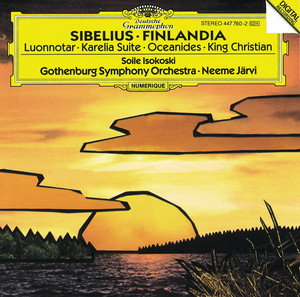 | Luonnotar, Op. 70 | Jean Sibelius, Soile Isokoski, Gothenburg Symphony Orchestra, Neeme Järvi | F♯ Minor | 1 | 11A | 132 BPM | |
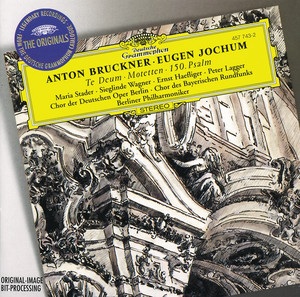 | Te Deum, WAB 45: 1. Te Deum laudamus | Anton Bruckner, Maria Stader, Sieglinde Wagner, Ernst Haefliger, Peter Lagger, Wolfgang Meyer, Berliner Philharmoniker, Eugen Jochum, Chor der Deutschen Oper Berlin, Walter Hagen-Groll | C Minor | 2 | 5A | 126 BPM | |
 | Weber: Der Freischütz, Op. 77, J. 277, Act 1: Böhmischer Walzer | Carl Maria von Weber, Joseph Keilberth, Berliner Philharmoniker | G Major | 5 | 9B | 119 BPM | |
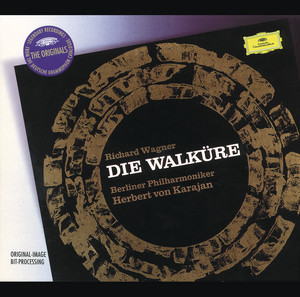 | Die Walküre, Act I Scene 3: Siegmund, den Wälsung, siehst du, Weib! | Richard Wagner, Gundula Janowitz, Jon Vickers, Berliner Philharmoniker, Herbert von Karajan | C Major | 4 | 8B | 86 BPM | |
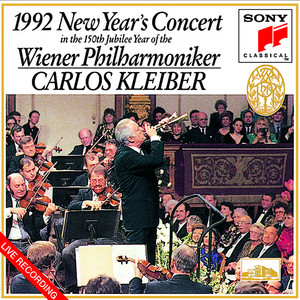 | Die lustigen Weiber von Windsor: Overture | Otto Nicolai, Carlos Kleiber, Wiener Philharmoniker | F Major | 2 | 7B | 80 BPM | |
 | Die Zauberflöte, K. 620: Overture | Wolfgang Amadeus Mozart, Staatskapelle Dresden, Sir Colin Davis | E♭ Major | 1 | 5B | 155 BPM | |
 | Mozart: Requiem in D Minor, K. 626: III. Dies irae | Nikolaus Harnoncourt, Vienna State Opera Chorus | G Minor | 4 | 6A | 77 BPM | |
 | Carmina Burana: VI. Dance | Carl Orff, Orchester der Deutschen Oper Berlin, Eugen Jochum | F Major | 2 | 7B | 139 BPM | |
 | Offenbach: Orphée aux enfers: Overture | Jacques Offenbach, Marc Minkowski, Orchestre de Chambre de Grenoble, Orchestre de l'Opéra de Lyon | G Major | 2 | 9B | 127 BPM | |
 | Ein Heldenleben, Op. 40, TrV. 190: I. Der Held | Richard Strauss, Rainer Honeck, Wiener Philharmoniker, Christian Thielemann | G Major | 1 | 9B | 85 BPM | |
 | La forza del destino: Overture (Sinfonia) | Giuseppe Verdi, Berliner Philharmoniker, Claudio Abbado | E Minor | 2 | 9A | 80 BPM | |
 | Mascagni: Cavalleria rusticana: "Gli aranci olezzano" (Coro) | Pietro Mascagni, Riccardo Muti, Ambrosian Opera Chorus, Philharmonia Orchestra | A Major | 1 | 11B | 76 BPM | |
 | Sibelius: Symphony No. 5 in E-Flat Major, Op. 82: III. Allegro molto (1915 Version) | Jean Sibelius, San Francisco Symphony, Esa-Pekka Salonen | E♭ Major | 1 | 5B | 76 BPM | |
 | Symphony No. 5 in C Minor, Op. 67: II. Andante con moto | Ludwig van Beethoven, Wiener Philharmoniker, Carlos Kleiber | A Major | 3 | 11B | 75 BPM | |
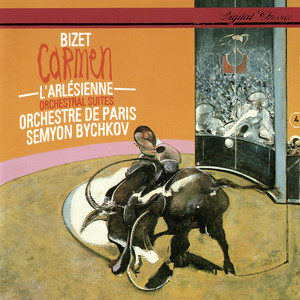 | L'Arlésienne Suite No. 1, WD 40: 3. Adagietto | Georges Bizet, Orchestre de Paris, Semyon Bychkov | F Major | 0 | 7B | 92 BPM | |
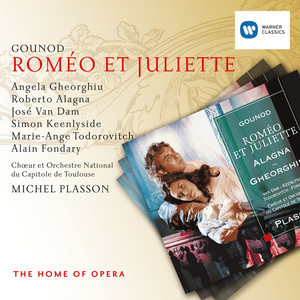 | Gounod: Roméo et Juliette: Ouverture | Charles Gounod, Michel Plasson, Orchestre Du Capitole De Toulouse | D Minor | 3 | 7A | 123 BPM | |
 | Symphony No. 40 in G Minor, K. 550 (1st Version, No Clarinets): I. Molto allegro | Wolfgang Amadeus Mozart, Wiener Philharmoniker, Karl Böhm | B Major | 0 | 1B | 94 BPM |
- ISRC
- DEPI82319242
- Label
- L-M Records/RCA Records