- BPM
- 98
- Key
- F Minor
- Camelot
- 4A
Sonatine, Op. 16: II. Très Lent - Modéré - Très animé by Albert Roussel, Emanuele Torquati Song Details
Albert Roussel, Emanuele Torquati's 'Sonatine, Op. 16: II. Très Lent - Modéré - Très animé' had a release date set for May 23, 2013. With this song being about 5 minutes long, at This song is fairly a long song compared to the average song length. This song does not have an "Explicit" tag, making it safe for all ages. There are a total of 24 in the song's album "Roussel: Promenade Sentimentale, Complete Piano Music". In this album, this song's track order is #18. Furthermore, we believe that the track originated from Netherlands. In terms of popularity, Sonatine, Op. 16: II. Très Lent - Modéré - Très animé is currently unknown. In our opinion, the overall tone is not very danceable and projects negative sounds, such as being sad, depressed, or angry.
BPM and Tempo
With Sonatine, Op. 16: II. Très Lent - Modéré - Très animé by Albert Roussel, Emanuele Torquati having a BPM of 98 with a half-time of 49 BPM and a double-time of 196 BPM, we would consider this track to have a Andante (at a walking pace) tempo marking. Because of this, we believe that the song has an overall slow tempo. The time signature for this track is 4/4.
Music Key
F Minor is the music key of this track. Which also means that the camelot key for this song is 4A. So, the perfect camelot match for 4A would be either 4A or 3B. While, a low energy boost can consist of either 4B or 5A. For moderate energy boost, you would use 1A and a high energy boost can either be 6A or 11A. However, if you are looking for a low energy drop, finding a song with a camelot key of 3A would be a great choice. Where 7A would give you a moderate drop, and 2A or 9A would be a high energy drop. Lastly, 7B allows you to change the mood.
Want to find the BPM and music key for other songs? Check out our BPM and Key Finder page!
- Popularity
- 0%
- Loudness
- -25.701 dB
- Acousticness
- 99%
- Danceability
- 38%
- Energy
- 7%
- Instrumentalness
- 86%
- Liveness
- 10%
- Loudness
- 57%
- Speechiness
- 3%
- Valence
- 20%
Recommendations
| Track | Artist | Key | Energy | Camelot | BPM | ||
|---|---|---|---|---|---|---|---|
 | Roussel : Symphony No.3 in G minor Op.42 : IV Allegro con spirito | Albert Roussel, Charles Dutoit, Orchestre National De France | G Major | 2 | 9B | 151 BPM | |
 | Sibelius: King Christian II Suite, Op. 27: II. Elegie | Jean Sibelius, Scottish National Orchestra/Sir Alexander Gibson, Alexander Gibson, Scottish National Orchestra | E Minor | 1 | 9A | 77 BPM | |
 | Gustav II Adolf, Op. 49: VI. Breitenfeld - Bataljmålning (Breitenfeld - Battle Painting) | Hugo Alfvén, Gothenburg Symphony Orchestra, Neeme Järvi | F Major | 0 | 7B | 69 BPM | |
 | Mendelssohn: A Midsummer Night's Dream, Op. 61, MWV M13: No. 7, Nocturne | Felix Mendelssohn, Nikolaus Harnoncourt, Chamber Orchestra of Europe | C Major | 2 | 8B | 90 BPM | |
 | Petrouchka: Les déguisés | Ferenc Fricsay, Berliner Philharmoniker | B♭ Major | 7 | 6B | 164 BPM | |
 | Tandem: III. Rustico | Jörgen Dafgård, Carl-Johan Stjernstrom, Benjamin Schmid, Musica Vitae, Joachim Gustafsson | F♯ Minor | 1 | 11A | 74 BPM | |
 | Saint-Saëns: Symphony No. 1 in E-Flat Major, Op. 2: III. Adagio | Camille Saint-Saëns, Georges Prêtre, Wiener Symphoniker | E Major | 0 | 12B | 86 BPM | |
 | Piano Concerto No. 2 in F Major, Op. 102: II. Andante | Dmitri Shostakovich, Angela Cheng, Jens Lindemann, CBC Radio Orchestra, Mario Bernardi | C Minor | 0 | 5A | 175 BPM | |
 | Prelude in F Minor (Arr. for Wind Quintet by Kara LaMoure) | Nadia Boulanger, WindSync | F Major | 0 | 7B | 69 BPM | |
 | Concerto for Oboe and Small Orchestra in D Major, Op. 144: II. Andante | Richard Strauss, François Leleux, Swedish Radio Symphony Orchestra, Daniel Harding | B♭ Major | 1 | 6B | 79 BPM | |
 | Violin Concerto in D Major, Op. 35: I. Moderato nobile | Erich Wolfgang Korngold, Vadim Gluzman, Hague Residentie Orchestra, Neeme Järvi | D Major | 1 | 10B | 88 BPM | |
 | Petite suite I. En bateau - Andantino En bateau - Andantino I - En bateu (Andantino) | Orchestra Sinfonica Abruzzese, Umberto Clerici, Marzio Conti | G Major | 0 | 9B | 96 BPM | |
 | Brian: Symphony No. 7 in C Major: I. Allegro moderato | Havergal Brian, Royal Liverpool Philharmonic Orchestra, Sir Charles Mackerras | F Major | 0 | 7B | 69 BPM | |
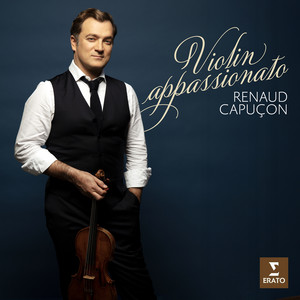 | Arensky: Piano Trio No. 1 in D Minor, Op. 32: III. Elegia. Adagio | Anton Arensky, Polina Leschenko, Renaud Capuçon, Gautier Capuçon | G Minor | 0 | 6A | 118 BPM | |
 | Organ Concerto in G Minor, FP 93: III. Andante moderato | Francis Poulenc, Philippe Lefebvre, Orchestre National de Lille, Jean-Claude Casadesus | D♭ Major | 0 | 3B | 79 BPM | |
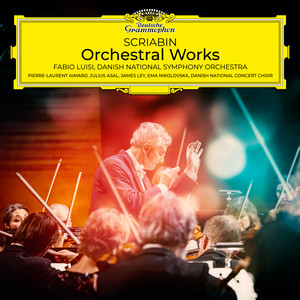 | Symphony No. 1 in E Major, Op. 26: IV. Vivace | Alexander Scriabin, Danish National Symphony Orchestra, Fabio Luisi | B♭ Minor | 2 | 3A | 86 BPM | |
 | Delius: Irmelin Prelude | Frederick Delius, Sir John Barbirolli, London Symphony Orchestra | D Major | 1 | 10B | 87 BPM | |
 | Cello Concerto in A Minor, Op. 129: IIa. Sehr langsam | Robert Schumann, Kian Soltani, Camerata Salzburg, Gregory Ahss | E Major | 0 | 12B | 113 BPM | |
 | Sibelius: Violin Concerto in D Minor, Op. 47: II. Adagio di molto | Jean Sibelius, Ida Haendel, Bournemouth Symphony Orchestra, Paavo Berglund | G Minor | 8 | 6A | 170 BPM | |
 | Jūra, MKČ 102: V. Recapitulation | Mikalojus Konstantinas Čiurlionis, Lithuanian National Symphony Orchestra, Mirga Gražinytė-Tyla | A Minor | 0 | 8A | 85 BPM | |
 | Concerto for 2 Pianos and Orchestra: III. Fuga chromatica - Allegro | Ralph Vaughan Williams, Tal & Groethuysen, Douglas Boyd | D Minor | 3 | 7A | 77 BPM | |
 | Roussel: Violin Sonata No. 2 in A Major, Op. 28, L. 33: II. Andante | Albert Roussel, Pierre Doukan | F Minor | 1 | 4A | 102 BPM | |
 | Quatuor pour hautbois, violon, violoncelle et piano, H.315: I. Moderato poco Allegro | Bohuslav Martinů, Philippe Tondre, Danae Dörken, Sarah Christian, Maximilian Hornung | F Major | 0 | 7B | 69 BPM | |
 | Variation 6: Sostenuto (quasi adagietto) | Max Reger, New Zealand Symphony Orchestra, Franz-Paul Decker | D Major | 1 | 10B | 74 BPM | |
 | Mathis der Maler Symphony: II. Grablegung | Paul Hindemith, Berliner Philharmoniker, Claudio Abbado | A♭ Minor | 0 | 1A | 87 BPM |
- ISRC
- NLY331209410
- Label
- L-M Records/RCA Records