- BPM
- 139
- Key
- E Minor
- Camelot
- 9A
Variations on a Theme by Tchaikovsky, Op. 35a: Var. I. Un poco più mosso - Live by Anton Arensky, Metamorphose String Orchestra, Pavel Lyubomudrov Song Details
"Variations on a Theme by Tchaikovsky, Op. 35a: Var. I. Un poco più mosso - Live" by Anton Arensky, Metamorphose String Orchestra, Pavel Lyubomudrov had its release date on October 14, 2022. With This song being less than two minutes long, at 1:32, we are fairly confident that this song is not explicit and is safe for all ages. Based on the duration of this song, this song duration is much smaller than the average song duration. This song is part of Variations on a Theme by Tchaikovsky, Op. 35a (Live) by Anton Arensky, Pavel Lyubomudrov, Metamorphose String Orchestra. The song's track number on the album is #2 out of 9 tracks. Based on our data, Italy was the country where this track was produced or recorded. Based on our statistics, Variations on a Theme by Tchaikovsky, Op. 35a: Var. I. Un poco più mosso - Live's popularity is not that popular right now. In our opinion, the overall tone is not very danceable and projects negative sounds, such as being sad, depressed, or angry.
BPM and Tempo
Since Variations on a Theme by Tchaikovsky, Op. 35a: Var. I. Un poco più mosso - Live by Anton Arensky, Metamorphose String Orchestra, Pavel Lyubomudrov has a tempo of 139 beats per a minute, the tempo markings of this song would be Allegro (fast, quick, and bright). With Variations on a Theme by Tchaikovsky, Op. 35a: Var. I. Un poco più mosso - Live being at 139 BPM, the half-time would be 70 BPM with a double-time of 278 BPM.In addition, we consider the tempo speed to be pretty fast for this song. This makes this song perfect for activities such as, walking. The time signature for this track is 4/4.
Music Key
E Minor is the music key of this track. Which also means that the camelot key for this song is 9A. So, the perfect camelot match for 9A would be either 9A or 8B. While, a low energy boost can consist of either 9B or 10A. For moderate energy boost, you would use 6A and a high energy boost can either be 11A or 4A. However, if you are looking for a low energy drop, finding a song with a camelot key of 8A would be a great choice. Where 12A would give you a moderate drop, and 7A or 2A would be a high energy drop. Lastly, 12B allows you to change the mood.
Want to find the BPM and music key for other songs? Check out our BPM and Key Finder page!
- Popularity
- 9%
- Loudness
- -24.17 dB
- Acousticness
- 84%
- Danceability
- 16%
- Energy
- 4%
- Instrumentalness
- 93%
- Liveness
- 26%
- Loudness
- 60%
- Speechiness
- 5%
- Valence
- 4%
Recommendations
| Track | Artist | Key | Energy | Camelot | BPM | ||
|---|---|---|---|---|---|---|---|
 | Suite No. 1, "Orientale": I. Okenstamning: Adagio | Kurt Atterberg, Ferenc Balogh, Gyorgy Kertesz, Andras Kiss, Ilona Prunyi | B Minor | 1 | 10A | 61 BPM | |
 | The Gadfly Suite, Op. 97a (arr. D. Yablonsky): Romance | Dmitri Shostakovich, Dmitry Yablonsky, Russian Philharmonic Orchestra | A Minor | 0 | 8A | 175 BPM | |
 | 13 Preludes, Op. 32: No. 12 in G-sharp Minor: Allegro | Sergei Rachmaninoff, Boris Giltburg | E Major | 0 | 12B | 65 BPM | |
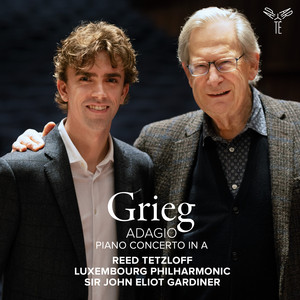 | Piano Concerto in A Minor, Op. 16: II. Adagio | Edvard Grieg, Reed Tetzloff, John Eliot Gardiner, Orchestre Philharmonique Du Luxembourg | D♭ Major | 0 | 3B | 92 BPM | |
 | Clarinet Quintet in B Minor, Op. 115: III. Andantino - Presto non assai, ma con sentimento | Johannes Brahms, Martin Fröst, Janine Jansen, Boris Brovtsyn, Maxim Rysanov, Torleif Thedéen | D Major | 2 | 10B | 105 BPM | |
 | String Octet in C Major, Op. 7 (Version for String Orchestra): I. Très modéré | George Enescu, Tabea Zimmermann, Ensemble Resonanz | E♭ Major | 0 | 5B | 78 BPM | |
 | Lieder ohne Worte, Op. 67: No. 2 Allegro leggiero (Arr. Ottensamer for Clarinet and Piano) | Felix Mendelssohn, Andreas Ottensamer, Yuja Wang | F♯ Minor | 0 | 11A | 75 BPM | |
 | Sonatine, M. 40: I. Modéré | Maurice Ravel, Hsiang Tu | E Major | 3 | 12B | 104 BPM | |
 | Bartók: Romanian Folk Dances, Sz. 56: No. 4, Horn Dance (Transcr. Strauss & Rizikov for Cello and Piano) | Béla Bartók, Lisa Strauss, Anastasia Rizikov | F Major | 0 | 7B | 97 BPM | |
 | Lied in E-Flat Major | Fanny Mendelssohn, Heather Schmidt | E Major | 1 | 12B | 114 BPM | |
 | Concerto for Violin and Cello, Op. 102 in A Minor: II. Andante | Johannes Brahms, Leoš Čepický, Michal Kaňka, Stanislav Vavřínek, Komorní filharmonie Pardubice | D Major | 1 | 10B | 96 BPM | |
 | Pelléas et Mélisande, Op. 80 (Arr. C. Koechlin): V. Sicilienne. Allegretto molto moderato | Gabriel Fauré, Radio Sinfonieorchester Stuttgart des SWR, Heinz Holliger | G Minor | 0 | 6A | 91 BPM | |
 | Five pieces for Two Violins and Piano: III. Elegy- Andantino | Dmitri Shostakovich, Brodsky Quartet, Christian Blackshaw | B♭ Minor | 0 | 3A | 103 BPM | |
 | Forgotten Melodies I, Op. 38: No. 6; Canzona Serenata | Nikolai Medtner, Dmitry Shishkin | B Major | 0 | 1B | 69 BPM | |
| Cello Sonata in D Minor, Op. 40: III. Largo | Dmitri Shostakovich, Dmitry Yablonsky, Ekaterina Saranceva | B♭ Minor | 4 | 3A | 0 BPM | |
 | Albumblätter, Op. 39: No. 1, Moderato | Hans Sitt, Danae Dörken, Adrien La Marca | C Major | 1 | 8B | 61 BPM | |
 | Schumann: Kinderszenen, Op. 15: VII. Träumerei (Arr. Trinkaus for Cello & Piano) | Robert Schumann, Taeguk Mun, Chi Ho Han | F Major | 0 | 7B | 170 BPM | |
 | Violin Sonata No. 3, Op. 45: I. Allegro molto ed appassionato | Edvard Grieg, Augustin Dumay, Maria João Pires | A Major | 5 | 11B | 83 BPM | |
| Adagio in E-Flat Major | Fanny Mendelssohn, Heather Schmidt | E♭ Minor | 0 | 2A | 90 BPM | |
 | Symphony No. 3 in E Flat Major, Op. 90: III. Menuetto. Moderato - Trio I - Trio II | Ferdinand Ries, Tapiola Sinfonietta, Janne Nisonen | E♭ Major | 0 | 5B | 174 BPM | |
 | 6 Romances sans paroles: No. 4, Le calme, CG 2e | Charles Gounod, Warren Lee | D♭ Major | 1 | 3B | 73 BPM | |
 | Chant du menestrel for Cello and Orchestra, Op. 71 | Alexander Glazunov, Alexander Rudin, Moscow Symphony Orchestra, Igor Golovschin | F♯ Minor | 0 | 11A | 87 BPM | |
 | No. 1, Prélude. Moderato | César Franck, Jean-Pierre Armengaud | B Minor | 0 | 10A | 70 BPM | |
 | Contes bleus, No. 2 Op. 122 | Cécile Chaminade, Eric Parkin | E♭ Major | 1 | 5B | 110 BPM | |
 | Piano Concerto in A Minor, Op. 7: II. Romanze. Andante non troppo, con Grazia | Clara Schumann, Ragna Schirmer, Staatskapelle Halle, Ariane Matiakh | A♭ Major | 0 | 4B | 176 BPM |
- ISRC
- ITD542201218
- Label
- L-M Records/RCA Records