- BPM
- 92
- Key
- G Major
- Camelot
- 9B
Pictures At An Exhibition: VI. Two Polish Jews, One Rich One Poor by Modest Mussorgsky, Tamriko Siprashvili, Mark Anderson Song Details
"Pictures At An Exhibition: VI. Two Polish Jews, One Rich One Poor" by Modest Mussorgsky, Tamriko Siprashvili, Mark Anderson had its release date on April 1, 2004. The duration of This song is about two minutes long, specifically at 2:45. This song does not appear to have any foul language. Pictures At An Exhibition: VI. Two Polish Jews, One Rich One Poor's duration is considered a little bit shorter than the average duration of a typical track. The track order of this song in Tamriko Siprashvili, Mark Anderson's "Mussorgsky & Stravinsky: Music for 2 Pianos" album is number 24 out of 29. On top of that, United Kingdom appears to be the country where this track was created. In terms of popularity, Pictures At An Exhibition: VI. Two Polish Jews, One Rich One Poor is currently unknown. In our opinion, the overall tone is not very danceable and projects negative sounds, such as being sad, depressed, or angry.
BPM and Tempo
We consider the tempo marking of Pictures At An Exhibition: VI. Two Polish Jews, One Rich One Poor by Modest Mussorgsky, Tamriko Siprashvili, Mark Anderson to be Andante (at a walking pace) because the track has a tempo of 92 BPM, a half-time of 46BPM, and a double-time of 184 BPM. Based on that, the speed of the song's tempo is slow. Activities such as, yoga or pilates, can go well with this song. The time signature for this track is 4/4.
Music Key
This song is in the music key of G Major. This also means that this song has a camelot key of 9B. So, the perfect camelot match for 9B would be either 9B or 10A. While, 10B can give you a low energy boost. For moderate energy boost, you would use 6B and a high energy boost can either be 11B or 4B. Though, if you want a low energy drop, you should looking for songs with either a camelot key of 9A or 8B will give you a low energy drop, 12B would be a moderate one, and 7B or 2B would be a high energy drop. Lastly, 6A allows you to change the mood.
Want to find the BPM and music key for other songs? Check out our BPM and Key Finder page!
- Popularity
- 0%
- Loudness
- -19.717 dB
- Acousticness
- 98%
- Danceability
- 36%
- Energy
- 17%
- Instrumentalness
- 88%
- Liveness
- 12%
- Loudness
- 67%
- Speechiness
- 4%
- Valence
- 8%
Recommendations
| Track | Artist | Key | Energy | Camelot | BPM | ||
|---|---|---|---|---|---|---|---|
 | The Hebrides, Op. 26 "Fingal's Cave" | Felix Mendelssohn, John Eliot Gardiner, London Symphony Orchestra | D Major | 1 | 10B | 137 BPM | |
 | Finlandia, Op. 26 | Jean Sibelius, Berliner Philharmoniker, Herbert von Karajan | A♭ Major | 3 | 4B | 67 BPM | |
 | Die Fledermaus: Overture | Johann Strauss II, Bavarian State Orchestra, Carlos Kleiber | G Major | 1 | 9B | 100 BPM | |
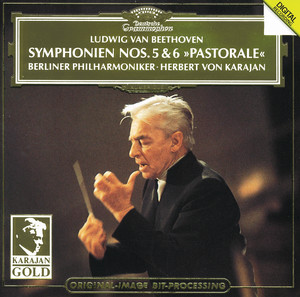 | Symphony No. 6 in F Major, Op. 68 "Pastoral": IV. Gewitter, Sturm. Allegro | Ludwig van Beethoven, Berliner Philharmoniker, Herbert von Karajan | F Minor | 3 | 4A | 86 BPM | |
 | Prince Igor: Polovtsian Dances (Remastered): No. 17a, Polovtsian Dance. Introduzione. Andantino | Alexander Borodin, Leonard Bernstein, New York Philharmonic | A Major | 1 | 11B | 78 BPM | |
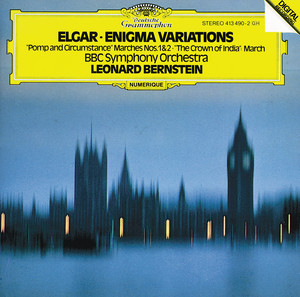 | Pomp and Circumstance March No. 2 in A Minor, Op. 39/2 | Edward Elgar, BBC Symphony Orchestra, Leonard Bernstein | B Minor | 2 | 10A | 132 BPM | |
 | Symphony No. 40 in G Minor, K. 550 (1st Version, No Clarinets): I. Molto allegro | Wolfgang Amadeus Mozart, Wiener Philharmoniker, Karl Böhm | B Major | 0 | 1B | 94 BPM | |
| Variations On An Original Theme, Op.36 "Enigma": 10. Intermezzo: Dorabella (Allegretto) | Edward Elgar, BBC Symphony Orchestra, Leonard Bernstein | G Major | 0 | 9B | 73 BPM | |
| Enigma Variations, Op. 36: Var. 1. L'istesso tempo "C.A.E." | Edward Elgar, BBC Symphony Orchestra, Leonard Bernstein | G Minor | 0 | 6A | 81 BPM | |
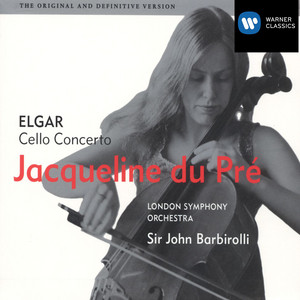 | Elgar: Cello Concerto in E Minor, Op. 85: II. Lento - Allegro molto | Edward Elgar, Jacqueline du Pré, London Symphony Orchestra, Sir John Barbirolli | G Major | 2 | 9B | 87 BPM | |
 | D'un matin de printemps | Lili Boulanger, Yan Pascal Tortelier, BBC Philharmonic | C Major | 1 | 8B | 130 BPM | |
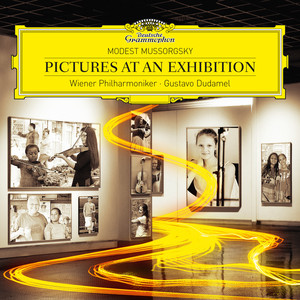 | Pictures at an Exhibition (Orch. Ravel): VI. Samuel Goldenberg und Schmuÿle | Modest Mussorgsky, Wiener Philharmoniker, Gustavo Dudamel | F♯ Minor | 1 | 11A | 114 BPM | |
 | Symphonie fantastique, Op. 14: Marche au supplice (Allegro non troppo) | Hector Berlioz, Swedish Radio Symphony Orchestra, Daniel Harding | B♭ Major | 2 | 6B | 147 BPM | |
 | Warsaw Concerto | Richard Addinsell, Jean-Yves Thibaudet, BBC Symphony Orchestra, Hugh Wolff | B Major | 1 | 1B | 76 BPM | |
 | Piano Concerto No. 3, Op. 30 in D Minor: Intermezzo: Adagio | Sergei Rachmaninoff, Vladimir Horowitz, Eugene Ormandy | D♭ Major | 0 | 3B | 71 BPM | |
 | Symphonie fantastique, H. 48: II. Un bal. Valse | Hector Berlioz, Orchestre de Paris, Klaus Mäkelä | A Major | 1 | 11B | 100 BPM | |
 | Mahler: Blumine | Gustav Mahler, San Francisco Symphony, Michael Tilson Thomas | C Major | 1 | 8B | 100 BPM | |
 | 21 Hungarian Dances, WoO 1: Hungarian Dance No. 6 in D-Flat Major | Johannes Brahms, Seattle Symphony Orchestra, Gerard Schwarz | D Major | 1 | 10B | 81 BPM | |
 | Simple Symphony, Op. 4: II. Playful Pizzicato | Benjamin Britten, Metamorphose String Orchestra, Pavel Lyubomudrov | C Major | 2 | 8B | 175 BPM | |
 | Boris Godunov | Modest Mussorgsky, Choir of the Bolshoi Theater, Yuri Mazurok, Alexandr Ognivcev, Orchestra of The Bolshoi Theater, Vladimir Atlantov, Mark Ermler, Yevgeny Nesterenko, Yelena Obratsova | E Minor | 2 | 9A | 102 BPM | |
 | Carmen Suite No. 1 (Arr. E. Guiraud): IV. Séguedille | Georges Bizet, Orquestra Simfònica de Barcelona i Nacional de Catalunya, Pablo González | G Minor | 0 | 6A | 66 BPM | |
 | Holberg Suite, Op. 40: II. Sarabande (Andante) | Edvard Grieg, Gothenburg Symphony Orchestra, Neeme Järvi | A Major | 1 | 11B | 87 BPM | |
 | Suk: Serenade for Strings in E-Flat Major, Op. 6: IV. Allegro giocoso ma non troppo presto | Josef Suk, Christopher Warren-Green, Andrew Shulman, Lyn Fletcher, Roger Chase, Nigel Warren-Green, London Chamber Orchestra | B♭ Major | 2 | 6B | 106 BPM | |
 | Ruslan and Lyudmila: Overture | Mikhail Glinka, London Symphony Orchestra, Sir Georg Solti | D Major | 3 | 10B | 83 BPM | |
 | Ruslan and Ludmila: Overture | Mikhail Glinka, The USSR Bolshoy Theatre Orchestra, Yevgeny Svetlanov | F Major | 3 | 7B | 81 BPM |
- ISRC
- GBAJU0400082
- Label
- L-M Records/RCA Records