- BPM
- 126
- Key
- A Major
- Camelot
- 11B
Pavane in F-Sharp Minor, Op. 50 - Adaption for Ballet Classes: Demi y grand plié. Metre 4/4 by Gabriel Fauré, MetodoVadim Song Details
Gabriel Fauré, MetodoVadim's ' "Pavane in F-Sharp Minor, Op. 50 - Adaption for Ballet Classes: Demi y grand plié. Metre 4/4" was released on its scheduled release date, August 26, 2018. The duration of This song is about two minutes long, specifically at 2:46. This song does not appear to have any foul language. Pavane in F-Sharp Minor, Op. 50 - Adaption for Ballet Classes: Demi y grand plié. Metre 4/4's duration is considered a little bit shorter than the average duration of a typical track. There are a total of 19 in the song's album "Piano music for Intermediate Ballet Class". In this album, this song's track order is #10. Furthermore, we believe that the track originated from Switzerland. Based on our statistics, Pavane in F-Sharp Minor, Op. 50 - Adaption for Ballet Classes: Demi y grand plié. Metre 4/4's popularity is unknown right now. The overall mood can be danceable to some, especially with it's high amount of postive energy.
BPM and Tempo
With Pavane in F-Sharp Minor, Op. 50 - Adaption for Ballet Classes: Demi y grand plié. Metre 4/4 by Gabriel Fauré, MetodoVadim having a BPM of 126 with a half-time of 63 BPM and a double-time of 252 BPM, we would consider this track to have a Allegro (fast, quick, and bright) tempo marking. Because of this, we believe that the song has an overall fast tempo. Looking at the BPM of this song, this song might go great with walking. The time signature for this track is 4/4.
Music Key
This song is in the music key of A Major. Or for those who are familiar with the camelot wheel, this song has a camelot key of 11B. So, the perfect camelot match for 11B would be either 11B or 12A. While, 12B can give you a low energy boost. For moderate energy boost, you would use 8B and a high energy boost can either be 1B or 6B. Though, if you want a low energy drop, you should looking for songs with either a camelot key of 11A or 10B will give you a low energy drop, 2B would be a moderate one, and 9B or 4B would be a high energy drop. Lastly, 8A allows you to change the mood.
Want to find the BPM and music key for other songs? Check out our BPM and Key Finder page!
- Popularity
- 0%
- Loudness
- -20.505 dB
- Acousticness
- 92%
- Danceability
- 59%
- Energy
- 5%
- Instrumentalness
- 97%
- Liveness
- 8%
- Loudness
- 66%
- Speechiness
- 26%
- Valence
- 78%
Recommendations
| Track | Artist | Key | Energy | Camelot | BPM | ||
|---|---|---|---|---|---|---|---|
 | Andante Festivo | Jean Sibelius, Gothenburg Symphony Orchestra, Neeme Järvi | G Major | 1 | 9B | 86 BPM | |
 | Rusalka, Op. 114, Act I: Song to the Moon | Antonín Dvořák, Pablo Ferrandez, Martin Fröst, Swedish Chamber Orchestra | D Minor | 1 | 7A | 109 BPM | |
 | Romance "O pourquoi donc" in E Minor, S. 169 | Franz Liszt, Lang Lang | E Minor | 0 | 9A | 67 BPM | |
 | Lyric Pieces, Book 5, Op. 54: Nocturne | Edvard Grieg, Alessio Bax | C Major | 0 | 8B | 72 BPM | |
 | Songs Without Words, Book VI Opus 67: No. 2 in F-Sharp Minor | Felix Mendelssohn, Bertrand Chamayou | F♯ Minor | 1 | 11A | 69 BPM | |
 | Liszt: Lieder aus Franz Schubert's "Schwanengesang", S. 560: No. 7 Ständchen | Franz Liszt, Mariam Batsashvili | A Minor | 1 | 8A | 120 BPM | |
 | Cello Sonata in B-Flat Major, Op. 46: 2. Andante sostenuto | Louise Farrenc, David Berlin, Benjamin Martin | A♭ Major | 0 | 4B | 65 BPM | |
 | Étude No. 3: Ballade | Marie Awadis | D♭ Major | 0 | 3B | 127 BPM | |
 | Dreaming, Op. 15: No. 3 | Amy Beach, Eline Marlene | D♭ Major | 0 | 3B | 75 BPM | |
 | Mendelssohn: 6 Lieder ohne Worte, Book 6, Op. 67: II. Allegro leggiero | Felix Mendelssohn, Leif Ove Andsnes | F♯ Minor | 1 | 11A | 182 BPM | |
 | 12 Songs, Op. 21: V. Lilacs (Transcr. Rachmaninoff for Solo Piano) | Sergei Rachmaninoff, Sergei Babayan | A♭ Major | 0 | 4B | 78 BPM | |
 | Enigma Variations, Op. 36: Var. 9. Adagio "Nimrod" | Edward Elgar, BBC Symphony Orchestra, Leonard Bernstein | E♭ Major | 0 | 5B | 79 BPM | |
 | Saint-Saëns: Le carnaval des animaux, R 125: XIII. Le cygne | Camille Saint-Saëns, Güher Pekinel, Éric Levionnais, Süher Pekinel | E♭ Major | 1 | 5B | 82 BPM | |
 | Pavane, Op. 50 | Gabriel Fauré, Sinfonieorchester Basel, Ivor Bolton | F♯ Minor | 0 | 11A | 66 BPM | |
 | Violin Concerto No. 1 in G Minor, Op. 26: III. Allegro energico | Max Bruch, Itzhak Perlman, Bernard Haitink, Royal Concertgebouw Orchestra | G Major | 3 | 9B | 97 BPM | |
 | Herz und Mund und Tat und Leben, Cantata BWV 147: Jesu, Joy of Man’s Desiring (Transcr. Hess for Piano) | Johann Sebastian Bach, Daniil Trifonov | G Major | 0 | 9B | 82 BPM | |
 | Lieder ohne Worte (Songs without Words), Book 2, Op. 30: No. 7 in E-Flat Major, Op. 30, No. 1, MWV U103 | Felix Mendelssohn, Péter Nagy | E♭ Major | 0 | 5B | 65 BPM | |
 | Three Postludes (1981/82): Postlude No. 3 | Valentin Silvestrov, Anja Lechner, Silke Avenhaus | D Major | 0 | 10B | 70 BPM | |
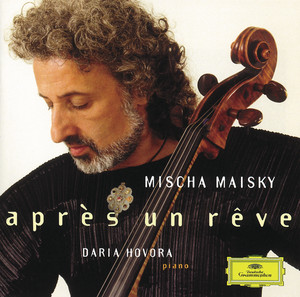 | Les chemins de l'amour, FP. 106 | Francis Poulenc, Mischa Maisky, Daria Hovora | E Major | 1 | 12B | 67 BPM | |
 | Gypsy Melodies, Op. 55, B. 104: IV. Songs My Mother Taught Me (Adapt. for Cello and Orchestra) | Antonín Dvořák, Camille Thomas, Brussels Philharmonic, Mathieu Herzog | C Minor | 1 | 5A | 100 BPM | |
 | Messiah, HWV 56, Pt. I: Pastoral Symphony, "Pifa" (Arr. L. Stokowski) | George Frideric Handel, Bournemouth Symphony Orchestra, José Serebrier | C Major | 0 | 8B | 84 BPM | |
 | Dvořák: Rusalka, Op. 114, B. 203, Act 1: Song to the Moon | Antonín Dvořák, Edgar Moreau, Jérémie Moreau | F♯ Major | 0 | 2B | 138 BPM | |
 | Gnossiennes: No. 1 Lent | Erik Satie, Alice Sara Ott | C Minor | 0 | 5A | 141 BPM | |
 | Abendlied, Op. 85, No. 12 (Arr. for String Orchestra by Johan Svendsen) | Robert Schumann, Lucerne Festival Strings, Daniel Dodds | B Major | 1 | 1B | 113 BPM | |
 | La lisonjera, Op. 50 | Cécile Chaminade, Péter Nagy | D♭ Major | 1 | 3B | 132 BPM |
- ISRC
- CH6541862523
- Label
- L-M Records/RCA Records