- BPM
- 235
- Key
- D♭ Major
- Camelot
- 3B
King David, H 37, Pt. 3: Thee Will I Love, O Lord by Arthur Honegger, Randall Scarlata, West Chester University Mastersingers, West Chester University Concert Choir, West Chester University Chamber Ensemble, Ryan Kelly Song Details
"King David, H 37, Pt. 3: Thee Will I Love, O Lord" by Arthur Honegger, Randall Scarlata, West Chester University Mastersingers, West Chester University Concert Choir, West Chester University Chamber Ensemble, Ryan Kelly had its release date on January 8, 2016. The duration of This song is about two minutes long, specifically at 2:27. This song does not appear to have any foul language. King David, H 37, Pt. 3: Thee Will I Love, O Lord's duration is considered a little bit shorter than the average duration of a typical track. The track order of this song in Arthur Honegger, West Chester University Mastersingers, West Chester University Concert Choir, West Chester University Chamber Ensemble, Ryan Kelly's "Honegger: King David, H 37" album is number 24 out of 27. On top of that, United States appears to be the country where this track was created. The popularity of King David, H 37, Pt. 3: Thee Will I Love, O Lord is currently unknown right now. In our opinion, the overall tone is not very danceable and projects negative sounds, such as being sad, depressed, or angry.
BPM and Tempo
We consider the tempo marking of King David, H 37, Pt. 3: Thee Will I Love, O Lord by Arthur Honegger, Randall Scarlata, West Chester University Mastersingers, West Chester University Concert Choir, West Chester University Chamber Ensemble, Ryan Kelly to be Prestissimo (even faster than presto) because the track has a tempo of 235 BPM, a half-time of 118BPM, and a double-time of 470 BPM. The time signature for this track is 3/4.
Music Key
D♭ Major is the music key of this track. This also means that this song has a camelot key of 3B. So, the perfect camelot match for 3B would be either 3B or 4A. While, 4B can give you a low energy boost. For moderate energy boost, you would use 12B and a high energy boost can either be 5B or 10B. Though, if you want a low energy drop, you should looking for songs with either a camelot key of 3A or 2B will give you a low energy drop, 6B would be a moderate one, and 1B or 8B would be a high energy drop. Lastly, 12A allows you to change the mood.
Want to find the BPM and music key for other songs? Check out our BPM and Key Finder page!
- Popularity
- 0%
- Loudness
- -27.374 dB
- Acousticness
- 96%
- Danceability
- 14%
- Energy
- 2%
- Instrumentalness
- 78%
- Liveness
- 25%
- Loudness
- 54%
- Speechiness
- 4%
- Valence
- 6%
Recommendations
| Track | Artist | Key | Energy | Camelot | BPM | ||
|---|---|---|---|---|---|---|---|
 | L'oiseau de feu, K. 10. Suite 1919: VI. Berceuse | Igor Stravinsky, Budapest Festival Orchestra, Iván Fischer | A Minor | 0 | 8A | 103 BPM | |
 | Turangalîla-Symphonie: X. Final | Olivier Messiaen, Yuja Wang, Cécile Lartigau, Boston Symphony Orchestra, Andris Nelsons | D♭ Major | 5 | 3B | 87 BPM | |
 | Serenade for String Orchestra in C Minor, Op. posth.: VI. Andante sostenuto | Max Bruch, George Hanson, Sinfonieorchester Wuppertal | E♭ Major | 0 | 5B | 87 BPM | |
| Serenade for String Orchestra in C Minor, Op. posth.: III. Allegro | Max Bruch, George Hanson, Sinfonieorchester Wuppertal | A Minor | 1 | 8A | 88 BPM | |
 | Symphony No. 5 "Di Tre re": III. Allegro marcato | Arthur Honegger, Neeme Järvi, Danish National Symphony Orchestra | D Minor | 3 | 7A | 133 BPM | |
 | Bliss: Suite from Miracle in the Gorbals: IV. The Young Lovers | Arthur Bliss, Paavo Berglund, Bournemouth Symphony Orchestra | A Minor | 3 | 8A | 111 BPM | |
 | Symphony No. 1 in F Minor, Op. 10: III. Lento – Largo – Lento – | Dmitri Shostakovich, Boston Symphony Orchestra, Andris Nelsons | F♯ Minor | 0 | 11A | 78 BPM | |
 | Jeanne d'Arc au bûcher, Scène I: Les voix du ciel | Arthur Honegger, Orquestra Simfònica de Barcelona i Nacional de Catalunya, Marc Soustrot, Madrigal Choir, Lieder Càmera Choir | A Major | 0 | 11B | 171 BPM | |
 | Variations on a theme by Haydn, Op. 56a "St. Anthony Variations": Finale | Johannes Brahms, Pittsburgh Symphony Orchestra, Marek Janowski | C Major | 1 | 8B | 60 BPM | |
 | D'un matin de printemps | Lili Boulanger, Yan Pascal Tortelier, BBC Philharmonic | C Major | 1 | 8B | 130 BPM | |
 | 5 Bagatelles, Op. 23: No. 2, Romance | Gerald Finzi, Anastasia Schmidlin, Denis Zhdanov | E♭ Major | 0 | 5B | 106 BPM | |
 | The Dream of Gerontius, Op. 38: No. 1, Prelude to Part One | Edward Elgar, Anne Sofie von Otter, Sir Colin Davis, London Symphony Orchestra | D Minor | 0 | 7A | 79 BPM | |
 | Falla: El sombrero de tres picos, Pt. 2: Danza final | Manuel de Falla, Sir Neville Marriner, Academy of St. Martin in the Fields | E♭ Major | 0 | 5B | 106 BPM | |
 | Le sacre du printemps / Pt. 2: Le sacrifice: XI. Glorification d'élue | Igor Stravinsky, Orchestre de Paris, Klaus Mäkelä | C Minor | 2 | 5A | 89 BPM | |
 | Fantasia & Fugue in G Minor, BWV 542 "The Great" (Arr. for Orchestra by Sir Andrew Davis): I. Fantasia | Johann Sebastian Bach, Martyn Brabbins, BBC Philharmonic | E♭ Major | 0 | 5B | 73 BPM | |
 | Rugby, H.67 | Arthur Honegger, Leonard Bernstein, New York Philharmonic | D Major | 4 | 10B | 142 BPM | |
| Turangalîla-Symphonie: IV. Chant d'amour 2 | Olivier Messiaen, Yuja Wang, Cécile Lartigau, Boston Symphony Orchestra, Andris Nelsons | D♭ Major | 5 | 3B | 87 BPM | |
 | Ligeti : Romanian Concerto : III Adagio, ma non troppo | György Ligeti, Jonathan Nott, Berliner Philharmoniker | F Major | 0 | 7B | 73 BPM | |
 | Symphony No. 2 in D Major, Op. 43: III. Vivacissimo | Jean Sibelius, Oslo Philharmonic Orchestra, Klaus Mäkelä | F♯ Minor | 1 | 11A | 66 BPM | |
 | Violin Sonata in E Minor, P. 85: IV. Giga. Vivace assai (After J.S. Bach's BWV 1023) | Ottorino Respighi, Ilkka Talvi, Seattle Symphony Orchestra, Gerard Schwarz | E Minor | 0 | 9A | 121 BPM | |
 | Symphony No. 1 in E major: II. Sehr langsam | Hans Rott, Paavo Järvi | E Major | 1 | 12B | 133 BPM | |
 | Elegie I. In Memoriam: Adagio | Lodewijk Mortelmans, Brussels Philharmonic, Silveer Vandenbroeck | E♭ Major | 0 | 5B | 106 BPM | |
 | Lutoslawski : Concerto for Orchestra : II Cappricio notturno e Arioso (Vivace) | Witold Lutosławski, Daniel Barenboim, Chicago Symphony Orchestra | B♭ Minor | 1 | 3A | 158 BPM | |
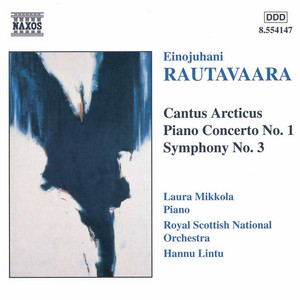 | Symphony No. 3: I. Langsom, breit, ruhig | Einojuhani Rautavaara, Royal Scottish National Orchestra, Hannu Lintu | C Minor | 1 | 5A | 82 BPM | |
 | Martinu: Piano Quartet No. 1, H. 287: II. Adagio | Bohuslav Martinů, Domus | D Minor | 1 | 7A | 85 BPM |
- ISRC
- USVZX1511124
- Label
- L-M Records/RCA Records