- BPM
- 184
- Key
- G Major
- Camelot
- 9B
Saint-Saëns: Le carnaval des animaux, R 125: I. Introduction et marche royale du lion by Camille Saint-Saëns, Louis Frémaux, Brenda Lucas, John Ogdon, City Of Birmingham Symphony Orchestra Song Details
"Saint-Saëns: Le carnaval des animaux, R 125: I. Introduction et marche royale du lion" by Camille Saint-Saëns, Louis Frémaux, Brenda Lucas, John Ogdon, City Of Birmingham Symphony Orchestra had its release date on February 5, 2007. The duration of This song is about two minutes long, specifically at 2:02. This song does not appear to have any foul language. Saint-Saëns: Le carnaval des animaux, R 125: I. Introduction et marche royale du lion's duration is considered a little bit shorter than the average duration of a typical track. There are a total of 21 in the song's album "Saint-Saëns: Symphony No. 3 "Organ Symphony", The Carnival of the Animals, Danse macabre & Bacchanale from Samson and Delilah". In this album, this song's track order is #2. Furthermore, we believe that the track originated from United Kingdom. The popularity of Saint-Saëns: Le carnaval des animaux, R 125: I. Introduction et marche royale du lion is currently not that popular right now. In our opinion, the overall tone is not very danceable and projects negative sounds, such as being sad, depressed, or angry.
BPM and Tempo
With Saint-Saëns: Le carnaval des animaux, R 125: I. Introduction et marche royale du lion by Camille Saint-Saëns, Louis Frémaux, Brenda Lucas, John Ogdon, City Of Birmingham Symphony Orchestra having a BPM of 184 with a half-time of 92 BPM and a double-time of 368 BPM, we would consider this track to have a Presto (very, very fast) tempo marking. Because of this, we believe that the song has an overall fast tempo. The time signature for this track is 4/4.
Music Key
G Major is the music key of this track. Or for those who are familiar with the camelot wheel, this song has a camelot key of 9B. So, the perfect camelot match for 9B would be either 9B or 10A. While, 10B can give you a low energy boost. For moderate energy boost, you would use 6B and a high energy boost can either be 11B or 4B. Though, if you want a low energy drop, you should looking for songs with either a camelot key of 9A or 8B will give you a low energy drop, 12B would be a moderate one, and 7B or 2B would be a high energy drop. Lastly, 6A allows you to change the mood.
Want to find the BPM and music key for other songs? Check out our BPM and Key Finder page!
- Popularity
- 6%
- Loudness
- -19.04 dB
- Acousticness
- 97%
- Danceability
- 31%
- Energy
- 27%
- Instrumentalness
- 90%
- Liveness
- 7%
- Loudness
- 68%
- Speechiness
- 5%
- Valence
- 14%
Recommendations
| Track | Artist | Key | Energy | Camelot | BPM | ||
|---|---|---|---|---|---|---|---|
 | 6 Album Leaves, Op. 2, JB 1:51: No. 2 in A Minor, Chanson. Moderato | Bedřich Smetana, Jitka Čechová | A Minor | 0 | 8A | 66 BPM | |
 | Sonata In G Minor For Cello & Piano, Op. 19: 3. Andante | Sergei Rachmaninoff, Alisa Weilerstein, Inon Barnatan | F Major | 2 | 7B | 82 BPM | |
 | Symphony No. 10 in E Minor, Op. 93: II. Allegro | Dmitri Shostakovich, Royal Liverpool Philharmonic Orchestra, Vasily Petrenko | B♭ Minor | 6 | 3A | 89 BPM | |
 | Elgar: Salut d'amour, Op. 12 | Edward Elgar, Min Kym, Gordon Back | E Major | 1 | 12B | 86 BPM | |
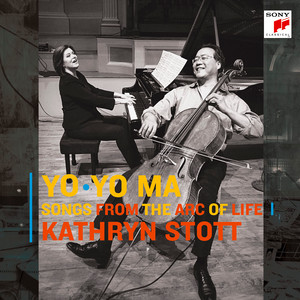 | Was it a Dream?, Op. 37, No. 4 | Jean Sibelius, Yo-Yo Ma, Kathryn Stott | A♭ Minor | 1 | 1A | 74 BPM | |
 | Serenade | Rinblade, Sarvanss, Jairos | C Major | 2 | 8B | 118 BPM | |
 | Clarinet Sonata in E-Flat Major, Op. 167, R. 147: Clarinet Sonata in E-Flat Major, Op. 167: I. Allegretto | Camille Saint-Saëns, Kimball Sykes, Stephane Lemelin | E♭ Major | 0 | 5B | 128 BPM | |
 | Orchestral Suite No. 3 in D Major, BWV 1068: II. Air "on the G String" | Johann Sebastian Bach, David Bell, Berliner Philharmoniker, Herbert von Karajan | D Major | 1 | 10B | 113 BPM | |
 | Myrthen, Op. 25 - Version for Cello and Piano: XXIV. Du bist wie eine Blume | Robert Schumann, Kian Soltani, Aaron Pilsan | F Major | 0 | 7B | 116 BPM | |
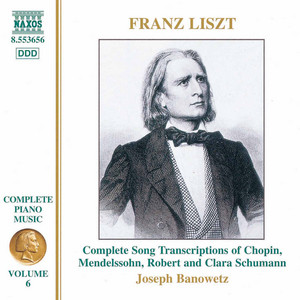 | Chopin - 6 Chants Polonais, S480/R145: No. 2. Fruhling(Wiosna, Spring) | Joseph Banowetz, Franz Liszt | G Major | 1 | 9B | 108 BPM | |
 | Nocturnes n°7 en mi majeur | Francis Poulenc, Alexandre Tharaud | E♭ Major | 1 | 5B | 87 BPM | |
 | Intermezzo No. 1 | Manuel Ponce, Simon Ghraichy | E Minor | 1 | 9A | 67 BPM | |
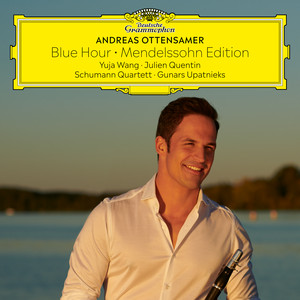 | Lieder ohne Worte I, Op. 19b: VI. Andante sostenuto "Venetian Gondola Song", MWV U78 (Arr. Ottensamer for Clarinet & Strings) | Felix Mendelssohn, Andreas Ottensamer, Schumann Quartett, Gunars Upatnieks | G Minor | 0 | 6A | 84 BPM | |
 | Adagio in D Minor, BWV 974: II. Adagio | Johann Sebastian Bach, Alexandre Tharaud | D Minor | 0 | 7A | 65 BPM | |
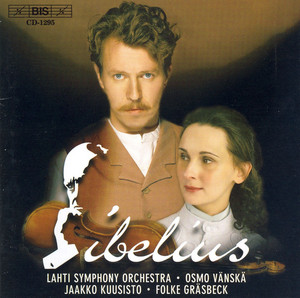 | Andante festivo, JS 34b (Version for String Orchestra & Timpani) | Jean Sibelius, Sinfonia Lahti, Osmo Vänskä | G Major | 2 | 9B | 57 BPM | |
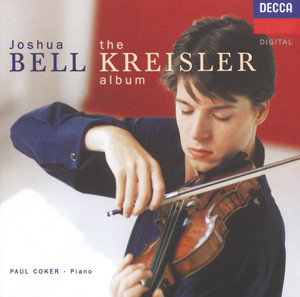 | Liebesleid, Old Viennese Dance No. 2 | Fritz Kreisler, Joshua Bell, Paul Coker | A Major | 1 | 11B | 74 BPM | |
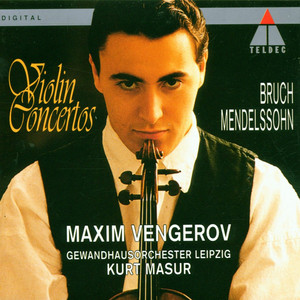 | Bruch: Violin Concerto No. 1 in G Minor, Op. 26: I. Prelude. Allegro moderato | Max Bruch, Maxim Vengerov, Kurt Masur, Gewandhausorchester | E♭ Major | 1 | 5B | 113 BPM | |
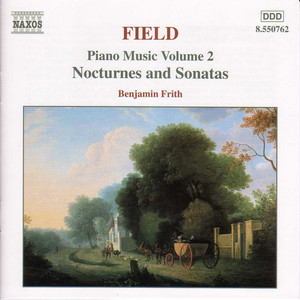 | Nocturne No. 10 In E Minor | Benjamin Frith, John Field | E Minor | 0 | 9A | 65 BPM | |
 | Adagio in G Minor "Albinoni's Adagio" | Remo Giazotto, Leon Spierer, David Bell, Berliner Philharmoniker, Herbert von Karajan | G Major | 0 | 9B | 62 BPM | |
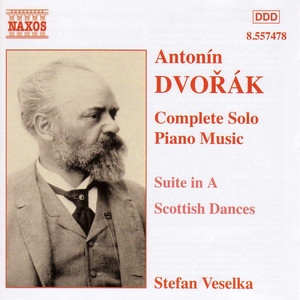 | 2 Pieces, Op. Posth., B. 188: No. 1, Lullaby in G Major | Antonín Dvořák, Stefan Veselka | G Major | 0 | 9B | 66 BPM | |
| Liebesfreud | Fritz Kreisler, Joshua Bell, Paul Coker | F Major | 1 | 7B | 99 BPM | |
 | The Lark | Mikhail Glinka, Evgeny Kissin | B♭ Minor | 0 | 3A | 96 BPM | |
 | Capriol Suite: 5. Pied-en- l'air | Peter Warlock, Academy of St. Martin in the Fields, Nicholas Kraemer, Sir Neville Marriner | G Major | 1 | 9B | 113 BPM | |
 | Danse macabre, Op. 40 | Camille Saint-Saëns, Royal Stockholm Philharmonic Orchestra, James DePreist | G Minor | 1 | 6A | 102 BPM | |
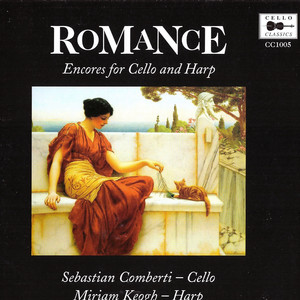 | Carnival of the Animals: The Swan - Arranged for Cello and Harp by Miriam Keogh | Camille Saint-Saëns, None, Sebastian Comberti, Miriam Keogh | G Major | 1 | 9B | 123 BPM |
- ISRC
- GBAYD8900266
- Label
- L-M Records/RCA Records