- BPM
- 138
- Key
- E♭ Major
- Camelot
- 5B
The Motherland Song Book, Vol. 3 (Excerpts): No. 8, We Be Three Poor Mariners by Ralph Vaughan Williams, Roderick Williams, William Vann, Helen Ashby, Kate Ashby, Cara Curran, Benedict Hymas, James Arthur, Nicholas Ashby Song Details
Ralph Vaughan Williams, Roderick Williams, William Vann, Helen Ashby, Kate Ashby, Cara Curran, Benedict Hymas, James Arthur, Nicholas Ashby's ' "The Motherland Song Book, Vol. 3 (Excerpts): No. 8, We Be Three Poor Mariners" was released on its scheduled release date, September 17, 2021. With This song being less than two minutes long, at 1:11, we are fairly confident that this song is not explicit and is safe for all ages. Based on the duration of this song, this song duration is much smaller than the average song duration. There are a total of 21 in the song's album "Ralph Vaughan Williams: Folk Songs, Vol. 3". In this album, this song's track order is #20. Based on our statistics, The Motherland Song Book, Vol. 3 (Excerpts): No. 8, We Be Three Poor Mariners's popularity is not that popular right now. The overall mood can be danceable to some, especially with it's high amount of postive energy.
BPM and Tempo
With The Motherland Song Book, Vol. 3 (Excerpts): No. 8, We Be Three Poor Mariners by Ralph Vaughan Williams, Roderick Williams, William Vann, Helen Ashby, Kate Ashby, Cara Curran, Benedict Hymas, James Arthur, Nicholas Ashby having a BPM of 138 with a half-time of 69 BPM and a double-time of 276 BPM, we would consider this track to have a Allegro (fast, quick, and bright) tempo marking. Because of this, we believe that the song has an overall fast tempo. Looking at the BPM of this song, this song might go great with walking. The time signature for this track is 4/4.
Music Key
This song has a musical key of E♭ Major. Or for those who are familiar with the camelot wheel, this song has a camelot key of 5B. So, the perfect camelot match for 5B would be either 5B or 6A. While, 6B can give you a low energy boost. For moderate energy boost, you would use 2B and a high energy boost can either be 7B or 12B. Though, if you want a low energy drop, you should looking for songs with either a camelot key of 5A or 4B will give you a low energy drop, 8B would be a moderate one, and 3B or 10B would be a high energy drop. Lastly, 2A allows you to change the mood.
Want to find the BPM and music key for other songs? Check out our BPM and Key Finder page!
- Popularity
- 2%
- Loudness
- -20.578 dB
- Acousticness
- 99%
- Danceability
- 49%
- Energy
- 20%
- Instrumentalness
- 0%
- Liveness
- 11%
- Loudness
- 66%
- Speechiness
- 5%
- Valence
- 78%
Recommendations
| Track | Artist | Key | Energy | Camelot | BPM | ||
|---|---|---|---|---|---|---|---|
 | Capriol Suite: 1. Basse-danse | Peter Warlock, Academy of St. Martin in the Fields, Nicholas Kraemer, Sir Neville Marriner | D Minor | 2 | 7A | 133 BPM | |
 | Prelude | Ralph Vaughan Williams, English Northern Philharmonia, David Lloyd-Jones | E♭ Minor | 0 | 2A | 83 BPM | |
 | Prince Igor: Polovtsian Dances (Version for Chorus) | Alexander Borodin, Kiev Chamber Choir, Ukraine National Radio Symphony Orchestra, Theodore Kuchar | A Major | 2 | 11B | 110 BPM | |
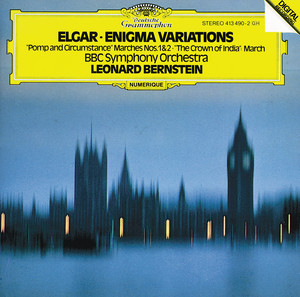 | Enigma Variations, Op. 36: Var. 1. L'istesso tempo "C.A.E." | Edward Elgar, BBC Symphony Orchestra, Leonard Bernstein | G Minor | 0 | 6A | 81 BPM | |
 | An English Suite: VI. Air | Hubert Parry, London Symphony Orchestra, Sir Adrian Boult | G Major | 0 | 9B | 91 BPM | |
 | The Mausoleum at Halicarnassus - From "Seven Wonders" Suite | Stuart Mitchell, Czech National Symphony Orchestra, Paul Bateman | B Minor | 0 | 10A | 75 BPM | |
 | A Moorside Suite, H. 173: Nocturne | Gustav Holst, Royal Northern Sinfonia, David Lloyd-Jones | B Minor | 0 | 10A | 80 BPM | |
 | Pelléas et Mélisande Suite, Op. 80: III. Sicilienne. Allegretto molto moderato | Gabriel Fauré, Berliner Philharmoniker, Daniel Barenboim | E♭ Major | 0 | 5B | 56 BPM | |
 | Peer Gynt Suite No.2 op. 55 Abduction and Ingrid's Lament Allegro furioso-Andante doloroso) | Academy of St. Martin in the Fields | G Minor | 0 | 6A | 133 BPM | |
 | Litolff: Concerto symphonique No. 4 in D Minor, Op. 102: II. Scherzo | Henry Litolff, San Francisco Symphony, Michael Tilson Thomas | D Minor | 3 | 7A | 122 BPM | |
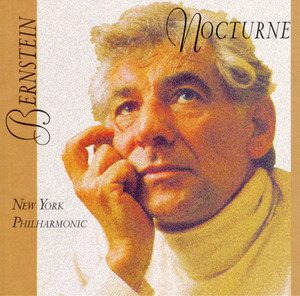 | Sir John in Love: Fantasia on Greensleeves | Ralph Vaughan Williams, Leonard Bernstein, New York Philharmonic, David Nadien | C Minor | 1 | 5A | 105 BPM | |
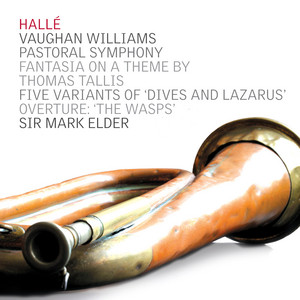 | Symphony No. 3 - 'Pastoral Symphony': I. Molto moderato | Ralph Vaughan Williams, Hallé, Sir Mark Elder | A Minor | 0 | 8A | 81 BPM | |
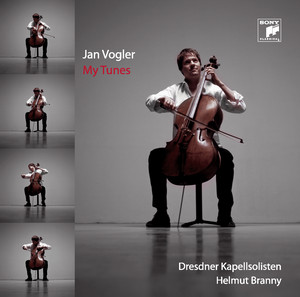 | Kol Nidrei, Op. 47 | Max Bruch, Jan Vogler, Helmut Branny | D Major | 1 | 10B | 136 BPM | |
 | Symphony No. 6 in B Minor, Op. 74 "Pathétique": II. Allegro con grazia | Pyotr Ilyich Tchaikovsky, Berliner Philharmoniker, Kirill Petrenko | D Major | 1 | 10B | 85 BPM | |
 | Suite No. 3, P. 172: III. Siciliana: Andantino | Ottorino Respighi, RTÉ National Symphony Orchestra | C Minor | 0 | 5A | 93 BPM | |
 | Violin Concerto No. 1 in G Minor, Op. 26: II. Adagio | Max Bruch, Itzhak Perlman, Bernard Haitink, Royal Concertgebouw Orchestra | E♭ Major | 1 | 5B | 87 BPM | |
 | Appalachian Spring: VII. Doppio movimento | Aaron Copland, Leonard Bernstein, New York Philharmonic | D♭ Major | 1 | 3B | 78 BPM | |
| Suite No. 3, P. 172: I. Italiana: Andantino | Ottorino Respighi, RTÉ National Symphony Orchestra | B♭ Major | 1 | 6B | 94 BPM | |
 | Sinding / Arr Sitt : Rustle of Spring | Christian Sinding, The Norwegian Radio Orchestra, Ari Rasilainen | F Minor | 2 | 4A | 90 BPM | |
 | Scheherazade: The Tale of the Kalendar Prince | Nikolai Rimsky-Korsakov, Lars Hjalmar Joakim | B Minor | 1 | 10A | 62 BPM | |
 | Symphony No. 3, "Pastoral Symphony": I. Molto moderato | Ralph Vaughan Williams, Brendan O'Brien, Patricia Rozario, Bournemouth Symphony Orchestra, Kees Bakels | C Major | 0 | 8B | 88 BPM | |
 | Hummel: Trumpet Concerto In E Flat - Iii Rondo | Johann Nepomuk Hummel, Tine Thing Helseth | E♭ Major | 2 | 5B | 144 BPM | |
| Scheherazade: The Fight | Nikolai Rimsky-Korsakov, Joakim Svenheden | E Minor | 1 | 9A | 80 BPM | |
![Black Swan: Black Swan (after Brahms' 6 Piano Pieces, Op. 118: No. 2, Intermezzo in A Major) [After Brahms' 6 Piano Pieces, Op. 118, No. 2. Intermezzo in A Major] by Bright Sheng, Seattle Symphony Orchestra, Gerard Schwarz](https://i.scdn.co/image/ab67616d00001e026b866f11d196d93dc5fe7ddc) | Black Swan: Black Swan (after Brahms' 6 Piano Pieces, Op. 118: No. 2, Intermezzo in A Major) [After Brahms' 6 Piano Pieces, Op. 118, No. 2. Intermezzo in A Major] | Bright Sheng, Seattle Symphony Orchestra, Gerard Schwarz | G Major | 3 | 9B | 80 BPM | |
| Suite: Graceful Dance | Ernest Tomlinson, Royal Northern Sinfonia, David Lloyd-Jones | D Major | 3 | 10B | 133 BPM |
- ISRC
- This song does not have an ISRC.
- Label
- L-M Records/RCA Records