- BPM
- 99
- Key
- A Major
- Camelot
- 11B
The Rake's Progress, Act II Scene 2: Trio. Could It then… (Anne, Tom, Baba) by Igor Stravinsky, Jayne West, Jon Garrison, Arthur Woodley, John Cheek, Shirley Love, Wendy White, Melvin Lowery, Jeffrey Johnson, Gregg Smith Singers, Orchestra of St. Luke's, Robert Craft Song Details
Igor Stravinsky, Jayne West, Jon Garrison, Arthur Woodley, John Cheek, Shirley Love, Wendy White, Melvin Lowery, Jeffrey Johnson, Gregg Smith Singers, Orchestra of St. Luke's, Robert Craft's ' "The Rake's Progress, Act II Scene 2: Trio. Could It then… (Anne, Tom, Baba)" was released on its scheduled release date, May 26, 2009. The duration of This song is about two minutes long, specifically at 2:45. This song does not appear to have any foul language. The Rake's Progress, Act II Scene 2: Trio. Could It then… (Anne, Tom, Baba)'s duration is considered a little bit shorter than the average duration of a typical track. There are a total of 73 in the song's album "Stravinsky, I.: Rake's Progress (The) [Opera]". In this album, this song's track order is #37. Furthermore, we believe that the track originated from Hong Kong. In terms of popularity, The Rake's Progress, Act II Scene 2: Trio. Could It then… (Anne, Tom, Baba) is currently unknown. Since there is more of a neutral sound being played, this makes the track somewhat danceable.
BPM and Tempo
With The Rake's Progress, Act II Scene 2: Trio. Could It then… (Anne, Tom, Baba) by Igor Stravinsky, Jayne West, Jon Garrison, Arthur Woodley, John Cheek, Shirley Love, Wendy White, Melvin Lowery, Jeffrey Johnson, Gregg Smith Singers, Orchestra of St. Luke's, Robert Craft having a BPM of 99 with a half-time of 50 BPM and a double-time of 198 BPM, we would consider this track to have a Andante (at a walking pace) tempo marking. Because of this, we believe that the song has an overall slow tempo. The time signature for this track is 4/4.
Music Key
This song is in the music key of A Major. Or for those who are familiar with the camelot wheel, this song has a camelot key of 11B. So, the perfect camelot match for 11B would be either 11B or 12A. While, 12B can give you a low energy boost. For moderate energy boost, you would use 8B and a high energy boost can either be 1B or 6B. Though, if you want a low energy drop, you should looking for songs with either a camelot key of 11A or 10B will give you a low energy drop, 2B would be a moderate one, and 9B or 4B would be a high energy drop. Lastly, 8A allows you to change the mood.
Want to find the BPM and music key for other songs? Check out our BPM and Key Finder page!
- Popularity
- 0%
- Loudness
- -21.165 dB
- Acousticness
- 97%
- Danceability
- 41%
- Energy
- 18%
- Instrumentalness
- 0%
- Liveness
- 43%
- Loudness
- 65%
- Speechiness
- 6%
- Valence
- 54%
Recommendations
| Track | Artist | Key | Energy | Camelot | BPM | ||
|---|---|---|---|---|---|---|---|
 | Pelléas et Mélisande, CD 93, Suite (Arr. Leinsdorf): II. Act II. Opening - Interlude 3 - Interlude 4 | Claude Debussy, Berliner Philharmoniker, Claudio Abbado | B♭ Minor | 0 | 3A | 111 BPM | |
 | Symphony No. 7 in A Major, Op. 92: III. Presto. Trio I und II. Assai meno presto | Ludwig van Beethoven, Berliner Philharmoniker, Kirill Petrenko | D Major | 2 | 10B | 105 BPM | |
 | In the Steppes of Central Asia | Alexander Borodin, Royal Philharmonic Orchestra, Vladimir Ashkenazy | A Major | 0 | 11B | 69 BPM | |
 | Le Sacre du Printemps - Revised version for Orchestra (published 1947) / Part 1: The Adoration of the Earth: The Augurs of Spring: Dances of the Young Girls | Igor Stravinsky, Berliner Philharmoniker, Herbert von Karajan | A♭ Minor | 3 | 1A | 104 BPM | |
| Nocturnes, CD 98: II. Fêtes | Claude Debussy, Berliner Philharmoniker, Claudio Abbado | A Major | 2 | 11B | 79 BPM | |
| Le Sacre du Printemps - Revised version for Orchestra (published 1947) / Part 2: The Sacrifice: Ritual Action of the Ancestors | Igor Stravinsky, Berliner Philharmoniker, Herbert von Karajan | D Minor | 0 | 7A | 108 BPM | |
 | Also sprach Zarathustra, Op. 30: II. Von den Hinterweltlern | Richard Strauss, Berliner Philharmoniker, Herbert von Karajan | A♭ Major | 0 | 4B | 78 BPM | |
 | Scheherazade: Calm at Sea | Nikolai Rimsky-Korsakov, Lars Hjalmar Joakim | E Major | 2 | 12B | 84 BPM | |
 | Pictures at an Exhibition (Orch. Ravel): II. The Old Castle | Modest Mussorgsky, Chicago Symphony Orchestra, Carlo Maria Giulini | A♭ Major | 0 | 4B | 136 BPM | |
 | Also sprach Zarathustra, Op. 30, TrV 176: Das Tanzlied - Das Nachtlied | Richard Strauss, Michel Schwalbé, Berliner Philharmoniker, Herbert von Karajan | C Major | 2 | 8B | 100 BPM | |
 | Saint-Saëns: Piano Concerto No. 2 in G Minor, Op. 22: I. Andante sostenuto | Camille Saint-Saëns, Bertrand Chamayou, Emmanuel Krivine, Orchestre National De France | G Minor | 2 | 6A | 94 BPM | |
 | Violin Concerto No. 1 In D Major, Op. 19: 2. Scherzo. Vivacissimo | Sergei Prokofiev, Gil Shaham, London Symphony Orchestra, André Previn | A Minor | 2 | 8A | 145 BPM | |
 | Symphony No. 1 in G Minor, Op. 13, TH 24, "Winter Daydreams": II. Adagio cantabile ma non tanto, "Land of Desolation, Land of Mist | Pyotr Ilyich Tchaikovsky, Mariss Jansons, Oslo Philharmonic Orchestra | B Minor | 2 | 10A | 139 BPM | |
 | The Rite of Spring: Part One: Adoration of the Earth: Dance of the Earth | Igor Stravinsky, Teodor Currentzis, musicAeterna | G Major | 5 | 9B | 89 BPM | |
| Pictures At An Exhibition: Gnomus | Modest Mussorgsky, Chicago Symphony Orchestra, Carlo Maria Giulini | B Major | 0 | 1B | 99 BPM | |
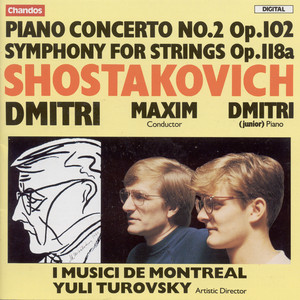 | Piano Concerto No. 2 in F Major, Op. 102: III. Allegro | Dmitri Shostakovich, I Musici de Montréal, Maxim Shostakovich | F Major | 3 | 7B | 164 BPM | |
 | Symphony No. 10 in E Minor, Op. 93: II. Allegro | Dmitri Shostakovich, Royal Liverpool Philharmonic Orchestra, Vasily Petrenko | B♭ Minor | 6 | 3A | 89 BPM | |
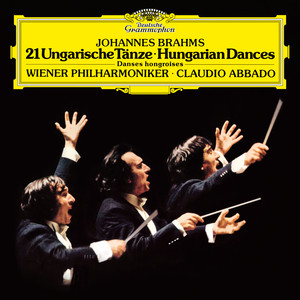 | 21 Hungarian Dances, WoO 1: Hungarian Dance No. 3 in F Major. Allegretto (Orch. Brahms) | Johannes Brahms, Wiener Philharmoniker, Claudio Abbado | F Major | 0 | 7B | 77 BPM | |
 | Symphonic Dances, Op. 45: II. Andante con moto (Tempo di valse) | Sergei Rachmaninoff, Berliner Philharmoniker, Lorin Maazel | C Minor | 0 | 5A | 83 BPM | |
 | Khachaturian: Spartacus (Highlights from the Ballet): Adagio of Spartacus and Phrygia | Aram Khachaturian, London Symphony Orchestra | A♭ Major | 1 | 4B | 88 BPM | |
 | Symphony No. 2 in D Major, Op. 43: I. Allegretto | Jean Sibelius, Berliner Philharmoniker, Sir Simon Rattle | D Major | 1 | 10B | 117 BPM | |
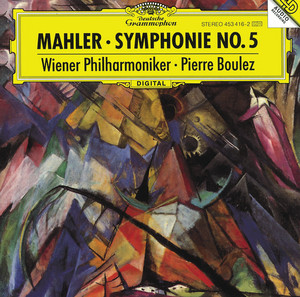 | Symphony No. 5: III. Scherzo. Kräftig, nicht zu schnell | Gustav Mahler, Wiener Philharmoniker, Pierre Boulez | F Major | 1 | 7B | 83 BPM | |
 | Tristan und Isolde, Act I: Prelude | Richard Wagner, Staatskapelle Dresden, Carlos Kleiber | A Major | 1 | 11B | 82 BPM | |
 | Mahler: Symphony No. 5 in C-Sharp Minor: IV. Adagietto. Sehr langsam | Gustav Mahler, Daniel Barenboim, Chicago Symphony Orchestra | F Major | 1 | 7B | 82 BPM | |
 | Symphony No. 3 In C Minor, Op. 78 "Organ Symphony": 1. Adagio - Allegro moderato - Poco adagio | Camille Saint-Saëns, Simon Preston, Berliner Philharmoniker, James Levine | A♭ Major | 1 | 4B | 118 BPM |
- ISRC
- HKI190908237
- Label
- L-M Records/RCA Records