- BPM
- 95
- Key
- A♭ Major
- Camelot
- 4B
Le Corsaire: Pas de Trois - Adagio by Riccardo Drigo, English National Ballet Philharmonic, Gavin Sutherland Song Details
"Le Corsaire: Pas de Trois - Adagio" by Riccardo Drigo, English National Ballet Philharmonic, Gavin Sutherland had its release date on November 22, 2019. With this song being around four minutes long, at 3:35, the duration of this song is pretty average compared to other songs. This track is safe for children and doesn't appear to contain any foul language, since the "Explicit" tag was not present in this track. The track order of this song in English National Ballet Philharmonic, Gavin Sutherland's "Le Corsaire (Highlights)" album is number 6 out of 12. On top of that, United Kingdom appears to be the country where this track was created. In terms of popularity, Le Corsaire: Pas de Trois - Adagio is currently not that popular. In our opinion, the overall tone is not very danceable and projects negative sounds, such as being sad, depressed, or angry.
BPM and Tempo
We consider the tempo marking of Le Corsaire: Pas de Trois - Adagio by Riccardo Drigo, English National Ballet Philharmonic, Gavin Sutherland to be Andante (at a walking pace) because the track has a tempo of 95 BPM, a half-time of 48BPM, and a double-time of 190 BPM. Based on that, the speed of the song's tempo is slow. Activities such as, yoga or pilates, can go well with this song. The time signature for this track is 4/4.
Music Key
This song has a musical key of A♭ Major. This also means that this song has a camelot key of 4B. So, the perfect camelot match for 4B would be either 4B or 5A. While, 5B can give you a low energy boost. For moderate energy boost, you would use 1B and a high energy boost can either be 6B or 11B. Though, if you want a low energy drop, you should looking for songs with either a camelot key of 4A or 3B will give you a low energy drop, 7B would be a moderate one, and 2B or 9B would be a high energy drop. Lastly, 1A allows you to change the mood.
Want to find the BPM and music key for other songs? Check out our BPM and Key Finder page!
- Popularity
- 15%
- Loudness
- -26.347 dB
- Acousticness
- 88%
- Danceability
- 14%
- Energy
- 3%
- Instrumentalness
- 87%
- Liveness
- 9%
- Loudness
- 56%
- Speechiness
- 4%
- Valence
- 4%
Recommendations
| Track | Artist | Key | Energy | Camelot | BPM | ||
|---|---|---|---|---|---|---|---|
 | Carmen Suite No. 1: III. Intermezzo, Interlude before Act III | Georges Bizet, Marc Soustrot, Aarhus Symphony Orchestra | D Major | 1 | 10B | 134 BPM | |
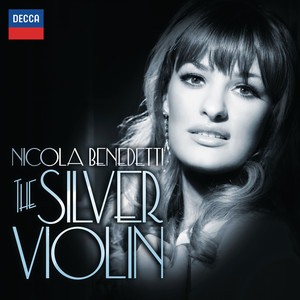 | Ladies In Lavender - Main Theme - (Ladies in Lavender) | Nigel Hess, Nicola Benedetti, Bournemouth Symphony Orchestra, Kirill Karabits | D Major | 2 | 10B | 87 BPM | |
 | Petit Ballet | London Philharmonic Orchestra | G Major | 1 | 9B | 120 BPM | |
 | Pelleas et Melisande Suite, Op. 80: III. Sicilienne | Gabriel Fauré, RTE Sinfonietta, John Georgiadis | D Minor | 0 | 7A | 70 BPM | |
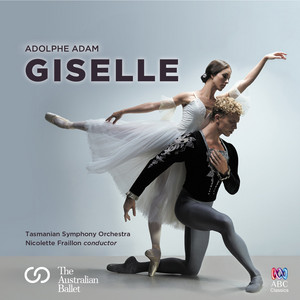 | Giselle, Act 1: Giselle's Variation | Adolphe Adam, Tasmanian Symphony Orchestra, Nicolette Fraillon | E♭ Major | 1 | 5B | 88 BPM | |
 | Offenbach: Les contes d'Hoffmann, Act 4: Barcarolle. "Belle nuit, ô nuit d'amour" (Version for Two Trumpets & Orchestra) | Jacques Offenbach, Lucienne Renaudin Vary, Erik Truffaz, Roberto Rizzi Brignoli, Orchestre National de Lille | D Major | 1 | 10B | 84 BPM | |
 | Suite Bergamasque, L. 75: III. "Clair de lune" | Claude Debussy, Kathryn Stott | D♭ Major | 0 | 3B | 66 BPM | |
 | La Bayadere, Act III: 43. "Entrance - Corps De Ballet, Nikiya, Solo | Evergreen Symphony Orchestra, Kevin Galiè | D Major | 1 | 10B | 80 BPM | |
 | Ancient Airs & Dances, Suite No. 3, P. 172: I. Italiana | Ottorino Respighi, Chamber Orchestra of New York, Salvatore Di Vittorio | B Major | 0 | 1B | 119 BPM | |
 | Carmen Suite: VIII. Bolero (after G. Bizet): Second Intermezzo | Rodion Shchedrin, Ukrainian State Symphony Orchestra, Theodore Kuchar | B Major | 1 | 1B | 122 BPM | |
 | Paradis: Sicilienne 파라디스 시실리안느 | 김준영 | E♭ Major | 0 | 5B | 137 BPM | |
 | La forza del destino: Overture (Sinfonia) | Giuseppe Verdi, Berliner Philharmoniker, Claudio Abbado | E Minor | 2 | 9A | 80 BPM | |
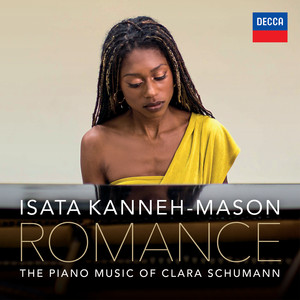 | 3 Romances, Op. 22: 2. Allegretto | Clara Schumann, Elena Urioste, Isata Kanneh-Mason | G Major | 0 | 9B | 116 BPM | |
 | Violin Concerto No. 3 in B Minor, Op. 61: II. Andantino quasi allegretto | Camille Saint-Saëns, Dong-Suk Kang, Polish National Radio Symphony Orchestra, Antoni Wit | F Major | 0 | 7B | 74 BPM | |
 | Le Corsaire: Pas d Esclave - Intro | Prince Pyotr Von Oldenburg, English National Ballet Philharmonic, Gavin Sutherland | B♭ Major | 0 | 6B | 152 BPM | |
 | Suite of Scottish Dances: The Indian Queen | William Alwyn, Royal Ballet Sinfonia, Gavin Sutherland | D Major | 0 | 10B | 110 BPM | |
 | Rhapsody - From "Stage Fright" | Leighton Lucas, Valentina Lisitsa, BBC Concert Orchestra, Gavin Sutherland | G Major | 2 | 9B | 133 BPM | |
 | A Moorside Suite: II. Nocturne (Arr. P. Lane) | Gustav Holst, Royal Ballet Sinfonia, Gavin Sutherland | A Minor | 0 | 8A | 57 BPM | |
 | Salut d'amour, Op. 12 | Edward Elgar, Nicola Benedetti, Petr Limonov | E Major | 1 | 12B | 73 BPM | |
 | La Fille Mal Gardee, Pas de, Act II: Moderato: Women's variation (Arr. March) | Peter Ludwig Hertel, Sofia National Opera Orchestra, Boris Spassov | G Major | 3 | 9B | 126 BPM | |
 | Pizzicato Polka | Johann Strauss II, Josef Strauss, Berliner Philharmoniker, Herbert von Karajan | C Major | 0 | 8B | 99 BPM | |
 | La Cinquantaine | Jean Gabriel-Marie, Philharmonica Orchestra, Sir Charles Groves | A Minor | 1 | 8A | 80 BPM | |
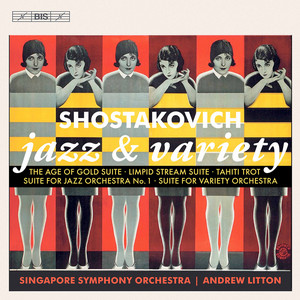 | VI. Waltz No. 1 | Dmitri Shostakovich, Singapore Symphony Orchestra, Andrew Litton | A♭ Major | 1 | 4B | 70 BPM | |
 | Raymonda, Act III: Grand Pas de Deux, Pas Classique Hongrois | Alexander Glazunov, English National Ballet Philharmonic, Gavin Sutherland | F Minor | 0 | 4A | 82 BPM | |
 | Ravel: Ma mère l'oye, M. 60: IV. Les entretiens de la Belle et de la Bête | Maurice Ravel, Yannick Nézet-Séguin, Rotterdam Philharmonic Orchestra | A Minor | 0 | 8A | 95 BPM |
- ISRC
- GBMJG1922039
- Label
- L-M Records/RCA Records