- BPM
- 138
- Key
- E Major
- Camelot
- 12B
A Village Romeo and Juliet (1992 Digital Remaster): The Walk to the Paradise Garden by Frederick Delius, Denis Dowling, Frederick Sharp, Margaret Ritchie, René Soames, Dorothy Bond, Marjorie Avis, Gwladys Garside, Lloyd Strauss-Smith, Marion Davies, Donald Munro, Lorely Dyer, Gordon Clinton, Philip Hattey, Royal Philharmonic Orchestra, Sir Thomas Beecham Song Details
"A Village Romeo and Juliet (1992 Digital Remaster): The Walk to the Paradise Garden" by Frederick Delius, Denis Dowling, Frederick Sharp, Margaret Ritchie, René Soames, Dorothy Bond, Marjorie Avis, Gwladys Garside, Lloyd Strauss-Smith, Marion Davies, Donald Munro, Lorely Dyer, Gordon Clinton, Philip Hattey, Royal Philharmonic Orchestra, Sir Thomas Beecham had its release date on February 7, 2011. Since This song is still less than 10 minute long, it is still considered a pretty long duration song compared to the average song length. This song does not appear to be explicit due to the lack of the "E" tag. There are a total of 88 in the song's album "Sir Thomas Beecham: The English Collection". In this album, this song's track order is #2. Furthermore, we believe that the track originated from United Kingdom. Based on our statistics, A Village Romeo and Juliet (1992 Digital Remaster): The Walk to the Paradise Garden's popularity is unknown right now. In our opinion, the overall tone is not very danceable and projects negative sounds, such as being sad, depressed, or angry.
BPM and Tempo
With A Village Romeo and Juliet (1992 Digital Remaster): The Walk to the Paradise Garden by Frederick Delius, Denis Dowling, Frederick Sharp, Margaret Ritchie, René Soames, Dorothy Bond, Marjorie Avis, Gwladys Garside, Lloyd Strauss-Smith, Marion Davies, Donald Munro, Lorely Dyer, Gordon Clinton, Philip Hattey, Royal Philharmonic Orchestra, Sir Thomas Beecham having a BPM of 138 with a half-time of 69 BPM and a double-time of 276 BPM, we would consider this track to have a Allegro (fast, quick, and bright) tempo marking. Because of this, we believe that the song has an overall fast tempo. Looking at the BPM of this song, this song might go great with walking. The time signature for this track is 4/4.
Music Key
E Major is the music key of this track. Or for those who are familiar with the camelot wheel, this song has a camelot key of 12B. So, the perfect camelot match for 12B would be either 12B or 1A. While, 1B can give you a low energy boost. For moderate energy boost, you would use 9B and a high energy boost can either be 2B or 7B. Though, if you want a low energy drop, you should looking for songs with either a camelot key of 12A or 11B will give you a low energy drop, 3B would be a moderate one, and 10B or 5B would be a high energy drop. Lastly, 9A allows you to change the mood.
Want to find the BPM and music key for other songs? Check out our BPM and Key Finder page!
- Popularity
- 0%
- Loudness
- -18.268 dB
- Acousticness
- 94%
- Danceability
- 15%
- Energy
- 11%
- Instrumentalness
- 92%
- Liveness
- 13%
- Loudness
- 70%
- Speechiness
- 4%
- Valence
- 4%
Recommendations
| Track | Artist | Key | Energy | Camelot | BPM | ||
|---|---|---|---|---|---|---|---|
 | Piano Concerto in A Minor, Op. 16: II. Adagio | Edvard Grieg, Javier Perianes, BBC Symphony Orchestra, Sakari Oramo | D♭ Major | 0 | 3B | 79 BPM | |
 | By the Sleepy Lagoon | Eric Coates, John Wilson, BBC Philharmonic | C Major | 1 | 8B | 77 BPM | |
 | Dvorák / Transc. Lenaerts: Rusalka, Op. 114, Act 1: Song to the Moon | Antonín Dvořák, Anneleen Lenaerts | F♯ Major | 0 | 2B | 168 BPM | |
 | Messiah, HWV 56, Pt. I: Pastoral Symphony, "Pifa" (Arr. L. Stokowski) | George Frideric Handel, Bournemouth Symphony Orchestra, José Serebrier | C Major | 0 | 8B | 84 BPM | |
 | A Downland Suite: II. Elegy | John Ireland, Sinfonia Of London, John Wilson | E♭ Major | 0 | 5B | 57 BPM | |
 | Debussy: La plus que lente, L. 121 | Claude Debussy, San Francisco Symphony, Michael Tilson Thomas | G Major | 0 | 9B | 133 BPM | |
 | Symphony in B Minor (arr. T. Finno for orchestra): Ii. Un poco lento, cantabile | Claude Debussy, フランス国立リヨン管弦楽団, 準・メルクル | E♭ Major | 1 | 5B | 92 BPM | |
 | The Banks of Green Willow | George Butterworth, Royal Liverpool Philharmonic Orchestra, Grant Llewellyn | A Minor | 0 | 8A | 71 BPM | |
 | A Walk To The Paradise Garden | Frederick Delius, Barry Wordsworth, London Symphony Orchestra | E Major | 0 | 12B | 103 BPM | |
 | Prélude, Op. 11 No. 1 | Anatoly Lyadov, Yoko Kikuchi | G Major | 0 | 9B | 69 BPM | |
 | 6 Impromptus, Op. 5: Impromptu No. 5 in B Minor | Jean Sibelius, Håvard Gimse | B Minor | 0 | 10A | 84 BPM | |
 | Piano Concerto "The World of Yesterday": II. Waltz Variations – | Stephen Hough, Hallé, Sir Mark Elder | D Major | 1 | 10B | 140 BPM | |
 | Pavane for Dead Princess | Maurice Ravel, David Robertson, Orchestre National De Lyon, Irina Mejoueva | G Major | 1 | 9B | 77 BPM | |
 | Holberg Suite, Op. 40: II. Sarabande. Andante | Edvard Grieg, Gothenburg Symphony Orchestra, Neeme Järvi | G Major | 0 | 9B | 101 BPM | |
 | 24 Preludes, Op. 11: No. 15 in D-Flat Major | Alexander Scriabin, Evgeny Zarafiants | D♭ Major | 0 | 3B | 70 BPM | |
 | Irmelin Prelude | Frederick Delius, London Symphony Orchestra, Sir John Barbirolli | F♯ Major | 0 | 2B | 96 BPM | |
 | Appalachian Spring: VI. Meno mosso | Aaron Copland, Leonard Bernstein, New York Philharmonic | A♭ Major | 0 | 4B | 143 BPM | |
 | Scheherazade, Op. 35: III. Andantino quasi allegretto "The Young Prince and The Young Princess" | Nikolai Rimsky-Korsakov, New York Philharmonic, Alan Gilbert, Lawrence Rock | G Major | 1 | 9B | 97 BPM | |
 | Pelléas et Mélisande, Op. 80, Suite: I. Prélude | Gabriel Fauré, Academy of St. Martin in the Fields, Sir Neville Marriner | G Major | 1 | 9B | 134 BPM | |
 | Young Birches, Op. 128, No. 2 | Amy Beach, Joanne Polk | F♯ Minor | 1 | 11A | 170 BPM | |
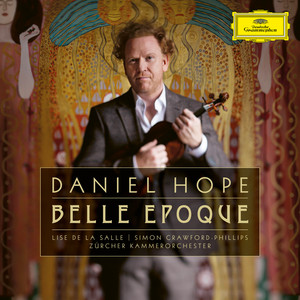 | Notturno for Strings and Harp | Arnold Schoenberg, Daniel Hope, Zürcher Kammerorchester, Jane Berthe | A♭ Major | 1 | 4B | 75 BPM | |
 | Florida Suite: I. Daybreak - Dance | Frederick Delius, English Northern Philharmonia, David Lloyd-Jones | A Major | 0 | 11B | 100 BPM | |
 | Polovetsian Dances from Prince Igor: Moderato alla breve | Alexander Borodin, George Szell, The Cleveland Orchestra | A Major | 2 | 11B | 108 BPM | |
| 5 Preludes, Op. 16: IV. Prelude No. 4 in E-Flat Minor: Lento | Alexander Scriabin, Evgeny Zarafiants | E♭ Minor | 0 | 2A | 90 BPM | |
 | wind whispers, Op. 85: II. floating leaf | Konstantia Gourzi, William Youn | F Major | 0 | 7B | 69 BPM |
- ISRC
- GBAYC9201793
- Label
- L-M Records/RCA Records