- BPM
- 80
- Key
- G Major
- Camelot
- 9B
String Quartet in E Flat Major, Op. 44, No. 3, MWV R 28: III. Adagio non troppo by Felix Mendelssohn, Emerson String Quartet Song Details
"String Quartet in E Flat Major, Op. 44, No. 3, MWV R 28: III. Adagio non troppo" by Felix Mendelssohn, Emerson String Quartet had its release date on January 1, 2005. Since This song is still less than 10 minute long, it is still considered a pretty long duration song compared to the average song length. This song does not appear to be explicit due to the lack of the "E" tag. The track order of this song in Felix Mendelssohn, Emerson String Quartet's "Mendelssohn: The String Quartets & Octet In Two Parts" album is number 16 out of 38. On top of that, Germany appears to be the country where this track was created. String Quartet in E Flat Major, Op. 44, No. 3, MWV R 28: III. Adagio non troppo is not that popular right now. In our opinion, the overall tone is not very danceable and projects negative sounds, such as being sad, depressed, or angry.
BPM and Tempo
We consider the tempo marking of String Quartet in E Flat Major, Op. 44, No. 3, MWV R 28: III. Adagio non troppo by Felix Mendelssohn, Emerson String Quartet to be Andante (at a walking pace) because the track has a tempo of 80 BPM, a half-time of 40BPM, and a double-time of 160 BPM. Based on that, the speed of the song's tempo is slow. The time signature for this track is 4/4.
Music Key
G Major is the music key of this track. This also means that this song has a camelot key of 9B. So, the perfect camelot match for 9B would be either 9B or 10A. While, 10B can give you a low energy boost. For moderate energy boost, you would use 6B and a high energy boost can either be 11B or 4B. Though, if you want a low energy drop, you should looking for songs with either a camelot key of 9A or 8B will give you a low energy drop, 12B would be a moderate one, and 7B or 2B would be a high energy drop. Lastly, 6A allows you to change the mood.
Want to find the BPM and music key for other songs? Check out our BPM and Key Finder page!
- Popularity
- 9%
- Loudness
- -22.133 dB
- Acousticness
- 97%
- Danceability
- 27%
- Energy
- 6%
- Instrumentalness
- 62%
- Liveness
- 11%
- Loudness
- 63%
- Speechiness
- 5%
- Valence
- 19%
Recommendations
| Track | Artist | Key | Energy | Camelot | BPM | ||
|---|---|---|---|---|---|---|---|
 | Etude in D-Sharp Minor, Op. 8, No. 12: Patetico - Remastered | Alexander Scriabin, Vladimir Horowitz | D♭ Minor | 3 | 12A | 72 BPM | |
 | Lyric Pieces, Book 5, Op. 54: No. 4, Notturno | Edvard Grieg, Emil Gilels | D Minor | 0 | 7A | 72 BPM | |
 | II. Dumka (Arr. P. Breiner for Piano) | Antonín Dvořák, Peter Breiner | B Minor | 0 | 10A | 71 BPM | |
 | Lieder ohne Worte, Op. 62: No. 6 Allegretto grazioso "Frühlingslied" (Arr. Ottensamer for Clarinet and Strings) | Felix Mendelssohn, Andreas Ottensamer, Schumann Quartett, Gunars Upatnieks | A Major | 1 | 11B | 99 BPM | |
 | Piano Sonata No. 9 in F Minor: I. Andante spiritoso | Baldassare Galuppi, Víkingur Ólafsson | F Minor | 0 | 4A | 73 BPM | |
 | Piano Sonata No. 8 in C minor, Op. 13 -"Pathétique": 2. Adagio cantabile | Ludwig van Beethoven, YUNDI | A♭ Major | 0 | 4B | 169 BPM | |
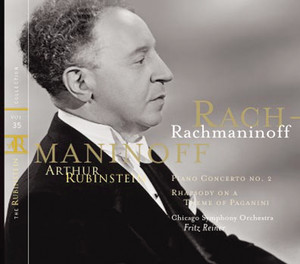 | Piano Concerto No. 2 in C Minor, Op. 18: I. Moderato | Sergei Rachmaninoff, Arthur Rubinstein, Fritz Reiner | C Minor | 1 | 5A | 71 BPM | |
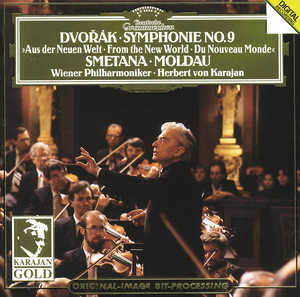 | Má vlast, JB 1:112: II. Vltava "The Moldau" | Bedřich Smetana, Wiener Philharmoniker, Herbert von Karajan | E Minor | 1 | 9A | 78 BPM | |
 | Suite No. 3, P. 172: I. Italiana: Andantino | Ottorino Respighi, RTÉ National Symphony Orchestra | B♭ Major | 1 | 6B | 94 BPM | |
 | Serenade for Strings in E Major, Op. 22, B. 52: III. Scherzo. Vivace | Antonín Dvořák, Prague Chamber Orchestra, Petr Skvor | F Major | 2 | 7B | 130 BPM | |
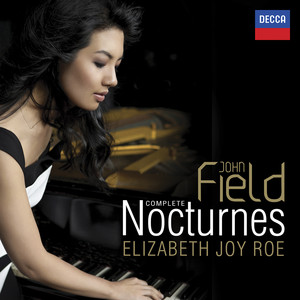 | Nocturne No. 1 in E-Flat Major, H. 24 | John Field, Elizabeth Joy Roe | E♭ Major | 0 | 5B | 75 BPM | |
 | Le carnaval des animaux, R. 125: Le cygne | Camille Saint-Saëns, Mischa Maisky, Orpheus Chamber Orchestra | C Major | 0 | 8B | 83 BPM | |
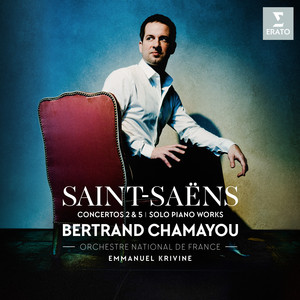 | Saint-Saëns: Piano Concerto No. 2 in G Minor, Op. 22: I. Andante sostenuto | Camille Saint-Saëns, Bertrand Chamayou, Emmanuel Krivine, Orchestre National De France | G Minor | 2 | 6A | 94 BPM | |
 | String Quartet No. 2 in D Major: II. Scherzo: Allegro | Alexander Borodin, Budapest Haydn Quartet | F Major | 1 | 7B | 107 BPM | |
 | Myrthen, Op. 25 - Version for Cello and Piano: XXIV. Du bist wie eine Blume | Robert Schumann, Kian Soltani, Aaron Pilsan | F Major | 0 | 7B | 116 BPM | |
 | Lalo: Cello Concerto in D Minor: II. Intermezzo - Allegro presto | Édouard Lalo, André Navarra, Charles Münch, Orchestre des Concerts Lamoureux | C Minor | 1 | 5A | 75 BPM | |
 | Concerto in D Minor for Two Violins, BWV 1043: Vivace | Johann Sebastian Bach, Jascha Heifetz, Erick Friedman, Thornton Lofthouse, The New Symphony Orchestra Of London, Sir Malcolm Sargent | A Minor | 2 | 8A | 94 BPM | |
 | Symphony No. 3 In C Minor, Op. 78 "Organ Symphony": 1. Adagio - Allegro moderato - Poco adagio | Camille Saint-Saëns, Simon Preston, Berliner Philharmoniker, James Levine | A♭ Major | 1 | 4B | 118 BPM | |
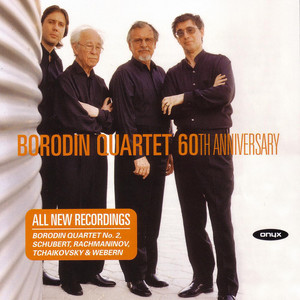 | Borodin - String Quartet No.2 in D major: Notturno: Andante | Alexander Borodin, Borodin Quartet | A Major | 2 | 11B | 74 BPM | |
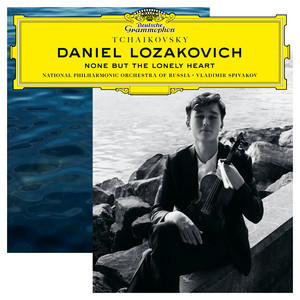 | Six Romances, Op. 6, TH 93: VI. None but the Lonely Heart (Arr. Elman) | Pyotr Ilyich Tchaikovsky, Daniel Lozakovich, Stanislav Soloviev | D♭ Major | 1 | 3B | 101 BPM | |
 | Piano Concerto No.2 In B Flat, Op.83: 4. Allegretto grazioso - Un poco più presto | Johannes Brahms, Krystian Zimerman, Wiener Philharmoniker, Leonard Bernstein | B♭ Major | 2 | 6B | 107 BPM | |
 | Symphony Concertante in D Major, Op. 20: III. Polonaise | Johann Evangelist Brandl, David Castro-Balbi, Alexandre Castro-Balbi, Deutsche Staatsphilharmonie Rheinland-Pfalz, Kevin Griffiths | D Major | 2 | 10B | 93 BPM | |
 | Peer Gynt Suite No.1 op. 46 Morning (Allegro pastorale) | Academy of St. Martin in the Fields | E Major | 0 | 12B | 68 BPM | |
| Cello Concerto No. 1 in A Minor, Op. 33: I. Allegro non troppo | Camille Saint-Saëns, Mischa Maisky, Orpheus Chamber Orchestra | F Major | 2 | 7B | 131 BPM | |
 | Le tombeau de Couperin: 3. Menuet (version for orchestra) | Maurice Ravel, フランス国立リヨン管弦楽団, レナード・スラットキン | A Major | 1 | 11B | 107 BPM |
- ISRC
- DEN960400833
- Label
- L-M Records/RCA Records