- BPM
- 71
- Key
- G Major
- Camelot
- 9B
Holberg Suite, Op. 40: 5. Rigaudon (Allegro con brio) by Edvard Grieg, Peter Jablonski Song Details
"Holberg Suite, Op. 40: 5. Rigaudon (Allegro con brio)" by Edvard Grieg, Peter Jablonski had its release date on October 6, 1997. With this song being around four minutes long, at 3:41, the duration of this song is pretty average compared to other songs. This track is safe for children and doesn't appear to contain any foul language, since the "Explicit" tag was not present in this track. The track order of this song in Edvard Grieg, Peter Jablonski's "Grieg: Piano Sonata; Holberg Suite; Lyric Pieces" album is number 10 out of 16. On top of that, United Kingdom appears to be the country where this track was created. Holberg Suite, Op. 40: 5. Rigaudon (Allegro con brio) is not that popular right now. In our opinion, the overall tone is not very danceable and projects negative sounds, such as being sad, depressed, or angry.
BPM and Tempo
We consider the tempo marking of Holberg Suite, Op. 40: 5. Rigaudon (Allegro con brio) by Edvard Grieg, Peter Jablonski to be Adagio (slowly with great expression) because the track has a tempo of 71 BPM, a half-time of 36BPM, and a double-time of 142 BPM. Based on that, the speed of the song's tempo is slow. The time signature for this track is 4/4.
Music Key
G Major is the music key of this track. This also means that this song has a camelot key of 9B. So, the perfect camelot match for 9B would be either 9B or 10A. While, 10B can give you a low energy boost. For moderate energy boost, you would use 6B and a high energy boost can either be 11B or 4B. Though, if you want a low energy drop, you should looking for songs with either a camelot key of 9A or 8B will give you a low energy drop, 12B would be a moderate one, and 7B or 2B would be a high energy drop. Lastly, 6A allows you to change the mood.
Want to find the BPM and music key for other songs? Check out our BPM and Key Finder page!
- Popularity
- 2%
- Loudness
- -25.987 dB
- Acousticness
- 99%
- Danceability
- 24%
- Energy
- 5%
- Instrumentalness
- 93%
- Liveness
- 14%
- Loudness
- 57%
- Speechiness
- 6%
- Valence
- 16%
Recommendations
| Track | Artist | Key | Energy | Camelot | BPM | ||
|---|---|---|---|---|---|---|---|
 | Tchaikovsky / Arr. Stetsuk for Cello and Orchestra: 16 Children's Songs, Op. 54: No. 10, Lullaby in a Storm | Pyotr Ilyich Tchaikovsky, Alexander Kniazev, Constantine Orbelian, Moscow Chamber Orchestra | D Minor | 0 | 7A | 89 BPM | |
 | Adoration | Florence Beatrice Price, Philippe Quint, Andrew Litton | G Major | 1 | 9B | 111 BPM | |
 | Cello Sonata in G Minor, Op. 65: III. Largo | Frédéric Chopin, Emmanuelle Bertrand, Pascal Amoyel | B♭ Major | 0 | 6B | 89 BPM | |
 | Piano Concerto No. 2 in F Major, Op. 102: I. Allegro | Dmitri Shostakovich, I Musici de Montréal, Maxim Shostakovich | B♭ Major | 3 | 6B | 160 BPM | |
 | Recueil de chants, Op. 65: No. 6, Barcarolle | Charles-Valentin Alkan, Bruce Liu | G Minor | 0 | 6A | 70 BPM | |
 | Symphony No. 2 In C Minor - "Resurrection" / 1st Movement - Allegro maestoso (Totenfeier): Allegro maestoso | Gustav Mahler, Wiener Philharmoniker, Gilbert Kaplan | C Minor | 1 | 5A | 80 BPM | |
 | 6 Pieces for Piano, P. 44: No. 3. Notturno. Lento (Version for Harp) | Ottorino Respighi, Magdalena Hoffmann | F♯ Major | 0 | 2B | 88 BPM | |
 | Piazzolla: Oblivion | Julian Lloyd Webber, John Lenehan | D Minor | 0 | 7A | 81 BPM | |
 | Die Nacht, D. deest (Arr. Lechner/Márquez for Cello & Guitar) | Franz Schubert, Anja Lechner, Pablo Marquez | G Major | 0 | 9B | 85 BPM | |
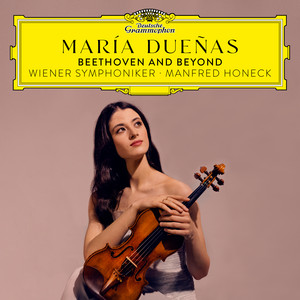 | 3 Old Viennese Dances: No. 2, Liebesleid (Transcr. for Violin and Orchestra) | Fritz Kreisler, María Dueñas, Wiener Symphoniker, Manfred Honeck | G Major | 0 | 9B | 103 BPM | |
 | Piano Quintet in C Minor: I. Andante | Alexander Borodin, Ilona Prunyi, New Budapest Quartet | C Minor | 1 | 5A | 68 BPM | |
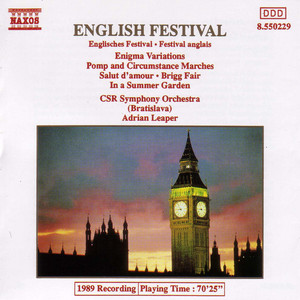 | Salut d'amour, Op. 12 (version for orchestra) | Edward Elgar, Slovak Radio Symphony Orchestra, Adrian Leaper | B♭ Major | 1 | 6B | 82 BPM | |
 | Gottes Zeit ist die allerbeste Zeit, BWV 106 "Actus tragicus": I. Sonatina | Johann Sebastian Bach, Márta Kurtág, György Kurtág | F Major | 3 | 7B | 102 BPM | |
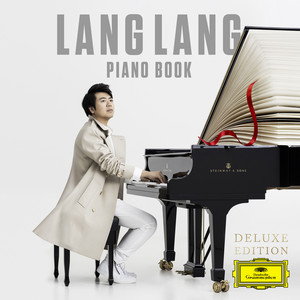 | The Well-Tempered Clavier I, Prelude & Fugue No. 1 in C Major, BWV 846: I. Prelude | Johann Sebastian Bach, Lang Lang | C Major | 1 | 8B | 134 BPM | |
 | Concerto No. 2 for Piano and Orchestra, Op. 102: II. Andante - 2017 Remastered Version | Dmitri Shostakovich, Leonard Bernstein, New York Philharmonic | F Major | 1 | 7B | 172 BPM | |
 | Gluck: Melodie from Orfeo ed Euridice | Christoph Willibald Gluck, Aurélien Pontier | E♭ Major | 2 | 5B | 107 BPM | |
 | Peer Gynt Suite No. 1, Op. 46: I. Morning Mood | Edvard Grieg, Berliner Philharmoniker, Herbert von Karajan | E Major | 0 | 12B | 141 BPM | |
 | Les Contes d'Hoffmann / Act 4: Entr'acte (Barcarolle) | Jacques Offenbach, Staatskapelle Dresden, Silvio Varviso | D Major | 0 | 10B | 121 BPM | |
 | Myrthen, Op. 25 - Version for Cello and Piano: XXIV. Du bist wie eine Blume | Robert Schumann, Kian Soltani, Aaron Pilsan | F Major | 0 | 7B | 116 BPM | |
 | Cello Concerto No. 1 in G Major: II. Romance. Andantino | Carl Stamitz, Christian Benda, Prague Chamber Orchestra | B♭ Major | 0 | 6B | 176 BPM | |
 | Lalo: Cello Concerto in D Minor: II. Intermezzo - Allegro presto | Édouard Lalo, André Navarra, Charles Münch, Orchestre des Concerts Lamoureux | C Minor | 1 | 5A | 75 BPM | |
 | Etude in F Minor | Felix Mendelssohn, Benjamin Frith | B♭ Major | 0 | 6B | 75 BPM | |
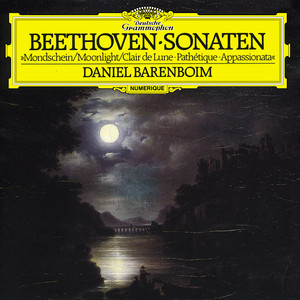 | Piano Sonata No.8 In C Minor, Op.13 -"Pathétique": 2. Adagio cantabile | Ludwig van Beethoven, Daniel Barenboim | A♭ Major | 0 | 4B | 179 BPM | |
 | Thaïs: Méditation | Jules Massenet, Bomsori, NFM Wrocław Philharmonic, Giancarlo Guerrero | D Major | 0 | 10B | 84 BPM | |
 | There Will Come | Rebecca Dale, Philharmonia Orchestra, Michael Collins, Steven Isserlis | B♭ Major | 1 | 6B | 67 BPM |
- ISRC
- GBF079611055
- Label
- L-M Records/RCA Records