- BPM
- 91
- Key
- F Minor
- Camelot
- 4A
String Quartet No. 1 in G Minor: III. Romance by Ralph Vaughan Williams, Medici String Quartet Song Details
"String Quartet No. 1 in G Minor: III. Romance" by Ralph Vaughan Williams, Medici String Quartet had its release date on January 1, 1989. Since This song is still less than 10 minute long, it is still considered a pretty long duration song compared to the average song length. This song does not appear to be explicit due to the lack of the "E" tag. This song is part of Vaughan Williams: The String Quartets & Phantasy Quintet by Ralph Vaughan Williams, Medici String Quartet, Simon Rowland-Jones. The song's track number on the album is #7 out of 12 tracks. In terms of popularity, String Quartet No. 1 in G Minor: III. Romance is currently not that popular. In our opinion, the overall tone is not very danceable and projects negative sounds, such as being sad, depressed, or angry.
BPM and Tempo
Since String Quartet No. 1 in G Minor: III. Romance by Ralph Vaughan Williams, Medici String Quartet has a tempo of 91 beats per a minute, the tempo markings of this song would be Andante (at a walking pace). With String Quartet No. 1 in G Minor: III. Romance being at 91 BPM, the half-time would be 46 BPM with a double-time of 182 BPM.In addition, we consider the tempo speed to be pretty slow for this song. This makes this song perfect for activities such as, yoga or pilates. The time signature for this track is 3/4.
Music Key
This song has a musical key of F Minor. Which also means that the camelot key for this song is 4A. So, the perfect camelot match for 4A would be either 4A or 3B. While, a low energy boost can consist of either 4B or 5A. For moderate energy boost, you would use 1A and a high energy boost can either be 6A or 11A. However, if you are looking for a low energy drop, finding a song with a camelot key of 3A would be a great choice. Where 7A would give you a moderate drop, and 2A or 9A would be a high energy drop. Lastly, 7B allows you to change the mood.
Want to find the BPM and music key for other songs? Check out our BPM and Key Finder page!
- Popularity
- 6%
- Loudness
- -25.88 dB
- Acousticness
- 96%
- Danceability
- 14%
- Energy
- 5%
- Instrumentalness
- 11%
- Liveness
- 12%
- Loudness
- 57%
- Speechiness
- 4%
- Valence
- 4%
Recommendations
| Track | Artist | Key | Energy | Camelot | BPM | ||
|---|---|---|---|---|---|---|---|
 | The Armed Man - A Mass For Peace: XII. Benedictus | Karl Jenkins, London Philharmonic Orchestra, National Youth Choir Of Great Britain, Mike Brewer, Guy Johnston | D Major | 0 | 10B | 79 BPM | |
 | El amor brujo: Ritual Fire Dance | Manuel de Falla, Fritz Reiner, Chicago Symphony Orchestra | G Major | 1 | 9B | 134 BPM | |
 | Le carnaval des animaux, R. 125: Le cygne | Camille Saint-Saëns, Mischa Maisky, Orpheus Chamber Orchestra | C Major | 0 | 8B | 83 BPM | |
 | Respighi: Trittico botticelliano, P. 151: I. La Primavera | Ottorino Respighi, Sir Neville Marriner, Academy of St. Martin in the Fields | A Major | 2 | 11B | 137 BPM | |
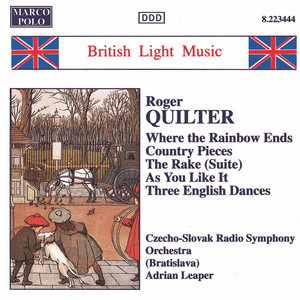 | Where the Rainbow Ends Suite (version for orchestra): No. 1a Rainbow Land | Roger Quilter, Slovak Radio Symphony Orchestra, Adrian Leaper | A Major | 0 | 11B | 69 BPM | |
 | Scottish Fantasy for Violin and Orchestra, Op. 46: II. Scherzo: Allegro | Max Bruch, Joshua Bell, Academy of St. Martin in the Fields | G Major | 2 | 9B | 115 BPM | |
 | Carmen Suite No. 1: Intermezzo | Georges Bizet, Orchestre Symphonique de Montréal, Charles Dutoit | E♭ Major | 0 | 5B | 80 BPM | |
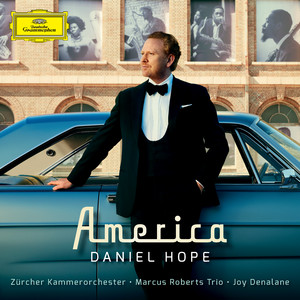 | Adoration (Version for Solo Violin and String Orchestra) | Florence Beatrice Price, Daniel Hope, Zürcher Kammerorchester | D Major | 1 | 10B | 80 BPM | |
 | Dona nobis pacem: Dirge for 2 Veterans | Ralph Vaughan Williams, Christina Pier, Matthew Brook, The Bach Choir, Bournemouth Symphony Orchestra, David Hill | F Major | 2 | 7B | 88 BPM | |
 | Holberg Suite, opus 40: Prelude (Allegro vivace) | Academy of St. Martin in the Fields | G Major | 1 | 9B | 76 BPM | |
 | The Moldau | Bedřich Smetana, Ferenc Fricsay, Berliner Philharmoniker | E Minor | 3 | 9A | 86 BPM | |
 | Suite: Graceful Dance | Ernest Tomlinson, Royal Northern Sinfonia, David Lloyd-Jones | D Major | 3 | 10B | 133 BPM | |
 | Dvorák / Transc. Lenaerts: Rusalka, Op. 114, Act 1: Song to the Moon | Antonín Dvořák, Anneleen Lenaerts | F♯ Major | 0 | 2B | 168 BPM | |
![Spartacus, Act III: Adagio of Spartacus and Phrygia (arr. Y. Grigorovich) [1968 Bolshoi Version] by Aram Khachaturian, RIAS Kammerchor, Deutsches Symphonie-Orchester Berlin, Michail Jurowski](https://i.scdn.co/image/ab67616d00001e02c21d253eed4ccdd547b4b94d) | Spartacus, Act III: Adagio of Spartacus and Phrygia (arr. Y. Grigorovich) [1968 Bolshoi Version] | Aram Khachaturian, RIAS Kammerchor, Deutsches Symphonie-Orchester Berlin, Michail Jurowski | E Major | 2 | 12B | 123 BPM | |
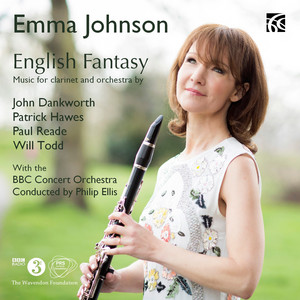 | Suite from The Victorian Kitchen Garden: I. Prelude | Paul Reade, Emma Johnson, Philip Ellis, BBC Concert Orchestra | B♭ Major | 0 | 6B | 93 BPM | |
 | A Moorside Suite: I. Scherzo (Arr. P. Lane) | Gustav Holst, Royal Ballet Sinfonia, Gavin Sutherland | D Minor | 2 | 7A | 128 BPM | |
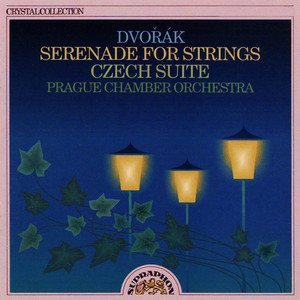 | Serenade for Strings in E Major, Op. 22, B. 52: I. Moderato | Antonín Dvořák, Prague Chamber Orchestra, Petr Skvor | E Major | 1 | 12B | 83 BPM | |
 | Symphony No. 5: IV. Adagietto. Sehr langsam | Gustav Mahler, Wiener Philharmoniker, Pierre Boulez | F Major | 0 | 7B | 87 BPM | |
 | A Shropshire Lad - Rhapsody | George Butterworth, Academy of St. Martin in the Fields, Sir Neville Marriner | A♭ Major | 1 | 4B | 95 BPM | |
 | The Planets Suite, Op. 32: IV. Jupiter | Gustav Holst, Vladimir Jurowski, London Philharmonic Choir, London Philharmonic Orchestra, Neville Creed | G Minor | 3 | 6A | 151 BPM | |
 | Holst: The Planets, Op. 32: IV. Jupiter, the Bringer of Jollity | Gustav Holst, Sir Adrian Boult, London Philharmonic Orchestra | G Minor | 3 | 6A | 133 BPM | |
| 2 Aquarelles: Lento, ma non troppo | Frederick Delius, Royal Northern Sinfonia, David Lloyd-Jones | F Major | 0 | 7B | 71 BPM | |
 | Carmen Suite No. 1: III. Intermezzo, Interlude before Act III | Georges Bizet, Marc Soustrot, Aarhus Symphony Orchestra | D Major | 1 | 10B | 134 BPM | |
 | Norfolk Rhapsody No. 1 in E minor | Ralph Vaughan Williams, New Queen's Hall Orchestra, Barry Wordsworth | E Minor | 0 | 9A | 80 BPM | |
 | Handel / Orch. Hale: Keyboard Suite No. 4 in D Minor, HWV 437: III. Sarabande | George Frideric Handel, Alexander Briger, Academy of St. Martin in the Fields | D Minor | 0 | 7A | 116 BPM |
- ISRC
- This song does not have an ISRC.
- Label
- L-M Records/RCA Records