- BPM
- 86
- Key
- F♯ Major
- Camelot
- 2B
That Would Be Lovely by Rise Stevens, Robert Merrill Song Details
Rise Stevens, Robert Merrill's 'That Would Be Lovely' had a release date set for 1958. The duration of This song is about 3 minutes long, at 3:11. Based on our data, This song appears to be safe for all ages and is not considered explicit. This track is about the average length of a typical track. There are a total of 15 in the song's album "The Chocolate Soldier". In this album, this song's track order is #11. That Would Be Lovely is unknown right now. Although the tone can be danceable to some, this track does projects more of a negative sound rather than a postive one.
BPM and Tempo
With That Would Be Lovely by Rise Stevens, Robert Merrill having a BPM of 86 with a half-time of 43 BPM and a double-time of 172 BPM, we would consider this track to have a Andante (at a walking pace) tempo marking. Because of this, we believe that the song has an overall slow tempo. Looking at the BPM of this song, this song might go great with yoga or pilates. The time signature for this track is 4/4.
Music Key
This song has a musical key of F♯ Major. Or for those who are familiar with the camelot wheel, this song has a camelot key of 2B. So, the perfect camelot match for 2B would be either 2B or 3A. While, 3B can give you a low energy boost. For moderate energy boost, you would use 11B and a high energy boost can either be 4B or 9B. Though, if you want a low energy drop, you should looking for songs with either a camelot key of 2A or 1B will give you a low energy drop, 5B would be a moderate one, and 12B or 7B would be a high energy drop. Lastly, 11A allows you to change the mood.
Want to find the BPM and music key for other songs? Check out our BPM and Key Finder page!
- Popularity
- 0%
- Loudness
- -18.345 dB
- Acousticness
- 97%
- Danceability
- 52%
- Energy
- 6%
- Instrumentalness
- 0%
- Liveness
- 31%
- Loudness
- 69%
- Speechiness
- 9%
- Valence
- 38%
Recommendations
| Track | Artist | Key | Energy | Camelot | BPM | ||
|---|---|---|---|---|---|---|---|
 | Tosca | Renata Tebaldi | E♭ Major | 2 | 5B | 84 BPM | |
 | Cendrillon: Ah! Que mes soeurs sont heureuses! | Jules Massenet, Frederica von Stade, Julius Rudel, Philharmonia Orchestra | D Minor | 0 | 7A | 85 BPM | |
 | Pagliacci, Act I: Prologue: Si puo? Si puo? | Ruggero Leoncavallo, Dmitri Hvorostovsky, Russia Spiritual Revival Choir, Philharmonia of Russia, Constantine Orbelian | G Minor | 1 | 6A | 93 BPM | |
 | Carmen: Nous avons en tête une affaire | Georges Bizet, George Cehanovsky, Margaret Roggero, Lucine Amara, Alessio De Paolis, Rise Stevens, Fritz Reiner | F♯ Major | 3 | 2B | 132 BPM | |
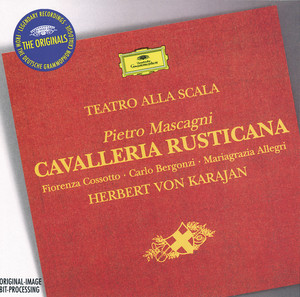 | Cavalleria rusticana: Brindisi. Viva il vino spumeggiante "Drinking Song" | Pietro Mascagni, Adriane Martino, Carlo Bergonzi, Orchestra Del Teatro Alla Scala, Milano, Herbert von Karajan, Coro Del Teatro Alla Scala Di Milano | A♭ Major | 3 | 4B | 126 BPM | |
 | Adieu, forèsts (Jeanne d´Arc) | Rise Stevens | B♭ Major | 2 | 6B | 86 BPM | |
 | Orfeo ed Euridice, Wq. 30: Act III: Divo Amore, son tue pene | Christoph Willibald Gluck, Pierre Monteux, Rome Opera Orchestra, Lisa della Casa, Roberta Peters, Rise Stevens | E Major | 2 | 12B | 77 BPM | |
 | Che farò senza Euridice? | Christoph Willibald Gluck, Vesselina Kasarova, Friedrich Haider | B♭ Major | 2 | 6B | 95 BPM | |
 | H.M.S. Pinafore / Act 1: The nightingale sighed | Arthur Sullivan, The D'Oyly Carte Opera Company, Thomas Round, Gillian Knight, The D'Oyly Carte Opera Chorus, The New Symphony Orchestra Of London, Isidore Godfrey | A♭ Major | 0 | 4B | 85 BPM | |
| Près des remparts de Séville (Carmen) | Rise Stevens, Metropolitan Opera Orchester, Raoul Jobin | G Major | 3 | 9B | 101 BPM | |
 | Samson and Delilah (Highlights): Act III, Scene III, "Gloire à Dagon" | Camille Saint-Saëns, Rise Stevens, Jan Peerce, Robert Merrill, Robert Shaw Chorale, NBC Symphony Orchestra, Leopold Stokowski | D Minor | 2 | 7A | 86 BPM | |
 | I Puritani / Act 1: Ah! per sempre io ti perdei | Vincenzo Bellini, Piero Cappuccilli, Renato Cazzaniga, London Symphony Orchestra, Richard Bonynge | G Major | 2 | 9B | 74 BPM | |
 | Cavalleria rusticana: Voi lo sapete | Pietro Mascagni, Agnes Baltsa, Munich Radio Orchestra, Heinz Wallberg | F Major | 3 | 7B | 172 BPM | |
 | Mignon: Holà, coquin! | Ambroise Thomas, James Melton, John Gurney, Mimi Benzell, Rise Stevens, Donald Dame, Ezio Pinza, Wilfrid Pelletier | A Major | 4 | 11B | 92 BPM | |
 | Ciléa: Adriana Lecouvreur, Act 1 Scene 3: "Ecco, respiro appena - lo son l'umile ancella" (Adriana) | Kiri Te Kanawa, Myung-Whun Chung | A♭ Major | 2 | 4B | 98 BPM | |
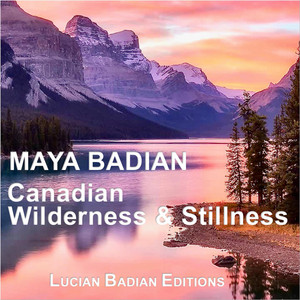 | Towards the Pinnacle, Poem for Soprano & Orchestra, Pt. 2 (Live) | Maya Badian, Romanian National Radio Orchestra, Emilia Petrescu | D Major | 6 | 10B | 110 BPM | |
 | Porgy And Bess: A Woman Is a Sometime Thing | George Gershwin, Alexander B. Smalls, John DeMain, Houston Grand Opera Orchestra, Houston Grand Opera | E Minor | 1 | 9A | 109 BPM | |
 | Die Csárdásfürstin · Operette in 3 Akten (1988 Digital Remaster), Erster Akt: Heia, heia, in den Bergen ist mein Heimatland (Sylva - Boni - Feri - Chor) | Emmerich Kálmán, Anneliese Rothenberger, Willy Mattes, Symphonie-Orchester Graunke | C Minor | 5 | 5A | 91 BPM | |
 | Orfeo ed Euridice / Act 3: Aria: "Che farò senza Euridice?" | Christoph Willibald Gluck, Marilyn Horne, Orchestra of the Royal Opera House, Covent Garden, Sir Georg Solti | C Major | 2 | 8B | 106 BPM | |
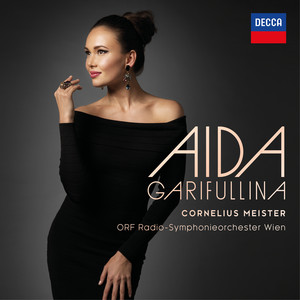 | The Golden Cockerel: Hymn to the Sun | Nikolai Rimsky-Korsakov, Aida Garifullina, Vienna Radio Symphony Orchestra, Cornelius Meister | A Major | 2 | 11B | 70 BPM | |
 | La del soto del parral: Ronda de enamorados | Reveriano Soutullo, Juan Vert, Madrid Community Chorus, Madrid Community Orchestra, Miguel Roa | D Major | 0 | 10B | 73 BPM | |
| H.M.S. Pinafore / Act 1: A maiden fair to see | Arthur Sullivan, The D'Oyly Carte Opera Company, Thomas Round, The D'Oyly Carte Opera Chorus, The New Symphony Orchestra Of London, Isidore Godfrey | C Major | 2 | 8B | 81 BPM | |
 | Louise (1997 Digital Remaster): Depuis le jour où je me suis donnée | Maria Callas, The Orchestra National De La Radiodiffusion Francaise, Georges Prêtre | G Major | 1 | 9B | 95 BPM | |
 | Don Pasquale / Act 3: "Com'è gentil...tornami a dir" | Gaetano Donizetti, Juan Diego Flórez, Andrea Menafra, Rossella Perrone, Giulio Patara, Coro Sinfonico di Milano Giuseppe Verdi, Orchestra Sinfonica di Milano Giuseppe Verdi, Riccardo Frizza | A Major | 1 | 11B | 67 BPM | |
 | Werther / Act 3: "Pourquoi me réveiller, ô souffle du printemps?" | Jonas Kaufmann, Jules Massenet, Prague Philharmonic Orchestra, Marco Armiliato | F♯ Minor | 3 | 11A | 89 BPM |
- ISRC
- This song does not have an ISRC.
- Label
- L-M Records/RCA Records