- BPM
- 87
- Key
- E Major
- Camelot
- 12B
Vaughan Williams: In the Fen Country by Ralph Vaughan Williams, Bernard Haitink, London Philharmonic Orchestra Song Details
"Vaughan Williams: In the Fen Country" by Ralph Vaughan Williams, Bernard Haitink, London Philharmonic Orchestra had its release date on January 1, 1999. This song appears to be safe for all ages as it is not explicit. This song is part of Vaughan Williams: Symphony No. 6/In the Fen Country/On Wenlock Edge by Ralph Vaughan Williams, Bernard Haitink, London Philharmonic Orchestra. The song's track number on the album is #5 out of 11 tracks. Based on our data, United Kingdom was the country where this track was produced or recorded. Vaughan Williams: In the Fen Country is unknown right now. In our opinion, the overall tone is not very danceable and projects negative sounds, such as being sad, depressed, or angry.
BPM and Tempo
Since Vaughan Williams: In the Fen Country by Ralph Vaughan Williams, Bernard Haitink, London Philharmonic Orchestra has a tempo of 87 beats per a minute, the tempo markings of this song would be Andante (at a walking pace). With Vaughan Williams: In the Fen Country being at 87 BPM, the half-time would be 44 BPM with a double-time of 174 BPM.In addition, we consider the tempo speed to be pretty slow for this song. This makes this song perfect for activities such as, yoga or pilates. The time signature for this track is 3/4.
Music Key
This song has a musical key of E Major. Or for those who are familiar with the camelot wheel, this song has a camelot key of 12B. So, the perfect camelot match for 12B would be either 12B or 1A. While, 1B can give you a low energy boost. For moderate energy boost, you would use 9B and a high energy boost can either be 2B or 7B. Though, if you want a low energy drop, you should looking for songs with either a camelot key of 12A or 11B will give you a low energy drop, 3B would be a moderate one, and 10B or 5B would be a high energy drop. Lastly, 9A allows you to change the mood.
Want to find the BPM and music key for other songs? Check out our BPM and Key Finder page!
- Popularity
- 0%
- Loudness
- -24.82 dB
- Acousticness
- 91%
- Danceability
- 23%
- Energy
- 7%
- Instrumentalness
- 0%
- Liveness
- 34%
- Loudness
- 59%
- Speechiness
- 5%
- Valence
- 6%
Recommendations
| Track | Artist | Key | Energy | Camelot | BPM | ||
|---|---|---|---|---|---|---|---|
 | Chanson de nuit, Op.15 No.1 | Edward Elgar, Hallé, Sir Mark Elder | G Major | 0 | 9B | 80 BPM | |
 | Dvořák: Nocturne, Op. 40, B. 47 | Antonín Dvořák, Sir Neville Marriner, Neville Marriner, Academy of St. Martin in the Fields | A Major | 1 | 11B | 93 BPM | |
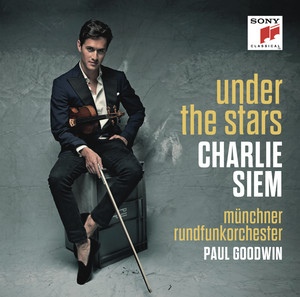 | The Gadfly Suite, Op. 97a: No. 8 Romance | Dmitri Shostakovich, Charlie Siem, Munich Radio Orchestra, Paul Goodwin | D♭ Major | 1 | 3B | 133 BPM | |
 | Mozart: Ave verum corpus, K. 618 | Wolfgang Amadeus Mozart, Riccardo Muti, Stockholm Chamber Choir, Stockholm Radio Chorus, Berliner Philharmoniker | D Major | 1 | 10B | 63 BPM | |
 | Fauré: Requiem, Op. 48: VII. In Paradisum | Gabriel Fauré, Paavo Järvi, Orchestre de Paris | D Major | 0 | 10B | 147 BPM | |
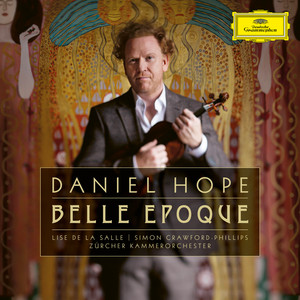 | Notturno for Strings and Harp | Arnold Schoenberg, Daniel Hope, Zürcher Kammerorchester, Jane Berthe | A♭ Major | 1 | 4B | 75 BPM | |
 | Capriol Suite: 5. Pied-en- l'air | Peter Warlock, Academy of St. Martin in the Fields, Nicholas Kraemer, Sir Neville Marriner | G Major | 1 | 9B | 113 BPM | |
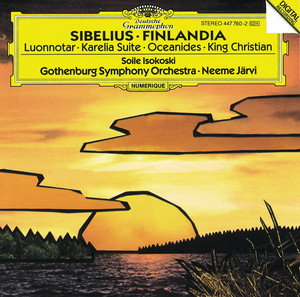 | Karelia Suite, Op.11: 1. Intermezzo (Moderato) | Jean Sibelius, Gothenburg Symphony Orchestra, Neeme Järvi | E♭ Major | 1 | 5B | 182 BPM | |
 | 3 Pieces in Old Style: No. 1, Aria | Krzysztof Penderecki, Warsaw Philharmonic Chamber Orchestra, Antoni Wit | B♭ Major | 0 | 6B | 75 BPM | |
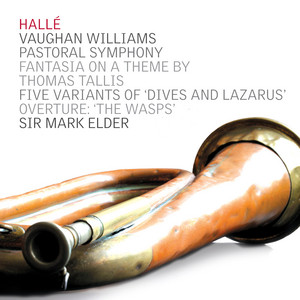 | Five Variants of ‘Dives and Lazarus’ | Ralph Vaughan Williams, Hallé, Sir Mark Elder | B Minor | 1 | 10A | 71 BPM | |
 | Symphony No. 3 in C Minor, Op. 78 "Organ": Allegro | Camille Saint-Saëns, Eugene Ormandy, E. Power Biggs, Philadelphia Orchestra | F Major | 3 | 7B | 111 BPM | |
 | Karelia Suite, Op. 11: II. Ballade. Tempo di menuetto | Jean Sibelius, New Zealand Symphony Orchestra, Pietari Inkinen | A Minor | 1 | 8A | 59 BPM | |
 | Rusalka, Op. 114: Song to the Moon (Arranged for Violin & Orchestra by Joshua Bell) | Antonín Dvořák, Joshua Bell, Michael Stern, Orchestra of St. Luke's | F♯ Major | 1 | 2B | 137 BPM | |
 | 5 Bagatelles, Op. 23a (Arr. L. Ashmore for Clarinet & Strings): No. 4, Forlana. Allegretto grazioso | Gerald Finzi, Robert Plane, Royal Northern Sinfonia, Howard Griffiths | F♯ Major | 1 | 2B | 96 BPM | |
 | Rachmaninoff: Vocalise, Op. 34, No. 14 | Sergei Rachmaninoff, San Francisco Symphony, Michael Tilson Thomas | A Minor | 1 | 8A | 76 BPM | |
 | Scottish Fantasy for Violin and Orchestra, Op. 46: II. Scherzo: Allegro | Max Bruch, Joshua Bell, Academy of St. Martin in the Fields | G Major | 2 | 9B | 115 BPM | |
 | Love's Labour's Lost, Op. 28a: II. Longaville's Sonnet | Gerald Finzi, Robert Plane, Royal Northern Sinfonia, Howard Griffiths | D Minor | 0 | 7A | 94 BPM | |
| Symphony No. 3 in C Minor, Op. 78 "Organ": Maestoso | Camille Saint-Saëns, Eugene Ormandy, E. Power Biggs, Philadelphia Orchestra | C Major | 1 | 8B | 49 BPM | |
 | Serenade in G Major: II. Air. Lento, ma non troppo (Original Version) | Ernest John Moeran, Ulster Orchestra, Joann Falletta | B♭ Major | 3 | 6B | 156 BPM | |
 | Adagio in G Minor | Tomaso Albinoni, Vladimir Fedoseyev, Moscow RTV Symphony Orchestra | A Minor | 0 | 8A | 129 BPM | |
 | Adagio from Violin Sonata in G Minor, Op. 5 No. 5 (Arr. Leopold Stokowski) | Arcangelo Corelli, Matthias Bamert, BBC Philharmonic | G Minor | 0 | 6A | 175 BPM | |
 | Requiem, Op. 48: 4. Pie Jesu (I) | Gabriel Fauré, Catherine Bott, Orchestre Révolutionnaire et Romantique, John Eliot Gardiner | B♭ Major | 0 | 6B | 72 BPM | |
 | Danse Sacrée et Danse Profane, L. 103: II. Danse Profane | Claude Debussy, Nieuw Sinfonietta Amsterdam, Ernitine Stoop | A Major | 0 | 11B | 73 BPM | |
 | Suite No. 3, P. 172: II. Arie Di Corte: Andante Cantabile | Ottorino Respighi, RTÉ National Symphony Orchestra | G Major | 0 | 9B | 79 BPM | |
![Etudes symphoniques (Symphonic Etudes), Op. 13, Adagio and Allegro brillante: Variation 11 [arr. P.I. Tchaikovsky for orchestra] by Robert Schumann, Seattle Symphony Orchestra, Gerard Schwarz](https://i.scdn.co/image/ab67616d00001e029057c124b554163ef1edd618) | Etudes symphoniques (Symphonic Etudes), Op. 13, Adagio and Allegro brillante: Variation 11 [arr. P.I. Tchaikovsky for orchestra] | Robert Schumann, Seattle Symphony Orchestra, Gerard Schwarz | A Minor | 0 | 8A | 104 BPM |
- ISRC
- GBAYC9702738
- Label
- L-M Records/RCA Records