- BPM
- 184
- Key
- D Major
- Camelot
- 10B
Hora unirii by George Enescu, Daniel Hope, Jacques Ammon Song Details
George Enescu, Daniel Hope, Jacques Ammon's ' "Hora unirii" was released on its scheduled release date, February 5, 2016. With This song being less than two minutes long, at 1:46, we are fairly confident that this song is not explicit and is safe for all ages. Based on the duration of this song, this song duration is much smaller than the average song duration. The track order of this song in Daniel Hope's "My Tribute To Yehudi Menuhin" album is number 20 out of 23. On top of that, Germany appears to be the country where this track was created. The popularity of Hora unirii is currently not that popular right now. The mood doesn't appear to be that danceable, but it still produces a high amount of positive energy.
BPM and Tempo
We consider the tempo marking of Hora unirii by George Enescu, Daniel Hope, Jacques Ammon to be Presto (very, very fast) because the track has a tempo of 184 BPM, a half-time of 92BPM, and a double-time of 368 BPM. Based on that, the speed of the song's tempo is fast. The time signature for this track is 3/4.
Music Key
This song is in the music key of D Major. This also means that this song has a camelot key of 10B. So, the perfect camelot match for 10B would be either 10B or 11A. While, 11B can give you a low energy boost. For moderate energy boost, you would use 7B and a high energy boost can either be 12B or 5B. Though, if you want a low energy drop, you should looking for songs with either a camelot key of 10A or 9B will give you a low energy drop, 1B would be a moderate one, and 8B or 3B would be a high energy drop. Lastly, 7A allows you to change the mood.
Want to find the BPM and music key for other songs? Check out our BPM and Key Finder page!
- Popularity
- 10%
- Loudness
- -18.991 dB
- Acousticness
- 97%
- Danceability
- 31%
- Energy
- 15%
- Instrumentalness
- 0%
- Liveness
- 18%
- Loudness
- 68%
- Speechiness
- 6%
- Valence
- 70%
Recommendations
| Track | Artist | Key | Energy | Camelot | BPM | ||
|---|---|---|---|---|---|---|---|
 | Poulenc: Piano Concerto, FP 146: I. Allegretto | Francis Poulenc, James Conlon, Rotterdam Philharmonic Orchestra | G Minor | 1 | 6A | 130 BPM | |
 | Brahms: String Quintet No. 2 in G Major, Op. 111: II. Adagio | Johannes Brahms, Belcea Quartet, Thomas Kakuska | A♭ Major | 0 | 4B | 75 BPM | |
 | Piano Quintet in A major, D. 667 "The Trout": 2. Andante | Franz Schubert, Takács Quartet, Joseph Carver, Andreas Haefliger | G Major | 1 | 9B | 132 BPM | |
 | Horn Trio in E-Flat Major, Op. 40: III. Adagio mesto | Johannes Brahms, Isabelle Faust, Alexander Melnikov, Teunis van der Zwart | E♭ Minor | 0 | 2A | 68 BPM | |
 | Enescu: String Octet in C Major, Op. 7: I. Très modéré | George Enescu, Quatuor Ébène, Belcea Quartet | E Major | 3 | 12B | 104 BPM | |
 | Dutilleux: Au gré des ondes: I. Prélude en berceuse | Henri Dutilleux, Anne Queffélec | C Major | 0 | 8B | 75 BPM | |
 | Miške, MKČ 101: III. Exposition, Secondary Theme. Andante espressivo e cantabile | Mikalojus Konstantinas Čiurlionis, Orchestre Philharmonique de Radio France, Mirga Gražinytė-Tyla | C Major | 0 | 8B | 129 BPM | |
 | Suite No. 1, "Orientale": I. Okenstamning: Adagio | Kurt Atterberg, Ferenc Balogh, Gyorgy Kertesz, Andras Kiss, Ilona Prunyi | B Minor | 1 | 10A | 61 BPM | |
 | Suite No. 3, P. 172: IV. Passacaglia: Maestoso | Ottorino Respighi, RTÉ National Symphony Orchestra | G Minor | 2 | 6A | 119 BPM | |
 | Légende, Op.17 | Henryk Wieniawski, Yehudi Menuhin, George Enescu, Colonne Concerts Orchestra | E♭ Major | 2 | 5B | 98 BPM | |
 | Prélude & Scherzo in F-Sharp Minor: Scherzo | George Enescu, Raluca Stirbat | D Minor | 1 | 7A | 130 BPM | |
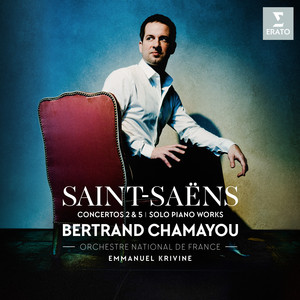 | Saint-Saëns: Piano Concerto No. 2 in G Minor, Op. 22: I. Andante sostenuto | Camille Saint-Saëns, Bertrand Chamayou, Emmanuel Krivine, Orchestre National De France | G Minor | 2 | 6A | 94 BPM | |
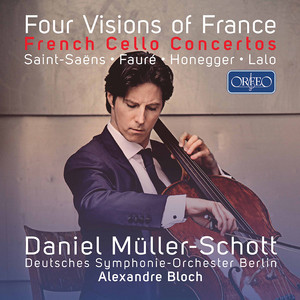 | Cello Concerto No. 1 in A Minor, Op. 33, R. 193: III. Allegro non troppo | Camille Saint-Saëns, Daniel Müller-Schott, Deutsches Symphonie-Orchester Berlin, Alexandre Bloch | F Major | 0 | 7B | 78 BPM | |
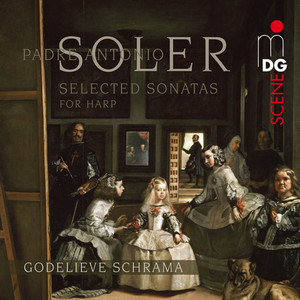 | Harpsichord Sonata No. 48: Allegro (arr. for Harp) | Antonio Soler, Godelieve Schrama | C Minor | 1 | 5A | 106 BPM | |
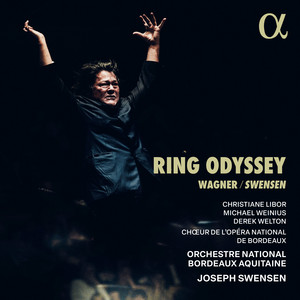 | Die Walküre, WWV 86B, Act I: Prelude - Thunderstorm, Sieglinde offers Shelter to Siegmund (Reworked by Joseph Swensen) | Richard Wagner, Orchestre National Bordeaux Aquitaine, Joseph Swensen | B♭ Major | 0 | 6B | 131 BPM | |
 | Bruch : Violin Concerto No.1 in G minor Op.26 : III Finale - Allegro energico | Max Bruch, Maxim Vengerov, Kurt Masur, Gewandhausorchester Leipzig | G Major | 2 | 9B | 90 BPM | |
 | Symphony No. 4, Op. 29 "The Inextinguishable": II. Poco allegretto | Carl Nielsen, Danish National Symphony Orchestra, Fabio Luisi | C Major | 0 | 8B | 77 BPM | |
 | Symphony No. 6 in D Major, Op. 104: IV. Allegro molto - Allegro assai - Doppio più lento | Jean Sibelius, Santtu-Matias Rouvali, Gothenburg Symphony Orchestra | G Major | 3 | 9B | 110 BPM | |
 | Var. 6, Adagio | Pyotr Ilyich Tchaikovsky, Li-wei Qin, Czech Philharmonic Chamber Orchestra, Michael Halasz | D Minor | 0 | 7A | 80 BPM | |
 | String Quartet in E-Flat Major, Op. 12: II. Canzonetta. Allegretto | Felix Mendelssohn, Leipziger Streichquartett | E Major | 3 | 12B | 104 BPM | |
 | Serenade for String Orchestra in C Minor, Op. posth.: III. Allegro | Max Bruch, George Hanson, Sinfonieorchester Wuppertal | A Minor | 1 | 8A | 88 BPM | |
 | 24 Preludes and Fugues Op. 87: No. 2, in A Minor: Fugue | Dmitri Shostakovich, Yulianna Avdeeva | A Minor | 3 | 8A | 121 BPM | |
 | Symphony No. 1 in E Minor, Op. 39: II. Andante (ma non troppo lento) | Jean Sibelius, Oslo Philharmonic Orchestra, Klaus Mäkelä | F♯ Minor | 1 | 11A | 66 BPM | |
 | Piano Sonata in G Minor: I. Allegro molto agitato | Fanny Mendelssohn, Heather Schmidt | B Minor | 3 | 10A | 87 BPM | |
 | Cello Concerto, Op. 22: II. Andante sostenuto | Samuel Barber, Baltimore Symphony Orchestra, Yo-Yo Ma, David Zinman | F♯ Minor | 0 | 11A | 88 BPM |
- ISRC
- DEN961501340
- Label
- L-M Records/RCA Records