- BPM
- 62
- Key
- D♭ Major
- Camelot
- 3B
Romance for Strings, Piano and Harmonica by Ralph Vaughan Williams, Tommy Reilly, Academy of St. Martin in the Fields, Sir Neville Marriner Song Details
"Romance for Strings, Piano and Harmonica" by Ralph Vaughan Williams, Tommy Reilly, Academy of St. Martin in the Fields, Sir Neville Marriner had its release date on January 1, 1999. Since This song is still less than 10 minute long, it is still considered a pretty long duration song compared to the average song length. This song does not appear to be explicit due to the lack of the "E" tag. This song is part of Vaughan Williams: Orchestral Works by Ralph Vaughan Williams, Academy of St. Martin in the Fields, Sir Neville Marriner, New Queen's Hall Orchestra, Barry Wordsworth, London Philharmonic Orchestra, Sir Adrian Boult. The song's track number on the album is #13 out of 22 tracks. Based on our data, United Kingdom was the country where this track was produced or recorded. Romance for Strings, Piano and Harmonica is not that popular right now. In our opinion, the overall tone is not very danceable and projects negative sounds, such as being sad, depressed, or angry.
BPM and Tempo
Since Romance for Strings, Piano and Harmonica by Ralph Vaughan Williams, Tommy Reilly, Academy of St. Martin in the Fields, Sir Neville Marriner has a tempo of 62 beats per a minute, the tempo markings of this song would be Larghetto (rather broadly). With Romance for Strings, Piano and Harmonica being at 62 BPM, the half-time would be 31 BPM with a double-time of 124 BPM.In addition, we consider the tempo speed to be pretty slow for this song. The time signature for this track is 4/4.
Music Key
This song has a musical key of D♭ Major. Or for those who are familiar with the camelot wheel, this song has a camelot key of 3B. So, the perfect camelot match for 3B would be either 3B or 4A. While, 4B can give you a low energy boost. For moderate energy boost, you would use 12B and a high energy boost can either be 5B or 10B. Though, if you want a low energy drop, you should looking for songs with either a camelot key of 3A or 2B will give you a low energy drop, 6B would be a moderate one, and 1B or 8B would be a high energy drop. Lastly, 12A allows you to change the mood.
Want to find the BPM and music key for other songs? Check out our BPM and Key Finder page!
- Popularity
- 10%
- Loudness
- -23.823 dB
- Acousticness
- 61%
- Danceability
- 15%
- Energy
- 10%
- Instrumentalness
- 0%
- Liveness
- 11%
- Loudness
- 60%
- Speechiness
- 5%
- Valence
- 7%
Recommendations
| Track | Artist | Key | Energy | Camelot | BPM | ||
|---|---|---|---|---|---|---|---|
 | English Suite: Meditation | Paul Lewis, Royal Northern Sinfonia, David Lloyd-Jones | A Minor | 0 | 8A | 61 BPM | |
 | Tu mancavi a tormentarmi, crudelissima speranza (Arr. L. Stokowski) | Antonio Cesti, Brussels Philharmonic, Richard Egarr | E Major | 1 | 12B | 87 BPM | |
 | Concerto Grosso: 1. Intrada | Ralph Vaughan Williams, Academy of St. Martin in the Fields, Sir Neville Marriner | G Major | 2 | 9B | 60 BPM | |
 | Dona nobis pacem: Dirge for 2 Veterans | Ralph Vaughan Williams, Christina Pier, Matthew Brook, The Bach Choir, Bournemouth Symphony Orchestra, David Hill | F Major | 2 | 7B | 88 BPM | |
 | Stille Musik: III. Augenblicke der Serenade | Valentin Silvestrov | C Major | 0 | 8B | 86 BPM | |
 | Mors et Vita: Judex | Charles Gounod, Richard Hickox Orchestra, Richard Hickox | C Minor | 1 | 5A | 95 BPM | |
 | Bruch : Violin Concerto No.1 in G minor Op.26 : III Finale - Allegro energico | Max Bruch, Maxim Vengerov, Kurt Masur, Gewandhausorchester Leipzig | G Major | 2 | 9B | 90 BPM | |
 | Water Music Suite No. 1 in F Major, HWV 348: II. Adagio e staccato | George Frideric Handel, The English Concert, Trevor Pinnock | D♭ Minor | 0 | 12A | 106 BPM | |
 | Appalachian Spring: VII. Doppio movimento | Aaron Copland, Leonard Bernstein, New York Philharmonic | D♭ Major | 1 | 3B | 78 BPM | |
 | Piano Concerto No. 2 in F Major, Op. 102: II. Andante | Dmitri Shostakovich, Esa-Pekka Salonen, Yefim Bronfman, Thomas Stevens, Los Angeles Philharmonic | G Minor | 1 | 6A | 137 BPM | |
 | Brook Green Suite: II. Air | Gustav Holst, English Sinfonia, Howard Griffiths | E♭ Major | 0 | 5B | 128 BPM | |
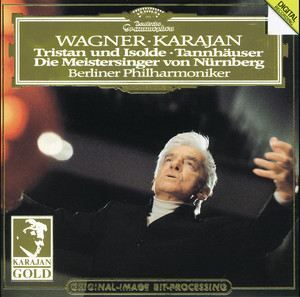 | Tristan und Isolde, Act III: Liebestod (Concert Version) | Richard Wagner, Berliner Philharmoniker, Herbert von Karajan | B Major | 2 | 1B | 94 BPM | |
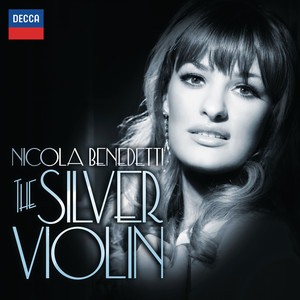 | Die tote Stadt, Act I: Mariettas Lied | Erich Wolfgang Korngold, Nicola Benedetti, Bournemouth Symphony Orchestra, Kirill Karabits | B♭ Major | 3 | 6B | 94 BPM | |
 | The Mausoleum at Halicarnassus - From "Seven Wonders" Suite | Stuart Mitchell, Czech National Symphony Orchestra, Paul Bateman | B Minor | 0 | 10A | 75 BPM | |
 | Piano Concerto No. 2 in F Major, Op. 102: II. Andante | Dmitri Shostakovich, Michael Houstoun, New Zealand Symphony Orchestra, Christopher Lyndon-Gee | F Major | 1 | 7B | 147 BPM | |
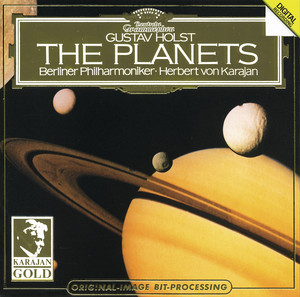 | The Planets, Op. 32: 4. Jupiter, the Bringer of Jollity | Gustav Holst, Berliner Philharmoniker, Herbert von Karajan | G Minor | 3 | 6A | 140 BPM | |
 | String Quartet No. 2 in D Major: III. Notturno: Andante | Alexander Borodin, Budapest Haydn Quartet | A Major | 1 | 11B | 89 BPM | |
 | Panis Angelicus (Arr. Leopold Stokowski) | César Franck, Matthias Bamert, BBC Philharmonic | A Major | 1 | 11B | 65 BPM | |
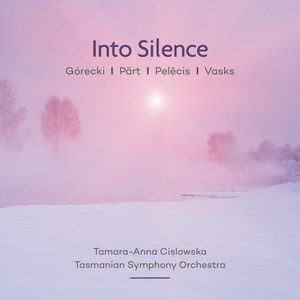 | Concertino bianco: 1. Con intenerimento | Georgs Pelēcis, Johannes Fritzsch, Tamara Anna Cislowska, Tasmanian Symphony Orchestra | C Major | 0 | 8B | 97 BPM | |
 | 6 Impromptus, Op. 5: Impromptu VI | Jean Sibelius, Leif Ove Andsnes | E Major | 0 | 12B | 62 BPM | |
 | Masques et bergamasques Suite, Op. 112: IV. Pastorale | Gabriel Fauré, RTE Sinfonietta, John Georgiadis | D Minor | 0 | 7A | 70 BPM | |
 | V. Pieds-en-l'air | Peter Warlock, Metamorphosen Berlin, Wolfgang Emanuel Schmidt | G Major | 0 | 9B | 85 BPM | |
 | Dvořák: Serenade for Strings in E Major, Op. 22, B. 52: I. Moderato | Antonín Dvořák, London Chamber Orchestra, Christopher Warren-Green | E Major | 1 | 12B | 82 BPM | |
 | Violin Concerto No. 1 in G Minor, Op. 26: II. Adagio | Max Bruch, Itzhak Perlman, Bernard Haitink, Royal Concertgebouw Orchestra | E♭ Major | 1 | 5B | 87 BPM | |
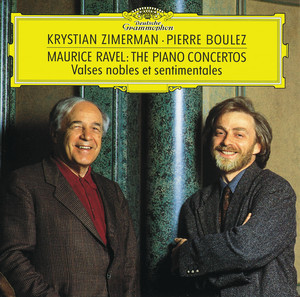 | Piano Concerto in G Major, M. 83: II. Adagio assai | Maurice Ravel, Krystian Zimerman, Cleveland Orchestra, Pierre Boulez | E Major | 0 | 12B | 74 BPM |
- ISRC
- GBF077610520
- Label
- L-M Records/RCA Records