- BPM
- 100
- Key
- F Major
- Camelot
- 7B
Promenade by Modest Mussorgsky, Maksim Song Details
Modest Mussorgsky, Maksim's ' "Promenade" was released on its scheduled release date, October 1, 2014. With This song being less than two minutes long, at 1:27, we are fairly confident that this song is not explicit and is safe for all ages. Based on the duration of this song, this song duration is much smaller than the average song duration. The track order of this song in Maksim's "Mezzo E Mezzo" album is number 8 out of 22. On top of that, United Kingdom appears to be the country where this track was created. In terms of popularity, Promenade is currently unknown. Since there is more of a neutral sound being played, this makes the track somewhat danceable.
BPM and Tempo
We consider the tempo marking of Promenade by Modest Mussorgsky, Maksim to be Andante (at a walking pace) because the track has a tempo of 100 BPM, a half-time of 50BPM, and a double-time of 200 BPM. Based on that, the speed of the song's tempo is slow. The time signature for this track is 4/4.
Music Key
This song is in the music key of F Major. This also means that this song has a camelot key of 7B. So, the perfect camelot match for 7B would be either 7B or 8A. While, 8B can give you a low energy boost. For moderate energy boost, you would use 4B and a high energy boost can either be 9B or 2B. Though, if you want a low energy drop, you should looking for songs with either a camelot key of 7A or 6B will give you a low energy drop, 10B would be a moderate one, and 5B or 12B would be a high energy drop. Lastly, 4A allows you to change the mood.
Want to find the BPM and music key for other songs? Check out our BPM and Key Finder page!
- Popularity
- 0%
- Loudness
- -14.988 dB
- Acousticness
- 97%
- Danceability
- 59%
- Energy
- 36%
- Instrumentalness
- 87%
- Liveness
- 11%
- Loudness
- 75%
- Speechiness
- 7%
- Valence
- 55%
Recommendations
| Track | Artist | Key | Energy | Camelot | BPM | ||
|---|---|---|---|---|---|---|---|
 | Violin Concerto No. 1 in G Minor, Op. 26: II. Adagio | Max Bruch, Itzhak Perlman, Bernard Haitink, Royal Concertgebouw Orchestra | E♭ Major | 1 | 5B | 87 BPM | |
 | Children's Corner (arr. A. Caplet for orchestra): Golliwogg's Cake-walk | Andre Caplet, Claude Debussy, Rheinland-Pfalz State Philharmonic Orchestra, Leif Segerstam | B♭ Major | 0 | 6B | 103 BPM | |
 | In the Steppes of Central Asia | Alexander Borodin, Royal Philharmonic Orchestra, Vladimir Ashkenazy | A Major | 0 | 11B | 69 BPM | |
 | La Damnation de Faust, Op. 24, H 111 / Pt. 1: Marche hongroise | Hector Berlioz, Chicago Symphony Orchestra, Sir Georg Solti | A Major | 2 | 11B | 93 BPM | |
 | Má vlast, JB 1:112: II. Vltava "The Moldau" | Bedřich Smetana, Chicago Symphony Orchestra, Daniel Barenboim | G Major | 1 | 9B | 142 BPM | |
 | Symphonic Metamorphoses on Themes of Carl Maria von Weber: IV. Marsch | Paul Hindemith, Leonard Bernstein, New York Philharmonic | B♭ Major | 3 | 6B | 77 BPM | |
 | Symphony No. 1 in D Major: 2. Kräftig bewegt - Live | Gustav Mahler, Berliner Philharmoniker, Claudio Abbado | A Major | 1 | 11B | 96 BPM | |
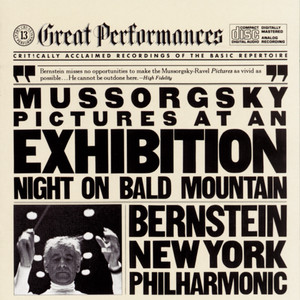 | Pictures at an Exhibition: II. Il vecchio castello | Modest Mussorgsky, Leonard Bernstein, New York Philharmonic | A♭ Major | 0 | 4B | 86 BPM | |
 | Aufforderung zum Tanz, Op. 65 (Orch. Berlioz) | Carl Maria von Weber, Ottomar Borwitzky, Berliner Philharmoniker, Herbert von Karajan | D Major | 1 | 10B | 111 BPM | |
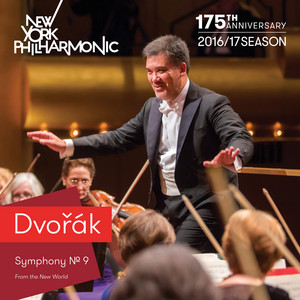 | Symphony No. 9 in E Minor, Op. 95 "From the New World": III. Scherzo. Molto vivace | Antonín Dvořák, New York Philharmonic, Alan Gilbert | C Major | 1 | 8B | 121 BPM | |
 | 2 Aquarelles: Lento, ma non troppo | Frederick Delius, Royal Northern Sinfonia, David Lloyd-Jones | F Major | 0 | 7B | 71 BPM | |
 | Poulenc: Concerto for Two Pianos in D Minor, FP 61: II. Larghetto | Francis Poulenc, James Conlon, François-René Duchâble, Jean-Philippe Collard, Rotterdam Philharmonic Orchestra | B♭ Major | 0 | 6B | 84 BPM | |
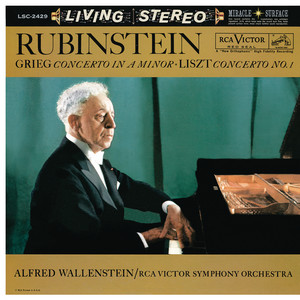 | Piano Concerto in A Minor, Op. 16: III. Allegro moderato molto e marcato - Remastered | Edvard Grieg, Arthur Rubinstein, Alfred Wallenstein, RCA Victor Symphony Orchestra | F Major | 1 | 7B | 119 BPM | |
| Symphony No. 9 in E Minor, Op. 95 "From the New World": I. Adagio — Allegro molto | Antonín Dvořák, New York Philharmonic, Alan Gilbert | E Minor | 1 | 9A | 125 BPM | |
 | Serenade for Strings in E Major, Op. 22, B. 52: III. Scherzo. Vivace | Antonín Dvořák, Prague Chamber Orchestra, Petr Skvor | F Major | 2 | 7B | 130 BPM | |
 | Morgen, Op. 27 No. 4 (Arr. Reger for Piano) | Richard Strauss, Angela Hewitt | A Major | 2 | 11B | 143 BPM | |
 | Polovetsian Dances from Prince Igor: Introduzione | Alexander Borodin, George Szell, The Cleveland Orchestra | A Major | 1 | 11B | 83 BPM | |
 | Pictures at an Exhibition (Orch. Ravel): VII. The Market at Limoges | Modest Mussorgsky, Wiener Philharmoniker, Gustavo Dudamel | E♭ Major | 3 | 5B | 123 BPM | |
 | El sombrero de tres picos, Pt. 2: IV. Danza final | Manuel de Falla, Carlos Miguel Prieto, The Orchestra of the Americas | C Major | 4 | 8B | 89 BPM | |
 | Jeux d'enfants, Op. 22: No. 3, La poupée | Georges Bizet, Katia Labèque, Marielle Labèque | B Major | 0 | 1B | 64 BPM | |
 | Symphony No. 9 in E-Flat Major, Op. 70: I. Allegro | Dmitri Shostakovich, Berliner Philharmoniker, Kirill Petrenko | B♭ Major | 4 | 6B | 136 BPM | |
 | The Oceanides, Op. 73 | Jean Sibelius, Thomas Søndergård, BBC National Orchestra Of Wales | G Major | 0 | 9B | 70 BPM | |
 | Eine Alpensinfonie, Op. 64, TrV 233: XXII. Nacht (II) | Richard Strauss, David Bell, Berliner Philharmoniker, Herbert von Karajan | B Major | 0 | 1B | 90 BPM | |
 | The Rite of Spring: Part One: Adoration of the Earth: The Augurs of Spring - Dance of the Young Girls | Igor Stravinsky, Teodor Currentzis, musicAeterna | B♭ Major | 3 | 6B | 120 BPM | |
| The Rite of Spring: Part One: Adoration of the Earth: Introduction | Igor Stravinsky, Teodor Currentzis, musicAeterna | B Minor | 0 | 10A | 87 BPM |
- ISRC
- GBQT41400022
- Label
- L-M Records/RCA Records