- BPM
- 100
- Key
- G Major
- Camelot
- 9B
Die Walküre, WWV 86B - Concert version / Act 3: The Ride Of The Walkyres by Richard Wagner, Orchestre de Paris, Daniel Barenboim Song Details
"Die Walküre, WWV 86B - Concert version / Act 3: The Ride Of The Walkyres" by Richard Wagner, Orchestre de Paris, Daniel Barenboim had its release date on January 1, 1995. With this song being about 5 minutes long, at This song is fairly a long song compared to the average song length. This song does not have an "Explicit" tag, making it safe for all ages. This song is part of Wagner: Orchestral Music by Richard Wagner, Orchestre de Paris, Daniel Barenboim. The song's track number on the album is #8 out of 8 tracks. Based on our data, Germany was the country where this track was produced or recorded. In terms of popularity, Die Walküre, WWV 86B - Concert version / Act 3: The Ride Of The Walkyres is currently below average in popularity. In our opinion, the overall tone is not very danceable and projects negative sounds, such as being sad, depressed, or angry.
BPM and Tempo
Since Die Walküre, WWV 86B - Concert version / Act 3: The Ride Of The Walkyres by Richard Wagner, Orchestre de Paris, Daniel Barenboim has a tempo of 100 beats per a minute, the tempo markings of this song would be Andante (at a walking pace). With Die Walküre, WWV 86B - Concert version / Act 3: The Ride Of The Walkyres being at 100 BPM, the half-time would be 50 BPM with a double-time of 200 BPM.In addition, we consider the tempo speed to be pretty slow for this song. The time signature for this track is 3/4.
Music Key
This song has a musical key of G Major. Or for those who are familiar with the camelot wheel, this song has a camelot key of 9B. So, the perfect camelot match for 9B would be either 9B or 10A. While, 10B can give you a low energy boost. For moderate energy boost, you would use 6B and a high energy boost can either be 11B or 4B. Though, if you want a low energy drop, you should looking for songs with either a camelot key of 9A or 8B will give you a low energy drop, 12B would be a moderate one, and 7B or 2B would be a high energy drop. Lastly, 6A allows you to change the mood.
Want to find the BPM and music key for other songs? Check out our BPM and Key Finder page!
- Popularity
- 27%
- Loudness
- -14.321 dB
- Acousticness
- 94%
- Danceability
- 29%
- Energy
- 35%
- Instrumentalness
- 75%
- Liveness
- 12%
- Loudness
- 76%
- Speechiness
- 4%
- Valence
- 16%
Recommendations
| Track | Artist | Key | Energy | Camelot | BPM | ||
|---|---|---|---|---|---|---|---|
 | Hungarian Rhapsody No. 2 in C Sharp Minor, S. 244 | Franz Liszt, Roberto Szidon | D♭ Major | 3 | 3B | 102 BPM | |
 | 21 Hungarian Dances, WoO 1: No. 5 in G Minor. Allegro (Orch. Schmeling) | Johannes Brahms, Royal Philharmonic Orchestra, Walter Weller | G Minor | 2 | 6A | 74 BPM | |
 | Verdi: Aida, Act 2: Triumphal March | Giuseppe Verdi, Antonio Pappano, Orchestra dell'Accademia Nazionale di Santa Cecilia | E♭ Major | 0 | 5B | 93 BPM | |
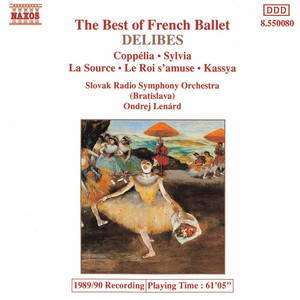 | Le roi s'amuse: Pavane | Léo Delibes, Slovak Philharmonic, Ondrej Lenard | B♭ Major | 0 | 6B | 91 BPM | |
 | Le Carnaval des Animaux, R. 125: VII. Aquarium | Camille Saint-Saëns, Ensemble Musique Oblique | A Minor | 0 | 8A | 127 BPM | |
 | Boccherini / Arr. Paillard: String Quintet in E Major, Op. 11 No. 5, G. 275: III. Minuetto | Luigi Boccherini, Jean-François Paillard, Orchestre de chambre Jean-François Paillard | A Major | 1 | 11B | 111 BPM | |
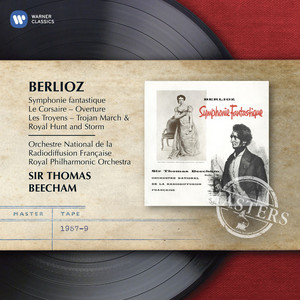 | Berlioz: Symphonie fantastique, Op. 14, H 48: II. Un bal. Valse. Allegro non troppo | Hector Berlioz, Sir Thomas Beecham, French National Radio Orchestra | A Major | 2 | 11B | 74 BPM | |
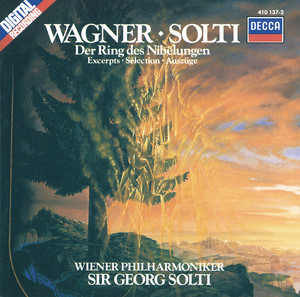 | Die Walküre, WWV 86B - Concert version / Dritter Aufzug: The Ride of the Valkyries | Richard Wagner, Wiener Philharmoniker, Sir Georg Solti | G Major | 4 | 9B | 91 BPM | |
 | Carmina Burana: I. O fortuna | Carl Orff, Orchester der Deutschen Oper Berlin, Eugen Jochum, Chor der Deutschen Oper Berlin | B♭ Major | 2 | 6B | 70 BPM | |
 | String Quintet in E Major, G. 275: III. Minuetto - Trio | Luigi Boccherini, Cuarteto Casals, Eckart Runge | A Major | 0 | 11B | 127 BPM | |
 | Overture 1812, Op. 49: Overture 1812 - Finale | Pyotr Ilyich Tchaikovsky, Gothenburg Symphony Orchestra, Neeme Järvi | E♭ Major | 4 | 5B | 90 BPM | |
 | String Quintet in E Major, G. 275 (Op. 11/5): Minuet | Luigi Boccherini, Orpheus Chamber Orchestra | A Major | 0 | 11B | 112 BPM | |
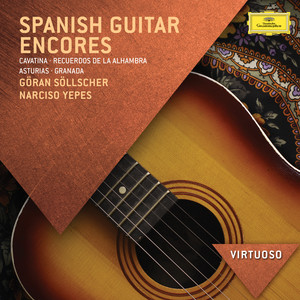 | Greensleeves | Traditional, Göran Söllscher | D Minor | 0 | 7A | 87 BPM | |
 | Handel / Orch. Hale: Keyboard Suite No. 4 in D Minor, HWV 437: III. Sarabande | George Frideric Handel, Alexander Briger, Academy of St. Martin in the Fields | D Minor | 0 | 7A | 116 BPM | |
 | Also sprach Zarathustra, Op. 30: Prelude (Sonnenaufgang) | Richard Strauss, Los Angeles Philharmonic, Zubin Mehta | C Major | 2 | 8B | 140 BPM | |
 | On the Beautiful Blue Danube - Waltz Op. 314 | Johann Strauss II, Hallé, Bryden Thomson | D Major | 0 | 10B | 81 BPM | |
 | String Quintet in E Major, Op. 13, No. 5: III. Minuetto | Luigi Boccherini, Lazar Gosman | A Major | 1 | 11B | 99 BPM | |
 | Wiener Blut, Op. 354 | Johann Strauss II, Vienna Volksoper Orchestra, Franz Bauer-Theussl | D Major | 2 | 10B | 93 BPM | |
 | La Cabalgata De Las Valkirias - De La Opera "La Valkiria" | Richard Wagner, Inma Shara | B Major | 3 | 1B | 94 BPM | |
 | Les Contes d'Hoffmann / Act 2: "Belle nuit, ô nuit d'amour" | Jacques Offenbach, Dame Joan Sutherland, Huguette Tourangeau, Chorus Pro Arte Lausanne Du Brassus, Radio Suisse Romande Chorus, Orchestre de la Suisse Romande, Richard Bonynge | D Major | 1 | 10B | 82 BPM | |
 | Schubert: Ave Maria, D. 839 | Franz Schubert, Julie Berthollet, Guillaume Vincent | B♭ Major | 1 | 6B | 134 BPM | |
 | En El Bello Danubio Azul | George Henkla | D Major | 2 | 10B | 104 BPM | |
 | Symphonie espagnole, Op. 21: I. Allegro non troppo | Édouard Lalo, Itzhak Perlman, Orchestre de Paris, Daniel Barenboim | D Minor | 1 | 7A | 75 BPM | |
 | Massenet: Thaïs, Act 2: Méditation. Andante religioso | Jules Massenet, Renaud Capuçon, Daniel Harding, Deutsche Kammerphilharmonie Bremen | E Minor | 1 | 9A | 94 BPM | |
 | Tchaikovsky: 1812 Overture in E-Flat Major, Op. 49 (Excerpt) | Pyotr Ilyich Tchaikovsky, Zubin Mehta, Israel Philharmonic Orchestra | E♭ Major | 4 | 5B | 89 BPM |
- ISRC
- DEF058302030
- Label
- L-M Records/RCA Records