- BPM
- 91
- Key
- G Major
- Camelot
- 9B
Die Walküre, WWV 86B - Concert version / Dritter Aufzug: The Ride of the Valkyries by Richard Wagner, Wiener Philharmoniker, Sir Georg Solti Song Details
"Die Walküre, WWV 86B - Concert version / Dritter Aufzug: The Ride of the Valkyries" by Richard Wagner, Wiener Philharmoniker, Sir Georg Solti had its release date on January 1, 1983. The duration of This song is about 3 minutes long, at 3:03. Based on our data, This song appears to be safe for all ages and is not considered explicit. This track is about the average length of a typical track. This song is part of Wagner: Der Ring des Nibelungen (orchestral excerpts) by Richard Wagner, Wiener Philharmoniker, Sir Georg Solti. The song's track number on the album is #1 out of 6 tracks. Based on our data, United Kingdom was the country where this track was produced or recorded. In terms of popularity, Die Walküre, WWV 86B - Concert version / Dritter Aufzug: The Ride of the Valkyries is currently average in popularity. In our opinion, the overall tone is not very danceable and projects negative sounds, such as being sad, depressed, or angry.
BPM and Tempo
Since Die Walküre, WWV 86B - Concert version / Dritter Aufzug: The Ride of the Valkyries by Richard Wagner, Wiener Philharmoniker, Sir Georg Solti has a tempo of 91 beats per a minute, the tempo markings of this song would be Andante (at a walking pace). With Die Walküre, WWV 86B - Concert version / Dritter Aufzug: The Ride of the Valkyries being at 91 BPM, the half-time would be 46 BPM with a double-time of 182 BPM.In addition, we consider the tempo speed to be pretty slow for this song. This makes this song perfect for activities such as, yoga or pilates. The time signature for this track is 3/4.
Music Key
This song has a musical key of G Major. Or for those who are familiar with the camelot wheel, this song has a camelot key of 9B. So, the perfect camelot match for 9B would be either 9B or 10A. While, 10B can give you a low energy boost. For moderate energy boost, you would use 6B and a high energy boost can either be 11B or 4B. Though, if you want a low energy drop, you should looking for songs with either a camelot key of 9A or 8B will give you a low energy drop, 12B would be a moderate one, and 7B or 2B would be a high energy drop. Lastly, 6A allows you to change the mood.
Want to find the BPM and music key for other songs? Check out our BPM and Key Finder page!
- Popularity
- 56%
- Loudness
- -13.863 dB
- Acousticness
- 93%
- Danceability
- 24%
- Energy
- 36%
- Instrumentalness
- 91%
- Liveness
- 17%
- Loudness
- 77%
- Speechiness
- 4%
- Valence
- 13%
Recommendations
| Track | Artist | Key | Energy | Camelot | BPM | ||
|---|---|---|---|---|---|---|---|
 | A Night On Bald Mountain | Modest Mussorgsky, Dimitri Mitropoulos, New York Philharmonic | D Major | 3 | 10B | 84 BPM | |
 | Firebird Suite - 1919 Version | Chicago Symphony Orchestra | B Major | 1 | 1B | 80 BPM | |
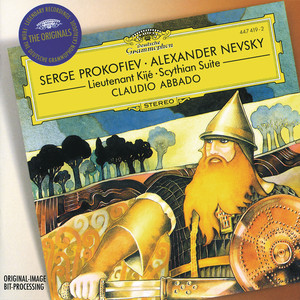 | Scythian Suite, Op. 20 - "Ala and Lolly": II. The Enemy God and the Dance of the Spirits of Darkness | Sergei Prokofiev, Chicago Symphony Orchestra, Claudio Abbado | C Major | 3 | 8B | 118 BPM | |
 | Carmen Suite No. 1: VI. Les toréadors (Act I Prelude. Allegro giocoso) – I. Andante moderato (Fate Motive) | Georges Bizet, Deutsches Symphonie-Orchester Berlin, Ferenc Fricsay | D Minor | 4 | 7A | 125 BPM | |
 | Dvořák: Symphony No. 9 in E Minor, Op. 95, B. 178 "From the New World": IV. Allegro con fuoco | Antonín Dvořák, José Serebrier, Bournemouth Symphony Orchestra | E Minor | 1 | 9A | 132 BPM | |
 | Tchaikovsky: 1812 Overture in E-Flat Major, Op. 49 | Pyotr Ilyich Tchaikovsky, Daniel Barenboim, Chicago Symphony Orchestra | E♭ Major | 2 | 5B | 71 BPM | |
 | Violin Concerto No. 1 in A minor, BWV 1041: I. (Allegro moderato) | Johann Sebastian Bach, Daniel Lozakovich, Chamber Orchestra of the Bavarian Radio, Radoslaw Szulc, Olga Watts | A Minor | 4 | 8A | 91 BPM | |
 | Symphony No. 3 in C Minor, Op. 78 "Organ": Allegro moderato | Camille Saint-Saëns, Eugene Ormandy, Philadelphia Orchestra | A♭ Major | 1 | 4B | 109 BPM | |
 | Fruhlingsstimmen (Voices Of Spring), Op. 410 | Strauss Festival Orchestra, Johann Strauss II | B♭ Major | 1 | 6B | 99 BPM | |
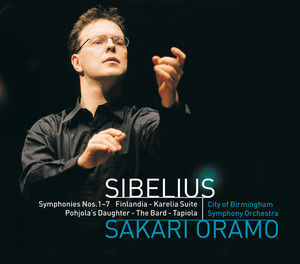 | Sibelius: Finlandia, Op. 26 | Jean Sibelius, Sakari Oramo, City Of Birmingham Symphony Orchestra | A♭ Major | 1 | 4B | 150 BPM | |
 | Tchaikovsky: Romeo and Juliet, Fantasy Overture (Excerpt) | Pyotr Ilyich Tchaikovsky, Oslo Philharmonic Orchestra, Mariss Jansons | B Minor | 1 | 10A | 79 BPM | |
 | Das Rheingold: Vorspiel | Richard Wagner, Frankfurter Opern- und Museumsorchester, Sebastian Weigle | D Major | 0 | 10B | 179 BPM | |
 | Spartacus: Adagio of Spartacus and Phrygia | Aram Khachaturian, Wiener Philharmoniker | A♭ Major | 1 | 4B | 129 BPM | |
 | Holst: The Planets, Op. 32: IV. Jupiter, the Bringer of Jollity | Gustav Holst, Sir Malcolm Sargent, BBC Symphony Orchestra | F Major | 2 | 7B | 86 BPM | |
 | Symphony No. 9 in D Minor, Op. 125: II. Molto vivace | Great Festival Orchestra | D Minor | 2 | 7A | 123 BPM | |
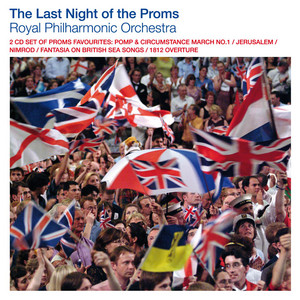 | Suppé: Leichte Kavallerie: Ouvertüre | Franz von Suppé, Royal Philharmonic Orchestra, Philip Ellis | A Major | 3 | 11B | 85 BPM | |
 | Peer Gynt Suite No. 1, Op. 46: IV. In the Hall of the Mountain King | Tbilisi Symphony Orchestra | F♯ Major | 2 | 2B | 95 BPM | |
 | Symphony No. 9 in E Minor, Op. 95, B. 178 "From the New World": IV. Allegro con fuoco | Antonín Dvořák, Symphonieorchester des Bayerischen Rundfunks, Andris Nelsons | E Minor | 1 | 9A | 143 BPM | |
 | Requiem: Dies Irae | Giuseppe Verdi, Sir Georg Solti, Chicago Symphony Orchestra, Chicago Symphony Chorus | G Major | 6 | 9B | 78 BPM | |
 | Prince Igor: Polovtsian Dances (Version for Chorus) | Alexander Borodin, Kiev Chamber Choir, Ukraine National Radio Symphony Orchestra, Theodore Kuchar | A Major | 2 | 11B | 110 BPM | |
 | Gayaneh: Gayaneh's Adagio | Aram Khachaturian, Wiener Philharmoniker | A♭ Major | 0 | 4B | 82 BPM | |
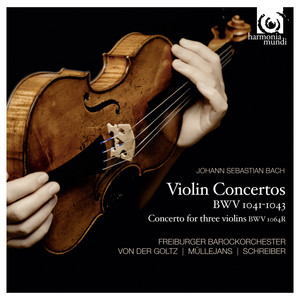 | Violin Concerto BWV 1042 in E Major: Violin Concerto BWV 1042 in E Major: I. Allegro | Johann Sebastian Bach, Freiburger Barockorchester, Gottfried Von Der Goltz | E♭ Major | 3 | 5B | 99 BPM | |
| The Sorcerer's Apprentice | Philharmonia Orchestra | D♭ Major | 2 | 3B | 130 BPM | |
 | VII. Finale | Igor Stravinsky, Brussels Philharmonic, Alexander Rahbari | D♭ Minor | 3 | 12A | 81 BPM | |
 | Radetzky-Marsch, Op. 228 | Johann Strauss I, Berliner Philharmoniker, Herbert von Karajan | A Major | 3 | 11B | 107 BPM |
- ISRC
- GBF078200300
- Label
- L-M Records/RCA Records