- BPM
- 175
- Key
- B♭ Major
- Camelot
- 6B
Henry V, A Shakespeare Scenario: Appendix II. Obal, diniou Limouzi by William Walton, Sir Neville Marriner, Academy of St. Martin in the Fields, Christopher Plummer, Celia Nicklin, Ian Watson, Choristers of Westminster Cathedral, Academy of St Martin in the Fields Chorus Song Details
William Walton, Sir Neville Marriner, Academy of St. Martin in the Fields, Christopher Plummer, Celia Nicklin, Ian Watson, Choristers of Westminster Cathedral, Academy of St Martin in the Fields Chorus's ' "Henry V, A Shakespeare Scenario: Appendix II. Obal, diniou Limouzi" was released on its scheduled release date, September 1, 1990. With This song being less than two minutes long, at 1:31, we are fairly confident that this song is not explicit and is safe for all ages. Based on the duration of this song, this song duration is much smaller than the average song duration. This song is part of Walton: Henry V by William Walton, Sir Neville Marriner, Academy of St. Martin in the Fields, Christopher Plummer, Celia Nicklin, Ian Watson, Choristers of Westminster Cathedral, Academy of St Martin in the Fields Chorus. The song's track number on the album is #13 out of 13 tracks. Based on our data, United Kingdom was the country where this track was produced or recorded. The popularity of Henry V, A Shakespeare Scenario: Appendix II. Obal, diniou Limouzi is currently not that popular right now. The overall mood can be danceable to some, especially with it's high amount of postive energy.
BPM and Tempo
Since Henry V, A Shakespeare Scenario: Appendix II. Obal, diniou Limouzi by William Walton, Sir Neville Marriner, Academy of St. Martin in the Fields, Christopher Plummer, Celia Nicklin, Ian Watson, Choristers of Westminster Cathedral, Academy of St Martin in the Fields Chorus has a tempo of 175 beats per a minute, the tempo markings of this song would be Vivace (lively and fast). With Henry V, A Shakespeare Scenario: Appendix II. Obal, diniou Limouzi being at 175 BPM, the half-time would be 88 BPM with a double-time of 350 BPM.In addition, we consider the tempo speed to be pretty fast for this song. The time signature for this track is 3/4.
Music Key
The music key of this track is B♭ Major. Or for those who are familiar with the camelot wheel, this song has a camelot key of 6B. So, the perfect camelot match for 6B would be either 6B or 7A. While, 7B can give you a low energy boost. For moderate energy boost, you would use 3B and a high energy boost can either be 8B or 1B. Though, if you want a low energy drop, you should looking for songs with either a camelot key of 6A or 5B will give you a low energy drop, 9B would be a moderate one, and 4B or 11B would be a high energy drop. Lastly, 3A allows you to change the mood.
Want to find the BPM and music key for other songs? Check out our BPM and Key Finder page!
- Popularity
- 9%
- Loudness
- -23.909 dB
- Acousticness
- 88%
- Danceability
- 46%
- Energy
- 10%
- Instrumentalness
- 80%
- Liveness
- 23%
- Loudness
- 60%
- Speechiness
- 4%
- Valence
- 78%
Recommendations
| Track | Artist | Key | Energy | Camelot | BPM | ||
|---|---|---|---|---|---|---|---|
 | Sibelius: Symphony No. 3, Op. 52: I. Allegro moderato | Jean Sibelius, Sakari Oramo, City Of Birmingham Symphony Orchestra | C Major | 1 | 8B | 127 BPM | |
 | In the Steppes of Central Asia | Alexander Borodin, Ukraine National Radio Symphony Orchestra, Theodore Kuchar | G Minor | 1 | 6A | 73 BPM | |
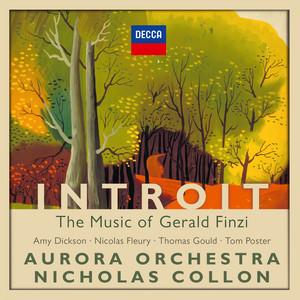 | Love's Labour's Lost, Op. 28: 1. Soliloquy 1: So sweet a kiss the golden sun gives not - Instrumental | Gerald Finzi, Aurora Orchestra, Nicholas Collon | C Minor | 1 | 5A | 99 BPM | |
 | Pavane for Dead Princess | Maurice Ravel, David Robertson, Orchestre National De Lyon, Irina Mejoueva | G Major | 1 | 9B | 77 BPM | |
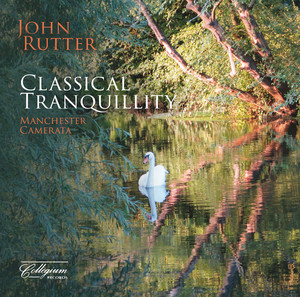 | Symphonic Dances, Op. 64: II. Allegretto grazioso (Arr. for Orchestra by John Rutter) | Edvard Grieg, John Rutter, Manchester Camerata | A Major | 1 | 11B | 101 BPM | |
 | Pavane, Op. 50 | Gabriel Fauré, Sinfonieorchester Basel, Ivor Bolton | F♯ Minor | 0 | 11A | 66 BPM | |
 | Orfeo ed Euridice, Wq. 30 / Act II: Dance of the Blessed Spirits (Arr. by Mathieu Herzog for Cello and Strings) | Christoph Willibald Gluck, Camille Thomas, Brussels Philharmonic, Mathieu Herzog | B Minor | 1 | 10A | 87 BPM | |
 | Ma mère l'oye, M. 62: Apothéose. Le jardin féerique | Maurice Ravel, Orchestre National De Lyon, Leonard Slatkin | C Major | 0 | 8B | 62 BPM | |
 | Le carnaval des animaux, R. 125: Le cygne | Camille Saint-Saëns, Mischa Maisky, Orpheus Chamber Orchestra | C Major | 0 | 8B | 83 BPM | |
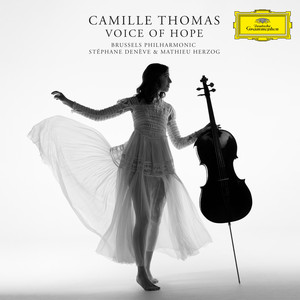 | Dido and Aeneas, Z. 626 / Act III: "When I Am Laid in Earth" Dido's Lamento (Arr. by Mathieu Herzog for Cello and Strings) | Henry Purcell, Camille Thomas, Brussels Philharmonic, Mathieu Herzog | G Minor | 1 | 6A | 77 BPM | |
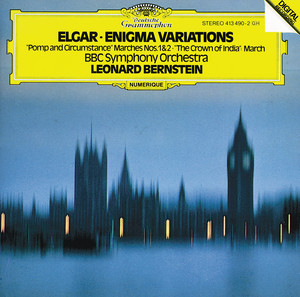 | Enigma Variations, Op. 36: Var. 9. Adagio "Nimrod" | Edward Elgar, BBC Symphony Orchestra, Leonard Bernstein | E♭ Major | 0 | 5B | 79 BPM | |
 | Walton: Henry V: Passacaglia "The Death of Falstaff" | William Walton, Douglas Boyd, Chamber Orchestra of Europe | E Minor | 0 | 9A | 86 BPM | |
 | 5 Stücke im Volkston, Op. 102: II. Langsam | Robert Schumann, Martin Fröst, Royal Stockholm Philharmonic Orchestra | F Major | 0 | 7B | 62 BPM | |
 | When I Am Laid in Earth | Henry Purcell, United Strings of Europe, Julian Azkoul | G Minor | 0 | 6A | 83 BPM | |
 | Moonbeams | Leo Livens, Duncan Honeybourne | C Major | 0 | 8B | 64 BPM | |
 | Suite No. 1, "Orientale": I. Okenstamning: Adagio | Kurt Atterberg, Ferenc Balogh, Gyorgy Kertesz, Andras Kiss, Ilona Prunyi | B Minor | 1 | 10A | 61 BPM | |
 | Over the Mountains High (Arr. J. Lloyd Webber for cello and piano) | Frederick Delius, Julian Lloyd Webber, John Lenehan | D Minor | 1 | 7A | 100 BPM | |
 | Piano Concerto No. 2 in F Major, Op. 102: II. Andante | Dmitri Shostakovich, Boris Giltburg, Royal Liverpool Philharmonic Orchestra, Vasily Petrenko | C Minor | 0 | 5A | 80 BPM | |
 | There Will Come | Rebecca Dale, Philharmonia Orchestra, Michael Collins, Steven Isserlis | B♭ Major | 1 | 6B | 67 BPM | |
 | Prelude | William Alwyn, Ashley Wass | G Minor | 0 | 6A | 169 BPM | |
 | Hymnus for 12 Cellos, Op. 57 | Julius Klengel, Andreas Brantelid, Ingemar Brantelid, Henrik Dam Thomsen, Øystein Sonstad, Niels Ullner, Emilie Eskær, Jakob La Cour, Louisa Schwab, Morten Zeuthen, Live Johansson, Samira Dayyani, Lea Brøndal | G Major | 1 | 9B | 102 BPM | |
 | Rachmaninov: Symphony No. 3 in A Minor, Op. 44: II. Adagio ma non troppo - Allegro vivace | Sergei Rachmaninoff, Mariss Jansons, St. Petersburg Philharmonic Orchestra | E♭ Minor | 0 | 2A | 117 BPM | |
 | Scapino, C. 40 | William Walton, Sinfonia Of London, John Wilson | D Major | 3 | 10B | 140 BPM | |
 | Orb and Sceptre | William Walton, Bournemouth Symphony Orchestra, David Hill | E Major | 3 | 12B | 97 BPM | |
 | 5 Preludes: No. 4, Andante con moto | William Alwyn, Royal Liverpool Philharmonic Orchestra, David Lloyd-Jones | E Major | 0 | 12B | 76 BPM |
- ISRC
- GBLWD9010313
- Label
- L-M Records/RCA Records