- BPM
- 95
- Key
- C Minor
- Camelot
- 5A
Romeo and Juliet, Fantasy Overture - TH.42: Romeo and Juliet, Fantasy Overture, TH 42, Love Theme by Pyotr Ilyich Tchaikovsky, Berliner Philharmoniker, Herbert von Karajan Song Details
"Romeo and Juliet, Fantasy Overture - TH.42: Romeo and Juliet, Fantasy Overture, TH 42, Love Theme" by Pyotr Ilyich Tchaikovsky, Berliner Philharmoniker, Herbert von Karajan had its release date on January 1, 1996. With this song being around four minutes long, at 3:33, the duration of this song is pretty average compared to other songs. This track is safe for children and doesn't appear to contain any foul language, since the "Explicit" tag was not present in this track. There are a total of 12 in the song's album "Romantic Karajan". In this album, this song's track order is #3. Furthermore, we believe that the track originated from Germany. In terms of popularity, Romeo and Juliet, Fantasy Overture - TH.42: Romeo and Juliet, Fantasy Overture, TH 42, Love Theme is currently below average in popularity. In our opinion, the overall tone is not very danceable and projects negative sounds, such as being sad, depressed, or angry.
BPM and Tempo
With Romeo and Juliet, Fantasy Overture - TH.42: Romeo and Juliet, Fantasy Overture, TH 42, Love Theme by Pyotr Ilyich Tchaikovsky, Berliner Philharmoniker, Herbert von Karajan having a BPM of 95 with a half-time of 48 BPM and a double-time of 190 BPM, we would consider this track to have a Andante (at a walking pace) tempo marking. Because of this, we believe that the song has an overall slow tempo. Looking at the BPM of this song, this song might go great with yoga or pilates. The time signature for this track is 4/4.
Music Key
This song has a musical key of C Minor. Which also means that the camelot key for this song is 5A. So, the perfect camelot match for 5A would be either 5A or 4B. While, a low energy boost can consist of either 5B or 6A. For moderate energy boost, you would use 2A and a high energy boost can either be 7A or 12A. However, if you are looking for a low energy drop, finding a song with a camelot key of 4A would be a great choice. Where 8A would give you a moderate drop, and 3A or 10A would be a high energy drop. Lastly, 8B allows you to change the mood.
Want to find the BPM and music key for other songs? Check out our BPM and Key Finder page!
- Popularity
- 32%
- Loudness
- -26.149 dB
- Acousticness
- 96%
- Danceability
- 22%
- Energy
- 7%
- Instrumentalness
- 82%
- Liveness
- 9%
- Loudness
- 56%
- Speechiness
- 4%
- Valence
- 19%
Recommendations
| Track | Artist | Key | Energy | Camelot | BPM | ||
|---|---|---|---|---|---|---|---|
 | Aufforderung zum Tanz, Op. 65 (Orch. Berlioz) | Carl Maria von Weber, Ottomar Borwitzky, Berliner Philharmoniker, Herbert von Karajan | D Major | 1 | 10B | 111 BPM | |
 | Symphony No. 8 in G Major, Op. 88, B. 163: III. Allegretto grazioso – Molto vivace | Antonín Dvořák, Wiener Philharmoniker, Herbert von Karajan | C Minor | 1 | 5A | 83 BPM | |
 | Rachmaninov: Rhapsody on a Theme of Paganini, Op. 43: Variation XVIII | Sergei Rachmaninoff, Nikolai Lugansky, Sakari Oramo, City Of Birmingham Symphony Orchestra | D♭ Major | 1 | 3B | 61 BPM | |
 | Faust, CG 4, Ballet Music: VI. Variations du miroir. Allegretto | Charles Gounod, Berliner Philharmoniker, Herbert von Karajan | E Major | 1 | 12B | 90 BPM | |
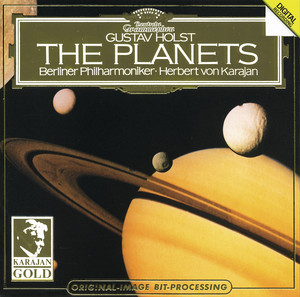 | The Planets, Op. 32: 4. Jupiter, the Bringer of Jollity | Gustav Holst, Berliner Philharmoniker, Herbert von Karajan | G Minor | 3 | 6A | 140 BPM | |
 | Les Sylphides: 2. Nocturne, Op. 32, No. 2 | Frédéric Chopin, National Philharmonic Orchestra, Richard Bonynge | A♭ Major | 1 | 4B | 125 BPM | |
| The Planets, Op. 32: 3. Mercury, the Winged Messenger | Gustav Holst, Berliner Philharmoniker, Herbert von Karajan | A Major | 1 | 11B | 108 BPM | |
 | Gaîté parisienne: Barcarolle | Jacques Offenbach, Berliner Philharmoniker, Herbert von Karajan | D Major | 0 | 10B | 82 BPM | |
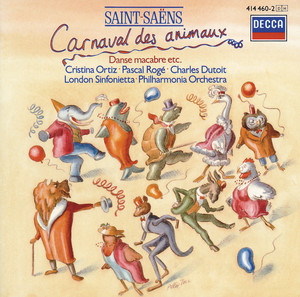 | Le carnaval des animaux, R. 125: XIII. Le cygne | Camille Saint-Saëns, Christopher van Kampen, Pascal Rogé, Cristina Ortiz, London Sinfonietta, Charles Dutoit | G Major | 0 | 9B | 130 BPM | |
 | Piano Concerto in A minor, Op. 16: II. Adagio | Edvard Grieg, Krystian Zimerman, Berliner Philharmoniker, Herbert von Karajan | D♭ Major | 0 | 3B | 77 BPM | |
 | Ancient Airs & Dances, Suite III, P. 172: I. Italiana (Anonymous) | Ottorino Respighi, Berliner Philharmoniker, Herbert von Karajan | F Minor | 1 | 4A | 75 BPM | |
 | Nabucco: Overture | Giuseppe Verdi, Berliner Philharmoniker, Claudio Abbado | F Major | 2 | 7B | 100 BPM | |
 | Peer Gynt Suite No. 1, Op. 46: III. Anitra's Dance | Edvard Grieg, Berliner Philharmoniker, Herbert von Karajan | D Minor | 0 | 7A | 84 BPM | |
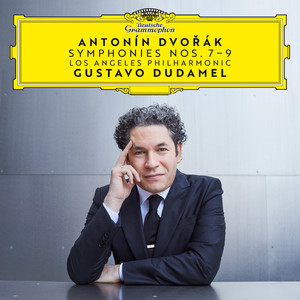 | Symphony No. 8 in G Major, Op. 88, B. 163: III. Allegretto grazioso - Molto vivace | Antonín Dvořák, Los Angeles Philharmonic, Gustavo Dudamel | C Major | 1 | 8B | 127 BPM | |
 | Salute D'Amour | Edward Elgar, Ilmar Lapinsch, Mostar Sinfonie Orchester | E Major | 1 | 12B | 128 BPM | |
 | Siegfried-Idyll, WWV 103 | Richard Wagner, Berliner Philharmoniker, Rafael Kubelík | B Major | 1 | 1B | 81 BPM | |
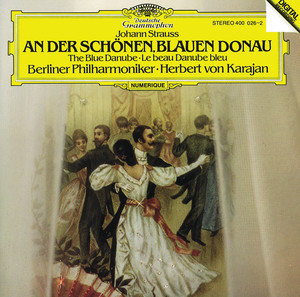 | Accelerationen Waltz, Op. 234 | Johann Strauss II, Berliner Philharmoniker, Herbert von Karajan | G Major | 0 | 9B | 175 BPM | |
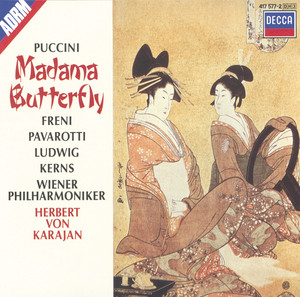 | Madama Butterfly, Act II: Coro a bocca chiusa "Humming Chorus" | Giacomo Puccini, Wiener Staatsopernchor, Wiener Philharmoniker, Herbert von Karajan | B♭ Major | 0 | 6B | 78 BPM | |
 | Alborada del gracioso, M. 43: Assez vif | Maurice Ravel, Berliner Philharmoniker, Pierre Boulez | D Major | 1 | 10B | 121 BPM | |
 | Pan Voyevoda, Op. 59: III. Nocturne: Clair de lune | Nikolai Rimsky-Korsakov, Moscow Symphony Orchestra, Igor Golovschin | E♭ Major | 1 | 5B | 138 BPM | |
 | Symphony No. 6 in B Minor, Op. 74, 'Pathetique': II. Allegro con grazia | Pyotr Ilyich Tchaikovsky, Royal Liverpool Philharmonic Orchestra, Domingo Hindoyan | B Minor | 1 | 10A | 74 BPM | |
 | Orchestral Suite No. 2 in B Minor, BWV 1067: VII. Badinerie | Johann Sebastian Bach, Berliner Philharmoniker, Herbert von Karajan | A♭ Minor | 2 | 1A | 67 BPM | |
 | Symphony No. 2 in D Major, Op. 73: III. Allegretto grazioso (quasi andantino) | Johannes Brahms, Berliner Philharmoniker, Herbert von Karajan | C Major | 0 | 8B | 83 BPM | |
 | The Rite of Spring, K15, Pt. 1: V. Games of the Rival Tribes | Igor Stravinsky, Berliner Philharmoniker, Herbert von Karajan | F Minor | 2 | 4A | 81 BPM | |
 | Delirien Waltz, Op. 212 | Josef Strauss, Berliner Philharmoniker, Herbert von Karajan | C Major | 2 | 8B | 97 BPM |
- ISRC
- DEF056601211
- Label
- L-M Records/RCA Records