- BPM
- 85
- Key
- G Minor
- Camelot
- 6A
Strauss, R: Sinfonia domestica, Op. 53: Wiegenlied. Mässig langsam by Richard Strauss, Rudolf Kempe, Staatskapelle Dresden Song Details
"Strauss, R: Sinfonia domestica, Op. 53: Wiegenlied. Mässig langsam" by Richard Strauss, Rudolf Kempe, Staatskapelle Dresden had its release date on January 1, 2013. This song is about six minutes long, preciously at 5:55, making this song fairly long compared to other songs. There are a total of 103 in the song's album "Strauss: Complete Orchestral Works". In this album, this song's track order is #86. Furthermore, we believe that the track originated from United Kingdom. Strauss, R: Sinfonia domestica, Op. 53: Wiegenlied. Mässig langsam is unknown right now. In our opinion, the overall tone is not very danceable and projects negative sounds, such as being sad, depressed, or angry.
BPM and Tempo
With Strauss, R: Sinfonia domestica, Op. 53: Wiegenlied. Mässig langsam by Richard Strauss, Rudolf Kempe, Staatskapelle Dresden having a BPM of 85 with a half-time of 42 BPM and a double-time of 170 BPM, we would consider this track to have a Andante (at a walking pace) tempo marking. Because of this, we believe that the song has an overall slow tempo. Looking at the BPM of this song, this song might go great with yoga or pilates. The time signature for this track is 3/4.
Music Key
This song has a musical key of G Minor. Which also means that the camelot key for this song is 6A. So, the perfect camelot match for 6A would be either 6A or 5B. While, a low energy boost can consist of either 6B or 7A. For moderate energy boost, you would use 3A and a high energy boost can either be 8A or 1A. However, if you are looking for a low energy drop, finding a song with a camelot key of 5A would be a great choice. Where 9A would give you a moderate drop, and 4A or 11A would be a high energy drop. Lastly, 9B allows you to change the mood.
Want to find the BPM and music key for other songs? Check out our BPM and Key Finder page!
- Popularity
- 0%
- Loudness
- -26.504 dB
- Acousticness
- 97%
- Danceability
- 9%
- Energy
- 7%
- Instrumentalness
- 84%
- Liveness
- 16%
- Loudness
- 56%
- Speechiness
- 4%
- Valence
- 4%
Recommendations
| Track | Artist | Key | Energy | Camelot | BPM | ||
|---|---|---|---|---|---|---|---|
 | Pirogov Suite, Op. 76a (Arr. L. Atovmyan for Orchestra): V. Finale | Dmitri Shostakovich, Bolshoi Theatre Orchestra, Maxim Shostakovich | E♭ Major | 2 | 5B | 107 BPM | |
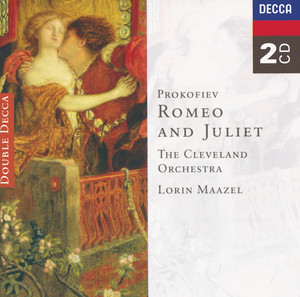 | Romeo and Juliet, Op. 64: Introduction | Sergei Prokofiev, The Cleveland Orchestra, Lorin Maazel | E Major | 1 | 12B | 112 BPM | |
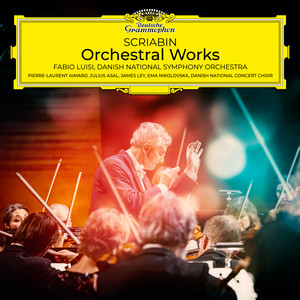 | Symphony No. 1 in E Major, Op. 26: I. Lento | Alexander Scriabin, Danish National Symphony Orchestra, Fabio Luisi | B♭ Minor | 2 | 3A | 86 BPM | |
 | Romeo and Juliette, Op. 64 (Arr. for Viola and Piano by Vadim Borisovsky, Orchestration for Viola and String Orchestra by François Vallières): Introduction | Sergei Prokofiev, Elvira Misbakhova, I Musici de Montréal, Jean-François Rivest | D Major | 1 | 10B | 99 BPM | |
 | Rêve Astral | Etoilee | F Minor | 8 | 4A | 119 BPM | |
 | Tchaikovsky: Variations on a Rococo Theme, Op. 33: Introduction - Thema | Pyotr Ilyich Tchaikovsky, Munich Philharmonic Orchestra, Valery Gergiev | B♭ Minor | 1 | 3A | 136 BPM | |
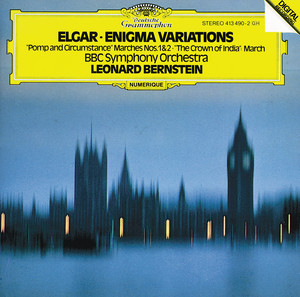 | Enigma Variations, Op. 36: Var. 5. Moderato "R.P.A." | Edward Elgar, BBC Symphony Orchestra, Leonard Bernstein | C Minor | 0 | 5A | 83 BPM | |
 | Sibelius: Symphony No. 5 in E-Flat Major, Op. 82: III. Allegro molto (1915 Version) | Jean Sibelius, San Francisco Symphony, Esa-Pekka Salonen | E♭ Major | 1 | 5B | 76 BPM | |
 | Schoenberg: Verklärte Nacht, Op. 4: II. Molto rallentando (1943 Version) | Arnold Schoenberg, Daniel Barenboim, Chicago Symphony Orchestra | E Major | 2 | 12B | 76 BPM | |
 | Wagner - Tannhauser: Pilgrim's Chorus, S443/R276 | Franz Liszt, William Wolfram | B Major | 0 | 1B | 95 BPM | |
 | VII. Finale | Igor Stravinsky, Brussels Philharmonic, Alexander Rahbari | D♭ Minor | 3 | 12A | 81 BPM | |
 | Symphony No. 5 in D Minor, Op. 47: II. Allegretto - 2017 Remastered Version | Dmitri Shostakovich, Leonard Bernstein, New York Philharmonic | C Major | 3 | 8B | 80 BPM | |
 | Le rouet d'Omphale, Op. 31: Le Rouet d'Omphale | Camille Saint-Saëns, Slovak Radio Symphony Orchestra, Stephen Gunzenhauser | D Major | 0 | 10B | 121 BPM | |
 | Nabucco: Overture | Giuseppe Verdi, Berliner Philharmoniker, Claudio Abbado | F Major | 2 | 7B | 100 BPM | |
 | Gounod: Messe solennelle de Sainte Cécile: IV. Offertorium | Charles Gounod, Georges Prêtre, Jean-Louis Gil | A♭ Major | 0 | 4B | 80 BPM | |
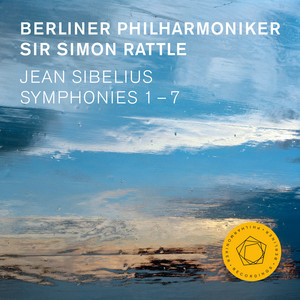 | Symphony No. 1 in E Minor, Op. 39: I. Andante, ma non troppo - Allegro energico | Jean Sibelius, Berliner Philharmoniker, Sir Simon Rattle | E Minor | 1 | 9A | 77 BPM | |
 | Fauré: Élégie, Op. 24 (Orchestral Version) | Gabriel Fauré, Paavo Järvi, Eric Picard, Orchestre de Paris | A♭ Major | 0 | 4B | 89 BPM | |
 | Symphony No. 2 in C Minor "Resurrection": III. In ruhig fließender Bewegung | Gustav Mahler, Leonard Bernstein, New York Philharmonic | B Minor | 0 | 10A | 112 BPM | |
 | St. Matthew Passion, BWV 244 / Part Two: "Erbarme dich" | Johann Sebastian Bach, Anne Sofie von Otter, Chicago Symphony Orchestra, Sir Georg Solti | B Minor | 1 | 10A | 93 BPM | |
 | Pavane pour une infante défunte | Maurice Ravel, Richard Sebring, Boston Pops Orchestra, John Williams | G Major | 1 | 9B | 93 BPM | |
 | 4 Impromptus, D. 899: 3. Andante in G-Flat Major | Franz Schubert, Vladimir Horowitz | F♯ Major | 0 | 2B | 65 BPM | |
 | Orpheo ed Euridice, Wq. 30, Act II: Dance of the Blessed Spirits | Christoph Willibald Gluck, Eugene Ormandy, Philadelphia Orchestra | D Minor | 1 | 7A | 67 BPM | |
 | A Midsummer Night's Dream, Incidental Music, Op.61, MWV M 13: No.1 Scherzo | Felix Mendelssohn, Judi Dench, Boston Symphony Orchestra, Seiji Ozawa | G Minor | 2 | 6A | 123 BPM | |
 | In the Steppes of Central Asia | Alexander Borodin, Royal Philharmonic Orchestra, Vladimir Ashkenazy | A Major | 0 | 11B | 69 BPM | |
 | Stravinsky: The Rite of Spring, Pt. 1 "Adoration of the Earth": Introduction - Augurs of Spring - Dances of the Young Girls - Ritual of Abduction | Igor Stravinsky, Sir Simon Rattle, City Of Birmingham Symphony Orchestra | A Major | 1 | 11B | 103 BPM |
- ISRC
- GBAYC1201710
- Label
- L-M Records/RCA Records