- BPM
- 79
- Key
- F Major
- Camelot
- 7B
Six Songs from A Shropshire Lad (Orchestrated by Roderick Williams): No. 1, Loveliest of trees by George Butterworth, Hallé, Sir Mark Elder, Roderick Williams Song Details
"Six Songs from A Shropshire Lad (Orchestrated by Roderick Williams): No. 1, Loveliest of trees" by George Butterworth, Hallé, Sir Mark Elder, Roderick Williams had its release date on November 4, 2022. The duration of This song is about two minutes long, specifically at 2:59. This song does not appear to have any foul language. Six Songs from A Shropshire Lad (Orchestrated by Roderick Williams): No. 1, Loveliest of trees's duration is considered a little bit shorter than the average duration of a typical track. The song is number 5 out of 21 in A Shropshire Lad: English Songs Orchestrated by Roderick Williams by Hallé, Sir Mark Elder, Roderick Williams. Going off of the ISRC code of this track, we detected that the origin of this track is from United Kingdom. Six Songs from A Shropshire Lad (Orchestrated by Roderick Williams): No. 1, Loveliest of trees is not that popular right now. In our opinion, the overall tone is not very danceable and projects negative sounds, such as being sad, depressed, or angry.
BPM and Tempo
The tempo marking of Six Songs from A Shropshire Lad (Orchestrated by Roderick Williams): No. 1, Loveliest of trees by George Butterworth, Hallé, Sir Mark Elder, Roderick Williams is Andante (at a walking pace), since this song has a tempo of 79 BPM. With that information, we can conclude that the song has a slow tempo. The time signature for this track is 4/4.
Music Key
This song is in the music key of F Major. This also means that this song has a camelot key of 7B. So, the perfect camelot match for 7B would be either 7B or 8A. While, 8B can give you a low energy boost. For moderate energy boost, you would use 4B and a high energy boost can either be 9B or 2B. Though, if you want a low energy drop, you should looking for songs with either a camelot key of 7A or 6B will give you a low energy drop, 10B would be a moderate one, and 5B or 12B would be a high energy drop. Lastly, 4A allows you to change the mood.
Want to find the BPM and music key for other songs? Check out our BPM and Key Finder page!
- Popularity
- 5%
- Loudness
- -27.93 dB
- Acousticness
- 87%
- Danceability
- 12%
- Energy
- 2%
- Instrumentalness
- 43%
- Liveness
- 10%
- Loudness
- 53%
- Speechiness
- 4%
- Valence
- 10%
Recommendations
| Track | Artist | Key | Energy | Camelot | BPM | ||
|---|---|---|---|---|---|---|---|
![Black Swan: Black Swan (after Brahms' 6 Piano Pieces, Op. 118: No. 2, Intermezzo in A Major) [After Brahms' 6 Piano Pieces, Op. 118, No. 2. Intermezzo in A Major] by Bright Sheng, Seattle Symphony Orchestra, Gerard Schwarz](https://i.scdn.co/image/ab67616d00001e026b866f11d196d93dc5fe7ddc) | Black Swan: Black Swan (after Brahms' 6 Piano Pieces, Op. 118: No. 2, Intermezzo in A Major) [After Brahms' 6 Piano Pieces, Op. 118, No. 2. Intermezzo in A Major] | Bright Sheng, Seattle Symphony Orchestra, Gerard Schwarz | G Major | 3 | 9B | 80 BPM | |
 | A Cotswold Hill Tune | Charles Wilfrid Orr, Royal Ballet Sinfonia, David Lloyd-Jones | G Major | 1 | 9B | 81 BPM | |
 | Suite bergamasque: Clair de lune | Andre Caplet, Claude Debussy, Gustave Cloez, Rheinland-Pfalz State Philharmonic Orchestra, Leif Segerstam | D♭ Major | 0 | 3B | 68 BPM | |
 | English Suite: Jaunt | Paul Lewis, Royal Northern Sinfonia, David Lloyd-Jones | C Major | 2 | 8B | 125 BPM | |
 | Serenade for String Orchestra in C Major, Op. 48, TH 48: III. Elegie | Pyotr Ilyich Tchaikovsky, The Russian Virtuosi of Europe, Yuri Zhislin | G Minor | 0 | 6A | 99 BPM | |
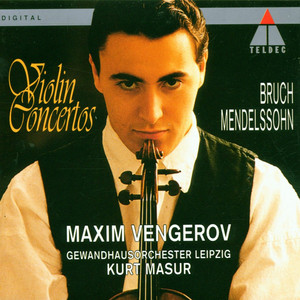 | Bruch: Violin Concerto No. 1 in G Minor, Op. 26: II. Adagio | Max Bruch, Maxim Vengerov, Kurt Masur, Gewandhausorchester | E♭ Major | 1 | 5B | 110 BPM | |
 | Variations on a theme by Haydn, Op. 56a "St. Anthony Variations": Thema, "Chorale St. Antoni". Andante | Johannes Brahms, Pittsburgh Symphony Orchestra, Marek Janowski | B♭ Major | 0 | 6B | 175 BPM | |
 | Capriol Suite: 5. Pied-en- l'air | Peter Warlock, Academy of St. Martin in the Fields, Nicholas Kraemer, Sir Neville Marriner | G Major | 1 | 9B | 113 BPM | |
 | Dvořák: Serenade for Strings in E Major, Op. 22, B. 52: I. Moderato | Antonín Dvořák, London Chamber Orchestra, Christopher Warren-Green | E Major | 1 | 12B | 82 BPM | |
 | V. Moderato | George Butterworth, BBC National Orchestra Of Wales, Kriss Russman | F Major | 1 | 7B | 78 BPM | |
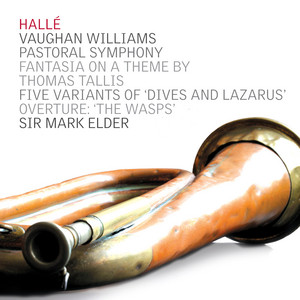 | Five Variants of ‘Dives and Lazarus’ | Ralph Vaughan Williams, Hallé, Sir Mark Elder | B Minor | 1 | 10A | 71 BPM | |
 | Holst: The Planets, Op. 32: IV. Jupiter, the Bringer of Jollity | Gustav Holst, Sir Adrian Boult, London Philharmonic Orchestra | G Minor | 3 | 6A | 133 BPM | |
 | In the Steppes of Central Asia | Alexander Borodin, Royal Philharmonic Orchestra, Vladimir Ashkenazy | A Major | 0 | 11B | 69 BPM | |
| Symphony No. 3 - 'Pastoral Symphony': II. Lento moderato | Ralph Vaughan Williams, Hallé, Sir Mark Elder | G Minor | 0 | 6A | 103 BPM | |
| Suite: Graceful Dance | Ernest Tomlinson, Royal Northern Sinfonia, David Lloyd-Jones | D Major | 3 | 10B | 133 BPM | |
 | String Quartet No. 12 in F Major, Op. 96, B. 179 "American": II. Lento | Antonín Dvořák, Pavel Haas Quartet | D Minor | 0 | 7A | 87 BPM | |
 | Donna Diana: Overture | Emil Nikolaus von Reznicek, Leonard Bernstein, New York Philharmonic | A Major | 5 | 11B | 102 BPM | |
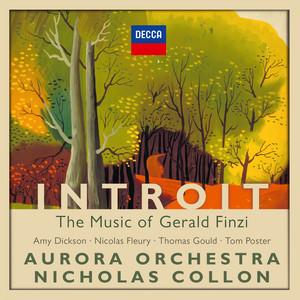 | Who is Sylvia?, Op.18, No.2 - Instrumental | Gerald Finzi, Nicolas Fleury, Aurora Orchestra, Nicholas Collon | E♭ Major | 1 | 5B | 138 BPM | |
 | Harp Concerto in C Minor: II. Adagio | Henriette Renié, Orchestre Régional Avignon Provence, Samuel Jean, Emmanuel Ceysson | D♭ Major | 0 | 3B | 63 BPM | |
 | Sonata for Flute and Piano (Orchestrated by Sir Lennox Berkeley): I. Allegro malinconico - Remastered | Francis Poulenc, James Galway, Charles Dutoit | C Major | 1 | 8B | 84 BPM | |
 | Prélude à l'après-midi d'un faune, CD 87a | Claude Debussy, The Cleveland Orchestra, Pierre Boulez | A♭ Minor | 0 | 1A | 75 BPM | |
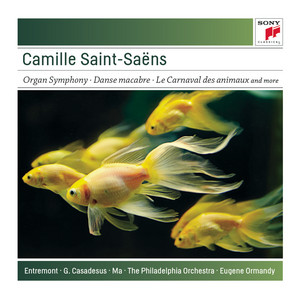 | Symphony No. 3 in C Minor, Op. 78 "Organ": Allegro | Camille Saint-Saëns, Eugene Ormandy, E. Power Biggs, Philadelphia Orchestra | F Major | 3 | 7B | 111 BPM | |
 | Fauré: Pavane, Op. 50 | Gabriel Fauré, New Philharmonia Orchestra/Sir David Willcocks/Gareth Morris, Gareth Morris, Sir David Willcocks, New Philharmonia Orchestra | F♯ Minor | 0 | 11A | 130 BPM | |
 | Dolly Suite, Op. 56 (arr. H. Rabaud): III. Le Jardin de Dolly | Henri Rabaud, Gabriel Fauré, RTE Sinfonietta, John Georgiadis | E Major | 0 | 12B | 64 BPM | |
 | Symphony No. 2 in A Minor, Op. 55: II. Adagio | Camille Saint-Saëns, Orchestre de la Suisse Romande, Marek Janowski | E Minor | 1 | 9A | 135 BPM |
- ISRC
- GBXSY2200013
- Label
- L-M Records/RCA Records