- BPM
- 175
- Key
- B♭ Major
- Camelot
- 6B
Variations on a theme by Haydn, Op. 56a "St. Anthony Variations": Thema, "Chorale St. Antoni". Andante by Johannes Brahms, Pittsburgh Symphony Orchestra, Marek Janowski Song Details
"Variations on a theme by Haydn, Op. 56a "St. Anthony Variations": Thema, "Chorale St. Antoni". Andante" by Johannes Brahms, Pittsburgh Symphony Orchestra, Marek Janowski had its release date on August 1, 2007. The duration of This song is about two minutes long, specifically at 2:03. This song does not appear to have any foul language. Variations on a theme by Haydn, Op. 56a "St. Anthony Variations": Thema, "Chorale St. Antoni". Andante's duration is considered a little bit shorter than the average duration of a typical track. The song is number 1 out of 14 in Brahms: Variations on a Theme by Haydn & Symphony No. 1 by Johannes Brahms, Pittsburgh Symphony Orchestra, Marek Janowski. Going off of the ISRC code of this track, we detected that the origin of this track is from Netherlands. The popularity of Variations on a theme by Haydn, Op. 56a "St. Anthony Variations": Thema, "Chorale St. Antoni". Andante is currently not that popular right now. In our opinion, the overall tone is not very danceable and projects negative sounds, such as being sad, depressed, or angry.
BPM and Tempo
The tempo marking of Variations on a theme by Haydn, Op. 56a "St. Anthony Variations": Thema, "Chorale St. Antoni". Andante by Johannes Brahms, Pittsburgh Symphony Orchestra, Marek Janowski is Vivace (lively and fast), since this song has a tempo of 175 BPM. With that information, we can conclude that the song has a fast tempo. The time signature for this track is 3/4.
Music Key
This song is in the music key of B♭ Major. This also means that this song has a camelot key of 6B. So, the perfect camelot match for 6B would be either 6B or 7A. While, 7B can give you a low energy boost. For moderate energy boost, you would use 3B and a high energy boost can either be 8B or 1B. Though, if you want a low energy drop, you should looking for songs with either a camelot key of 6A or 5B will give you a low energy drop, 9B would be a moderate one, and 4B or 11B would be a high energy drop. Lastly, 3A allows you to change the mood.
Want to find the BPM and music key for other songs? Check out our BPM and Key Finder page!
- Popularity
- 18%
- Loudness
- -29.246 dB
- Acousticness
- 98%
- Danceability
- 10%
- Energy
- 2%
- Instrumentalness
- 97%
- Liveness
- 11%
- Loudness
- 51%
- Speechiness
- 4%
- Valence
- 19%
Recommendations
| Track | Artist | Key | Energy | Camelot | BPM | ||
|---|---|---|---|---|---|---|---|
 | Tchaikovsky: Variations on a Rococo Theme, Op. 33: Introduction - Thema | Pyotr Ilyich Tchaikovsky, Munich Philharmonic Orchestra, Valery Gergiev | B♭ Minor | 1 | 3A | 136 BPM | |
 | 4 Dance Episodes from Rodeo: No. 2, Corral Nocturne | Aaron Copland, Louis Lane, Atlanta Symphony Orchestra | D♭ Minor | 1 | 12A | 164 BPM | |
 | 2 Sketches: A Northern Dance | Adam Carse, Royal Northern Sinfonia, David Lloyd-Jones | E Minor | 2 | 9A | 104 BPM | |
 | English Folk Song Suite: 2. Intermezzo: My Bonny Boy | Ralph Vaughan Williams, Academy of St. Martin in the Fields, Sir Neville Marriner | C Minor | 0 | 5A | 64 BPM | |
 | Variations on a theme by Haydn, Op. 56a "St. Anthony Variations": Var. I | Johannes Brahms, Pittsburgh Symphony Orchestra, Marek Janowski | B♭ Major | 1 | 6B | 84 BPM | |
 | V. Pieds-en-l'air | Peter Warlock, Metamorphosen Berlin, Wolfgang Emanuel Schmidt | G Major | 0 | 9B | 85 BPM | |
 | Symphony No. 5 in B-Flat Major, D. 485: 3. Menuetto (Allegro molto) | Franz Schubert, Wiener Philharmoniker, Claudio Abbado | G Minor | 1 | 6A | 181 BPM | |
 | Symphony No. 1, Op. 9: III. Andante tranquillo | Samuel Barber, Leonard Slatkin, St. Louis Symphony | B♭ Major | 3 | 6B | 93 BPM | |
 | Simple Symphony, Op. 4: II. Playful Pizzicato | Benjamin Britten, Metamorphose String Orchestra, Pavel Lyubomudrov | C Major | 2 | 8B | 175 BPM | |
 | Rodeo: IV. Saturday Night Waltz | Aaron Copland, Detroit Symphony Orchestra, Leonard Slatkin | E♭ Major | 0 | 5B | 93 BPM | |
 | Woodland Suite: III. Moon-Fairy | George Dyson, BBC Symphony Orchestra, Richard Hickox | A Major | 0 | 11B | 74 BPM | |
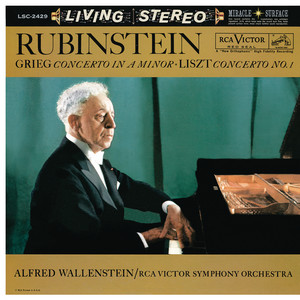 | Piano Concerto in A Minor, Op. 16: II. Adagio - Remastered | Edvard Grieg, Arthur Rubinstein, RCA Victor Symphony Orchestra, Alfred Wallenstein | D♭ Major | 0 | 3B | 86 BPM | |
 | The Planets, Op. 32: IV. Jupiter, the Bringer of Jollity | Gustav Holst, Orchestre Symphonique de Montréal, Charles Dutoit | G Minor | 2 | 6A | 136 BPM | |
 | Academic Festival Overture, Op. 80 | Johannes Brahms, Helsingborg Symphony Orchestra, Andrew Manze | C Major | 1 | 8B | 146 BPM | |
 | A Fugal Concerto, Op. 40, No. 2: I. Moderato | Gustav Holst, Anna Pyne, Philip Harmer, English Sinfonia, Howard Griffiths | D Major | 2 | 10B | 105 BPM | |
 | Symphony No. 9 in E Minor, Op. 95, B. 178, "From the New World": IV. Largo. Goin' Home (Arr. Koncz For Solo Cello and Cello Ensemble) | Antonín Dvořák, Kian Soltani, Staatskapelle Berlin, Cellists | D♭ Major | 0 | 3B | 94 BPM | |
 | Symphony No. 3 In C Minor, Op. 78 "Organ Symphony": 2. Allegro moderato - Presto - Allegro moderato - Maestoso - Più allegro - Molto allegro | Camille Saint-Saëns, Simon Preston, Berliner Philharmoniker, James Levine | F Minor | 2 | 4A | 117 BPM | |
 | Symphony No. 2 in One Movement, Op. 30: II. Allegro moderato | Ruth Gipps, Rumon Gamba, BBC National Orchestra Of Wales | D Minor | 1 | 7A | 132 BPM | |
 | Grand Canyon Suite: 2. The Painted Desert | Ferde Grofé, Detroit Symphony Orchestra, Antal Doráti | B Minor | 0 | 10A | 129 BPM | |
 | Symphony No. 4 in A Major, Op. 90, MWV N16, "Italian": I. Allegro vivace | Felix Mendelssohn, Slovak Philharmonic, Anthony Bramall | D Minor | 1 | 7A | 108 BPM | |
 | Serenade: Allegretto | William Mathias, Royal Ballet Sinfonia, Andrew Penny | E Minor | 0 | 9A | 118 BPM | |
 | Capriol Suite: 2. Pavane | Peter Warlock, Academy of St. Martin in the Fields, Sir Neville Marriner | B♭ Major | 0 | 6B | 160 BPM | |
 | 6 Épigraphes antiques, L. 131: I. Pour invoquer Pan, du vent d'été | Claude Debussy, Orchestre de la Suisse Romande, Kazushi Yamada | D Minor | 0 | 7A | 93 BPM | |
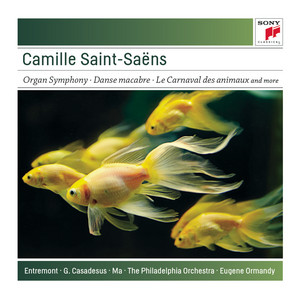 | Symphony No. 3 in C Minor, Op. 78 "Organ": Maestoso | Camille Saint-Saëns, Eugene Ormandy, E. Power Biggs, Philadelphia Orchestra | C Major | 1 | 8B | 49 BPM | |
 | Symphony No. 2 in E Minor: IV. Finale. Allegro vivace | Emilie Mayer, NDR Radiophilharmonie, Leo McFall | E Minor | 1 | 9A | 110 BPM |
- ISRC
- NLE420700601
- Label
- L-M Records/RCA Records