- BPM
- 68
- Key
- A♭ Major
- Camelot
- 4B
Das Rheingold: Prelude by Richard Wagner, Berliner Philharmoniker, Herbert von Karajan Song Details
"Das Rheingold: Prelude" by Richard Wagner, Berliner Philharmoniker, Herbert von Karajan had its release date on January 1, 1968. With this song being about 5 minutes long, at This song is fairly a long song compared to the average song length. This song does not have an "Explicit" tag, making it safe for all ages. This song is part of Wagner: Das Rheingold by Richard Wagner, Berliner Philharmoniker, Herbert von Karajan. The song's track number on the album is #1 out of 44 tracks. Based on our data, Germany was the country where this track was produced or recorded. Das Rheingold: Prelude is below average in popularity right now. In our opinion, the overall tone is not very danceable and projects negative sounds, such as being sad, depressed, or angry.
BPM and Tempo
Since Das Rheingold: Prelude by Richard Wagner, Berliner Philharmoniker, Herbert von Karajan has a tempo of 68 beats per a minute, the tempo markings of this song would be Adagio (slowly with great expression). With Das Rheingold: Prelude being at 68 BPM, the half-time would be 34 BPM with a double-time of 136 BPM.In addition, we consider the tempo speed to be pretty slow for this song. The time signature for this track is 3/4.
Music Key
This song has a musical key of A♭ Major. Or for those who are familiar with the camelot wheel, this song has a camelot key of 4B. So, the perfect camelot match for 4B would be either 4B or 5A. While, 5B can give you a low energy boost. For moderate energy boost, you would use 1B and a high energy boost can either be 6B or 11B. Though, if you want a low energy drop, you should looking for songs with either a camelot key of 4A or 3B will give you a low energy drop, 7B would be a moderate one, and 2B or 9B would be a high energy drop. Lastly, 1A allows you to change the mood.
Want to find the BPM and music key for other songs? Check out our BPM and Key Finder page!
- Popularity
- 24%
- Loudness
- -27.491 dB
- Acousticness
- 98%
- Danceability
- 15%
- Energy
- 0%
- Instrumentalness
- 97%
- Liveness
- 24%
- Loudness
- 54%
- Speechiness
- 6%
- Valence
- 2%
Recommendations
| Track | Artist | Key | Energy | Camelot | BPM | ||
|---|---|---|---|---|---|---|---|
 | Capriccio Espagnol, Op. 34: II. Variazioni | Nikolai Rimsky-Korsakov, Berliner Philharmoniker, Lorin Maazel | G Major | 2 | 9B | 74 BPM | |
![Symphony No. 9: Ic. [Horns] by Gustav Mahler, Berliner Philharmoniker, Herbert von Karajan](https://i.scdn.co/image/ab67616d00001e0257500b3d012cf8ff99f0f198) | Symphony No. 9: Ic. [Horns] | Gustav Mahler, Berliner Philharmoniker, Herbert von Karajan | G Minor | 0 | 6A | 73 BPM | |
 | Symphony No.8 In G, Op.88, B. 163: 2. Adagio | Antonín Dvořák, Berliner Philharmoniker, Rafael Kubelík | C Major | 1 | 8B | 80 BPM | |
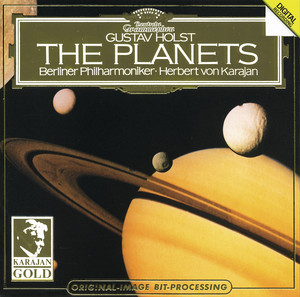 | The Planets, Op. 32: 3. Mercury, the Winged Messenger | Gustav Holst, Berliner Philharmoniker, Herbert von Karajan | A Major | 1 | 11B | 108 BPM | |
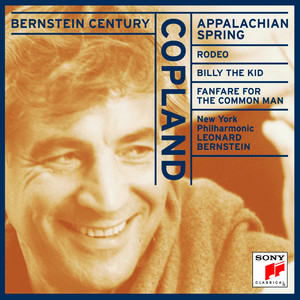 | Appalachian Spring: I. Very Slowly | Aaron Copland, Leonard Bernstein, New York Philharmonic | A Major | 0 | 11B | 78 BPM | |
 | Concerto for Orchestra, Sz. 116: IV. Intermezzo interrotto. Allegretto | Béla Bartók, Berliner Philharmoniker, Herbert von Karajan | F Major | 0 | 7B | 96 BPM | |
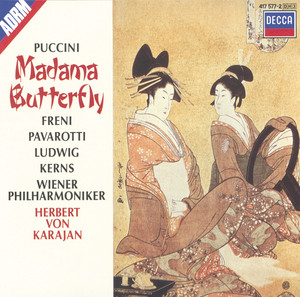 | Madama Butterfly, Act II: Coro a bocca chiusa "Humming Chorus" | Giacomo Puccini, Wiener Staatsopernchor, Wiener Philharmoniker, Herbert von Karajan | B♭ Major | 0 | 6B | 78 BPM | |
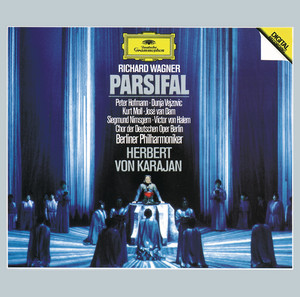 | Parsifal, Act I: Nicht Dank! Haha! Was wird es helfen? – He, du da! Was liegst du dort wie ein wildes Tier? | Richard Wagner, Dunja Vejzovic, Heiner Hopfner, Georg Tichy, Kurt Moll, Berliner Philharmoniker, Herbert von Karajan | E Minor | 1 | 9A | 127 BPM | |
 | The Firebird Suite (1919 Version): VII. Finale | Igor Stravinsky, Leonard Bernstein, New York Philharmonic | D♭ Minor | 2 | 12A | 73 BPM | |
 | Ancient Airs & Dances, Suite III, P. 172: IV. Passacaglia (Roncalli) | Ottorino Respighi, Berliner Philharmoniker, Herbert von Karajan | G Minor | 1 | 6A | 119 BPM | |
 | Prélude à l'après-midi d'un faune, L. 86 | Claude Debussy, Karlheinz Zoeller, Berliner Philharmoniker, Herbert von Karajan | A♭ Minor | 0 | 1A | 84 BPM | |
 | La mer, L. 109: III. Dialogue Of The Wind And The Sea | Claude Debussy, Berliner Philharmoniker, Herbert von Karajan | D♭ Major | 2 | 3B | 86 BPM | |
 | Flute Concerto in G Minor, Op. 10/2, RV 439 "La notte": V. Il sonno. Largo – VI. Allegro | Antonio Vivaldi, Andreas Blau, Berliner Philharmoniker, Herbert von Karajan | G Minor | 2 | 6A | 124 BPM | |
 | Violin Concerto No.1 In G Minor, Op.26: 1. Vorspiel (Allegro moderato) | Max Bruch, Anne-Sophie Mutter, Berliner Philharmoniker, Herbert von Karajan | E♭ Major | 1 | 5B | 105 BPM | |
 | Peer Gynt Suite No. 1, Op. 46: I. Morning Mood | Edvard Grieg, Berliner Philharmoniker, Herbert von Karajan | E Major | 0 | 12B | 141 BPM | |
| The Planets, Op. 32: II. Venus, the Bringer of Peace | Gustav Holst, Berliner Philharmoniker, Herbert von Karajan | F Minor | 0 | 4A | 85 BPM | |
 | Schoenberg: Verklärte Nacht, Op. 4: V. Adagio, molto tranquilo | Arnold Schoenberg, Daniel Barenboim, Chicago Symphony Orchestra, Charles Pikler, John Sharp, Joseph Golan, Li-Kuo Chang, Ruben Gonzalez, Stephen Balderston | E Minor | 1 | 9A | 125 BPM | |
 | "Pomp and Circumstance," Op.39: March, No.1 in D | Edward Elgar, BBC Symphony Orchestra, Leonard Bernstein | D Major | 3 | 10B | 72 BPM | |
| Enigma Variations, Op. 36: Var. 5. Moderato "R.P.A." | Edward Elgar, BBC Symphony Orchestra, Leonard Bernstein | C Minor | 0 | 5A | 83 BPM | |
 | VII. Finale | Igor Stravinsky, Brussels Philharmonic, Alexander Rahbari | D♭ Minor | 3 | 12A | 81 BPM | |
 | Eine Alpensinfonie, Op. 64: XXI. Ausklang | Richard Strauss, David Bell, Berliner Philharmoniker, Herbert von Karajan | E♭ Major | 1 | 5B | 63 BPM | |
 | Symphony No. 7 in E Major, WAB 107 (Ed. Haas): II. Adagio. Sehr feierlich und sehr langsam | Anton Bruckner, Wiener Philharmoniker, Herbert von Karajan | D♭ Major | 1 | 3B | 85 BPM | |
 | Symphony No. 5 in D minor, Op. 47: 1. Moderato | Dmitri Shostakovich, Berliner Philharmoniker, Semyon Bychkov | D Minor | 0 | 7A | 80 BPM | |
 | Symphony No. 5 in E Minor, Op. 64: IV. Finale. Andante maestoso – Allegro vivace – Moderato assai e molto maestoso – Presto – Molto meno mosso | Pyotr Ilyich Tchaikovsky, Berliner Philharmoniker, Kirill Petrenko | E Major | 3 | 12B | 141 BPM | |
 | L'Arlésienne Suite No. 1, WD 40: IV. Carillon | Georges Bizet, Daniel Deffayet, Berliner Philharmoniker, Herbert von Karajan | E Major | 0 | 12B | 65 BPM |
- ISRC
- DEF056731406
- Label
- L-M Records/RCA Records