- BPM
- 85
- Key
- G Major
- Camelot
- 9B
Turn Back O Man by Gustav Holst, Ripon Cathedral Choir, Ronny Krippner, Tim Harper Song Details
"Turn Back O Man" by Gustav Holst, Ripon Cathedral Choir, Ronny Krippner, Tim Harper had its release date on December 19, 2025. With this song being around four minutes long, at 4:06, the duration of this song is pretty average compared to other songs. This track is safe for children and doesn't appear to contain any foul language, since the "Explicit" tag was not present in this track. The track order of this song in Ripon Cathedral Choir, Ronny Krippner's "Glorius Kingdom: Anthems from Ripon Cathedral" album is number 13 out of 16. On top of that, United Kingdom appears to be the country where this track was created. Turn Back O Man is unknown right now. In our opinion, the overall tone is not very danceable and projects negative sounds, such as being sad, depressed, or angry.
BPM and Tempo
We consider the tempo marking of Turn Back O Man by Gustav Holst, Ripon Cathedral Choir, Ronny Krippner, Tim Harper to be Andante (at a walking pace) because the track has a tempo of 85 BPM, a half-time of 42BPM, and a double-time of 170 BPM. Based on that, the speed of the song's tempo is slow. Activities such as, yoga or pilates, can go well with this song. The time signature for this track is 4/4.
Music Key
This song is in the music key of G Major. This also means that this song has a camelot key of 9B. So, the perfect camelot match for 9B would be either 9B or 10A. While, 10B can give you a low energy boost. For moderate energy boost, you would use 6B and a high energy boost can either be 11B or 4B. Though, if you want a low energy drop, you should looking for songs with either a camelot key of 9A or 8B will give you a low energy drop, 12B would be a moderate one, and 7B or 2B would be a high energy drop. Lastly, 6A allows you to change the mood.
Want to find the BPM and music key for other songs? Check out our BPM and Key Finder page!
- Popularity
- 0%
- Loudness
- -20.616 dB
- Acousticness
- 88%
- Danceability
- 10%
- Energy
- 21%
- Instrumentalness
- 0%
- Liveness
- 13%
- Loudness
- 66%
- Speechiness
- 4%
- Valence
- 8%
Recommendations
| Track | Artist | Key | Energy | Camelot | BPM | ||
|---|---|---|---|---|---|---|---|
 | Poet and Peasant: Overture | Franz von Suppé, Berliner Philharmoniker, Herbert von Karajan | D Major | 1 | 10B | 83 BPM | |
 | First Choral Symphony, Op. 41, H. 155, I, Song and Bacchanal: II - IV. Whence came ye, merry Damsels! whence came ye! (Chorus) - W | Gustav Holst, Andrew Davis, BBC Symphony Orchestra, Susan Gritton, BBC Symphony Chorus, Sir Andrew Davis | C Major | 1 | 8B | 93 BPM | |
 | St. Paul's Suite, Op. 29, No. 2: I. Jig | Gustav Holst, Bournemouth Sinfonietta, Richard Studt | D Minor | 2 | 7A | 84 BPM | |
 | Karelia Suite, Op.11: 3. Alla marcia (Moderato) | Jean Sibelius, Academy of St. Martin in the Fields, Sir Neville Marriner | A Major | 3 | 11B | 184 BPM | |
 | Florida Suite: II. By the River | Frederick Delius, English Northern Philharmonia, David Lloyd-Jones | G Major | 0 | 9B | 68 BPM | |
 | Symphony No. 3, "Pastoral Symphony": II. Lento moderato | Ralph Vaughan Williams, Brendan O'Brien, Patricia Rozario, Bournemouth Symphony Orchestra, Kees Bakels | G Minor | 0 | 6A | 88 BPM | |
 | Prelude in C Sharp Minor, Op. 3, No. 2 (Arr. Orchestra) - Live | Sergei Rachmaninoff, Czech Philharmonic, Leopold Stokowski | E♭ Major | 4 | 5B | 124 BPM | |
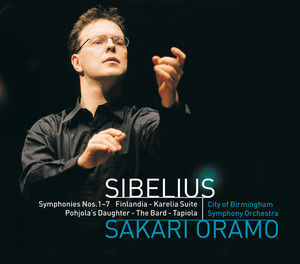 | Sibelius: Finlandia, Op. 26 | Jean Sibelius, Sakari Oramo, City Of Birmingham Symphony Orchestra | A♭ Major | 1 | 4B | 150 BPM | |
 | Symphony No. 1 in D Major: 2. Kräftig bewegt - Live | Gustav Mahler, Berliner Philharmoniker, Claudio Abbado | A Major | 1 | 11B | 96 BPM | |
| First Choral Symphony, Op. 41, H. 155, II, Ode on a Grecian Urn: Who are these coming to the sacrifice? (Chorus) | Gustav Holst, Andrew Davis, BBC Symphony Orchestra, BBC Symphony Chorus, Sir Andrew Davis | A Major | 0 | 11B | 77 BPM | |
 | Serenade in E Minor, Op. 20: II. Larghetto | Edward Elgar, Wales Camerata, Owain Arwel Hughes | C Major | 0 | 8B | 76 BPM | |
 | Prince Igor: Polovtsian Dances (Version for Chorus) | Alexander Borodin, Kiev Chamber Choir, Ukraine National Radio Symphony Orchestra, Theodore Kuchar | A Major | 2 | 11B | 110 BPM | |
 | The Planets Suite, Op. 32: IV. Jupiter | Gustav Holst, Vladimir Jurowski, London Philharmonic Choir, London Philharmonic Orchestra, Neville Creed | G Minor | 3 | 6A | 151 BPM | |
 | Peer Gynt Suite No. 1, Op. 46: II. Åse's Death | Edvard Grieg, Wiener Philharmoniker, Zubin Mehta | G Major | 0 | 9B | 99 BPM | |
 | Concerto Grosso #1 - 1. Prelude | Howard Hanson | D Major | 1 | 10B | 96 BPM | |
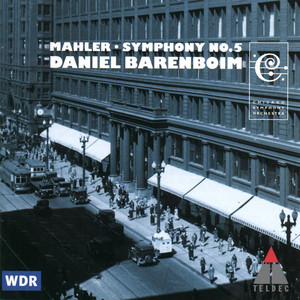 | Mahler: Symphony No. 5 in C-Sharp Minor: IV. Adagietto. Sehr langsam | Gustav Mahler, Daniel Barenboim, Chicago Symphony Orchestra | F Major | 1 | 7B | 82 BPM | |
 | Symphony No. 2 in E Minor: IV. Finale. Allegro vivace | Emilie Mayer, NDR Radiophilharmonie, Leo McFall | E Minor | 1 | 9A | 110 BPM | |
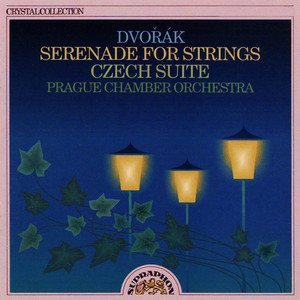 | Serenade for Strings in E Major, Op. 22, B. 52: I. Moderato | Antonín Dvořák, Prague Chamber Orchestra, Petr Skvor | E Major | 1 | 12B | 83 BPM | |
 | Chaminade: Flute Concertino, Op. 107 | Cécile Chaminade, Emmanuel Pahud, François Leleux, Orchestre de chambre de Paris | D Major | 1 | 10B | 83 BPM | |
 | Symphony No. 3 In C Minor, Op. 78 "Organ Symphony": 2. Allegro moderato - Presto - Allegro moderato - Maestoso - Più allegro - Molto allegro | Camille Saint-Saëns, Simon Preston, Berliner Philharmoniker, James Levine | F Minor | 2 | 4A | 117 BPM | |
 | Copland: Appalachian Spring: VII. Doppio movimento (Variations on a Shaker Hymn - Simple Gifts) | Aaron Copland, Aurora Orchestra, Nicholas Collon | D♭ Major | 1 | 3B | 82 BPM | |
 | Also sprach Zarathustra, Op. 30: III. Von der großen Sehnsucht | Richard Strauss, Berliner Philharmoniker, Herbert von Karajan | D Major | 1 | 10B | 96 BPM | |
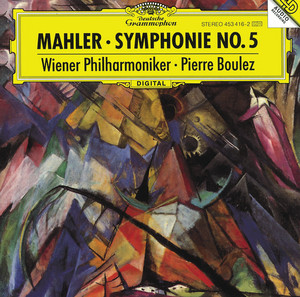 | Symphony No. 5: IV. Adagietto. Sehr langsam | Gustav Mahler, Wiener Philharmoniker, Pierre Boulez | F Major | 0 | 7B | 87 BPM | |
 | Capriccio espagnol, Op. 34: V. Fandango asturiano | Nikolai Rimsky-Korsakov, Seattle Symphony Orchestra, Gerard Schwarz | A Minor | 1 | 8A | 78 BPM | |
 | English Folk Song Suite: I. March "Seventeen Come Sunday" | Ralph Vaughan Williams, Timothy Reynish, Royal Northern College Of Music Wind Orchestra | A♭ Major | 2 | 4B | 117 BPM |
- ISRC
- GBXUX2525513
- Label
- L-M Records/RCA Records