- BPM
- 79
- Key
- F♯ Minor
- Camelot
- 11A
Francesca da Rimini, Act I: Francesca dove andrai (Samaritana) by Riccardo Zandonai, Orchestra Sinfonica Nazionale della RAI di Roma, Ornella Rovero, Antonio Guarnieri Song Details
"Francesca da Rimini, Act I: Francesca dove andrai (Samaritana)" by Riccardo Zandonai, Orchestra Sinfonica Nazionale della RAI di Roma, Ornella Rovero, Antonio Guarnieri had its release date on August 5, 2014. The duration of This song is about two minutes long, specifically at 2:36. This song does not appear to have any foul language. Francesca da Rimini, Act I: Francesca dove andrai (Samaritana)'s duration is considered a little bit shorter than the average duration of a typical track. This song is part of Zandonai: Francesca da Rimini by Riccardo Zandonai, Antonio Guarnieri, Maria Caniglia, Orchestra Sinfonica Nazionale della RAI di Roma, Giacinto Prandelli, Carlo Tagliabue, Mario Carlin, Ornella Rovero, Mario Tommasini. The song's track number on the album is #4 out of 24 tracks. Based on our data, Italy was the country where this track was produced or recorded. Francesca da Rimini, Act I: Francesca dove andrai (Samaritana) is unknown right now. In our opinion, the overall tone is not very danceable and projects negative sounds, such as being sad, depressed, or angry.
BPM and Tempo
Since Francesca da Rimini, Act I: Francesca dove andrai (Samaritana) by Riccardo Zandonai, Orchestra Sinfonica Nazionale della RAI di Roma, Ornella Rovero, Antonio Guarnieri has a tempo of 79 beats per a minute, the tempo markings of this song would be Andante (at a walking pace). With Francesca da Rimini, Act I: Francesca dove andrai (Samaritana) being at 79 BPM, the half-time would be 40 BPM with a double-time of 158 BPM.In addition, we consider the tempo speed to be pretty slow for this song. The time signature for this track is 4/4.
Music Key
This song has a musical key of F♯ Minor. Or for those who are familiar with the camelot wheel, this song has a camelot key of 11A. So, the perfect camelot match for 11A would be either 11A or 10B. While, a low energy boost can consist of either 11B or 12A. For moderate energy boost, you would use 8A and a high energy boost can either be 1A or 6A. However, if you are looking for a low energy drop, finding a song with a camelot key of 10A would be a great choice. Where 2A would give you a moderate drop, and 9A or 4A would be a high energy drop. Lastly, 2B allows you to change the mood.
Want to find the BPM and music key for other songs? Check out our BPM and Key Finder page!
- Popularity
- 0%
- Loudness
- -13.042 dB
- Acousticness
- 99%
- Danceability
- 19%
- Energy
- 29%
- Instrumentalness
- 32%
- Liveness
- 21%
- Loudness
- 78%
- Speechiness
- 4%
- Valence
- 9%
Recommendations
| Track | Artist | Key | Energy | Camelot | BPM | ||
|---|---|---|---|---|---|---|---|
 | Francesca da Rimini, Act IV: Torna Malatestino (Live) | Riccardo Zandonai, Magda Olivero, Orchestra Del Teatro Alla Scala, Milano, Piero de Palma, Giampiero Malaspina, Gianandrea Gavazzeni | E♭ Major | 5 | 5B | 140 BPM | |
 | Der fliegende Holländer, Act III: Willst jenen Tag du nicht dich mehr entsinnen "Cavatina" | Richard Wagner, René Kollo, Chicago Symphony Orchestra, Sir Georg Solti | A Major | 3 | 11B | 87 BPM | |
 | Manon Lescaut / Act 2: Minuetto | Giacomo Puccini, Anthony Laciura, Giuseppe Taddei, Mirella Freni, Metropolitan Opera Chorus, Metropolitan Opera Orchestra, James Levine | D Major | 0 | 10B | 146 BPM | |
 | La Sonnambula / Act 1: D'un pensiero e d'un accento | Vincenzo Bellini, Dame Joan Sutherland, Sylvia Stahlman, Margreta Elkins, Nicola Monti, Coro del Maggio Musicale Fiorentino, Orchestra del Maggio Musicale Fiorentino, Richard Bonynge | E♭ Major | 3 | 5B | 82 BPM | |
 | Puccini : Manon Lescaut : Act 1 "Tra voi, belle" [Des Grieux] | Giacomo Puccini, José Cura, Plácido Domingo, Philharmonia Orchestra | C Major | 1 | 8B | 131 BPM | |
 | Andrea Chénier / Act 1: Soffoco, moro tutta chiusa | Umberto Giordano, Hugues Cuénod, Montserrat Caballé, Kathleen Kuhlmann, Astrid Varnay, Florindo Andreolli, Chorus of the Welsh National Opera, National Philharmonic Orchestra, Riccardo Chailly | F♯ Major | 2 | 2B | 110 BPM | |
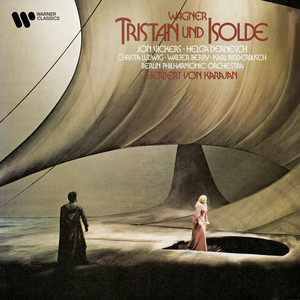 | Wagner: Tristan und Isolde, Act 1: "Welcher Wahn! Welch' eitles Zürnen!" (Brangäne, Isolde) | Richard Wagner, Herbert von Karajan, Christa Ludwig, Helga Dernesch, Berliner Philharmoniker | C Major | 1 | 8B | 131 BPM | |
 | Concerto andaluso, RZ 227: II. Malagueñas. Allegretto | Riccardo Zandonai, Stefano Guarino, Orchestra da Camera di Trento, Giancarlo Guarino | A Minor | 1 | 8A | 90 BPM | |
 | Bellini: I puritani: "Ah! per sempre io ti perdei" (Riccardo) | Vincenzo Bellini, Dresdner Philharmonie, Riccardo Frizza | D Major | 5 | 10B | 136 BPM | |
 | Francesca da Rimini, Op. 4, Act II: Paolo! | Riccardo Zandonai, Martin Mühle, Christina Vasileva, Philharmonisches Orchester Freiburg, Fabrice Bollon | D Minor | 2 | 7A | 88 BPM | |
| Francesca da Rimini, Op. 4, Act IV: E se il fratello vede che taluno | Riccardo Zandonai, Adriano Graziani, Juan Orozco, Philharmonisches Orchester Freiburg, Fabrice Bollon | D♭ Major | 3 | 3B | 85 BPM | |
 | La Giaconda, Act 2, The Rosary: Sailors' Song "Ho! He! Ho! He!" (Sailors, Boys, Barnaba, Pilot) - "Recitative and Barcarolle "Pescator, affonda l'esca" [Barnaba, Pilot, Sailors, Boys] | Amilcare Ponchielli, Angelo Nardinocchi, Massimiliano Travagliati, Coro di Voci Bianche del Teatro “Giuseppe Verdi” di Salerno, Silvana Noschese, Coro del Teatro dell'Opera di Salerno, Luigi Petrozziello, Orchestra Filarmonica Salernitana “Giuseppe Verdi”, Yishai Steckler | F Major | 2 | 7B | 99 BPM | |
 | Aida, Act II: O Re: pei sacri Numi - Ensemble. Gloria all'Egitto, ad Iside | Giuseppe Verdi, Katia Ricciarelli, Elena Obraztsova, Plácido Domingo, Ruggero Raimondi, Nicolai Ghiaurov, Orchestra Del Teatro Alla Scala, Milano, Claudio Abbado, Coro Del Teatro Alla Scala Di Milano, Romano Gandolfi | A♭ Major | 0 | 4B | 81 BPM | |
 | Mozart: Così fan tutte, K. 588, Act II, Scene 4: No. 21, Duetto con coro. "Secondate, aurette amiche" (Ferrando, Guglielmo, Chorus) | Wolfgang Amadeus Mozart, Alfredo Kraus, Giuseppe Taddei, Heinrich Schmidt, The Philharmonia Chorus, Karl Böhm, Philharmonia Orchestra | D Minor | 0 | 7A | 130 BPM | |
 | Otello - Fire of Rejoicing | Giuseppe Verdi, Chor der Deutschen Staatsoper Berlin, Staatskapelle Berlin, Otmar Suitner, Ernst Stoy | B♭ Major | 1 | 6B | 139 BPM | |
 | Bolivar, Op. 236: Berceuse | Darius Milhaud, Orchestre De La Société Des Concerts Du Conservatoire, Janine Micheau | B Minor | 2 | 10A | 84 BPM | |
| Francesca da Rimini, Op. 4, Act III: E Galeotto dice, "Dama, abbiatene Pietà" | Riccardo Zandonai, Christina Vasileva, Viktória Mester, Benedicte Tauran, Kim-Lillian Strebel, Sally Wilson, Philharmonisches Orchester Freiburg, Fabrice Bollon | D Minor | 2 | 7A | 88 BPM | |
 | Requiem, Op. 89, B. 165: Tuba mirum | Antonín Dvořák, Czech Philharmonic Orchestra | F♯ Major | 1 | 2B | 88 BPM | |
 | Tosca: Recondita armonia | Carlo Bergonzi, Gianandrea Gavazzeni, Orchestra dell'Accademia Nazionale di Santa Cecilia | F Major | 2 | 7B | 93 BPM | |
 | La Bohème / Act 3: "Mimì è tanto malata!" - Live | Giacomo Puccini, Anna Netrebko, Rolando Villazón, Boaz Daniel, Bavarian Radio Symphony Orchestra, Bertrand de Billy | D♭ Major | 3 | 3B | 76 BPM | |
 | Wagner: Der fliegende Holländer, WWV 63, Act 2: "Auf hohem Felsen lag ich träumend" (Erik, Senta) | Richard Wagner, Otto Klemperer, Anja Silja, Ernst Kozub, New Philharmonia Orchestra | B♭ Major | 2 | 6B | 73 BPM | |
 | Rigoletto / Act 1: Giovanna, ho dei rimorsi | Giuseppe Verdi, Ileana Cotrubas, Hanna Schwarz, Plácido Domingo, Wiener Philharmoniker, Carlo Maria Giulini | G Major | 1 | 9B | 79 BPM | |
| Andrea Chénier / Act 1: Il giorno intorno già s'insera lentamente! ... Via, | Umberto Giordano, Montserrat Caballé, Leo Nucci, Astrid Varnay, Kathleen Kuhlmann, National Philharmonic Orchestra, Riccardo Chailly | D Major | 1 | 10B | 79 BPM | |
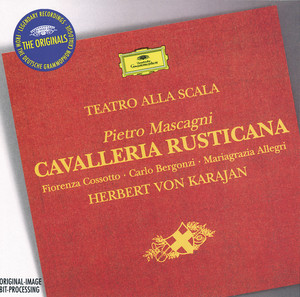 | Cavalleria rusticana: "Dite, mamma Lucia" | Pietro Mascagni, Fiorenza Cossotto, Maria Gracia Allegri, Orchestra Del Teatro Alla Scala, Milano, Herbert von Karajan | E Major | 10 | 12B | 134 BPM | |
 | Turandot / Act 1: La grazia, Principessa! - O divina bellezza (Coro / Calaf) | Giacomo Puccini, Plácido Domingo, Wiener Philharmoniker, Herbert von Karajan, Vienna State Opera Chorus | B Major | 2 | 1B | 82 BPM |
- ISRC
- ITCC51102424
- Label
- L-M Records/RCA Records