- BPM
- 122
- Key
- C Major
- Camelot
- 8B
Tinkerbell by Angela Morley, Danish State Radio Orchestra, Robert Farnon, Charles Shadwell Orchestra, Charles Williams Concert Orchestra, Dolf van der Linden Orchestra, International Radio Orchestra, London Concert Orchestra, London Promenade Orchestra, Louis Voss Orchestra, National Light Orchestra, New Concert Orchestra, Queen's Hall Light Orchestra, Ray Martin Concert Orchestra, Regent Classic Orchestra, Roger Roger And His Champs Elysees Orchestra, Sidney Torch Orchestra, West End Celebrity Orchestra Song Details
Angela Morley, Danish State Radio Orchestra, Robert Farnon, Charles Shadwell Orchestra, Charles Williams Concert Orchestra, Dolf van der Linden Orchestra, International Radio Orchestra, London Concert Orchestra, London Promenade Orchestra, Louis Voss Orchestra, National Light Orchestra, New Concert Orchestra, Queen's Hall Light Orchestra, Ray Martin Concert Orchestra, Regent Classic Orchestra, Roger Roger And His Champs Elysees Orchestra, Sidney Torch Orchestra, West End Celebrity Orchestra's 'Tinkerbell' had a release date set for August 1, 2006. The duration of This song is about two minutes long, specifically at 2:34. This song does not appear to have any foul language. Tinkerbell's duration is considered a little bit shorter than the average duration of a typical track. There are a total of 27 in the song's album "The Golden Age of Light Music: Childhood Memories". In this album, this song's track order is #6. Furthermore, we believe that the track originated from Switzerland. Based on our statistics, Tinkerbell's popularity is not that popular right now. Although the tone can be danceable to some, this track does projects more of a negative sound rather than a postive one.
BPM and Tempo
With Tinkerbell by Angela Morley, Danish State Radio Orchestra, Robert Farnon, Charles Shadwell Orchestra, Charles Williams Concert Orchestra, Dolf van der Linden Orchestra, International Radio Orchestra, London Concert Orchestra, London Promenade Orchestra, Louis Voss Orchestra, National Light Orchestra, New Concert Orchestra, Queen's Hall Light Orchestra, Ray Martin Concert Orchestra, Regent Classic Orchestra, Roger Roger And His Champs Elysees Orchestra, Sidney Torch Orchestra, West End Celebrity Orchestra having a BPM of 122 with a half-time of 61 BPM and a double-time of 244 BPM, we would consider this track to have a Allegro (fast, quick, and bright) tempo marking. Because of this, we believe that the song has an overall fast tempo. Looking at the BPM of this song, this song might go great with walking. The time signature for this track is 4/4.
Music Key
C Major is the music key of this track. Or for those who are familiar with the camelot wheel, this song has a camelot key of 8B. So, the perfect camelot match for 8B would be either 8B or 9A. While, 9B can give you a low energy boost. For moderate energy boost, you would use 5B and a high energy boost can either be 10B or 3B. Though, if you want a low energy drop, you should looking for songs with either a camelot key of 8A or 7B will give you a low energy drop, 11B would be a moderate one, and 6B or 1B would be a high energy drop. Lastly, 5A allows you to change the mood.
Want to find the BPM and music key for other songs? Check out our BPM and Key Finder page!
- Popularity
- 1%
- Loudness
- -11.126 dB
- Acousticness
- 96%
- Danceability
- 50%
- Energy
- 31%
- Instrumentalness
- 90%
- Liveness
- 11%
- Loudness
- 81%
- Speechiness
- 3%
- Valence
- 38%
Recommendations
| Track | Artist | Key | Energy | Camelot | BPM | ||
|---|---|---|---|---|---|---|---|
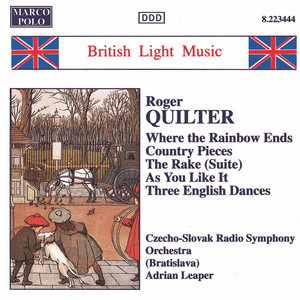 | Where the Rainbow Ends Suite (version for orchestra): No. 1a Rainbow Land | Roger Quilter, Slovak Radio Symphony Orchestra, Adrian Leaper | A Major | 0 | 11B | 69 BPM | |
 | Mélodie in Ab Major - arr. for orchestra | Louise Farrenc, Prague Metropolitan Orchestra, Shea Lolin | A♭ Major | 1 | 4B | 64 BPM | |
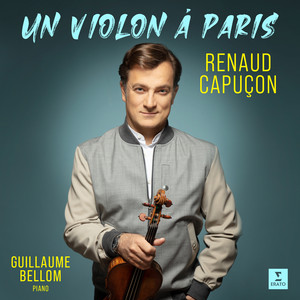 | Chaplin / Arr. Quint & Coleman: Modern Times: Smile | Charlie Chaplin, Renaud Capuçon | E♭ Major | 2 | 5B | 113 BPM | |
 | Notturno (From "La califfa") | Ennio Morricone, Marco Serino, Orchestra di Padova e del Veneto | E Major | 1 | 12B | 88 BPM | |
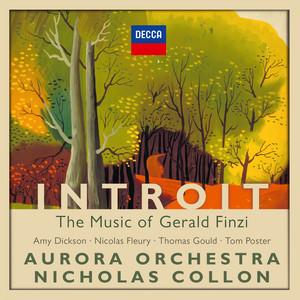 | Love's Labour's Lost, Op. 28: 1. Soliloquy 1: So sweet a kiss the golden sun gives not - Instrumental | Gerald Finzi, Aurora Orchestra, Nicholas Collon | C Minor | 1 | 5A | 99 BPM | |
 | Two Dialogues with Postscript: I. Wedding Waltz | Valentin Silvestrov, Hélène Grimaud, Camerata Salzburg | D♭ Minor | 1 | 12A | 164 BPM | |
 | Musica serena | Pēteris Vasks, Munich Radio Orchestra, Ivan Repušić | A Minor | 0 | 8A | 65 BPM | |
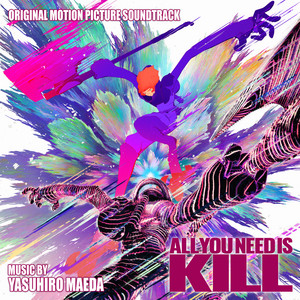 | 92nd time | Yasuhiro Maeda | E♭ Major | 3 | 5B | 74 BPM | |
 | Valse triste, Op. 44 No. 1 | Jean Sibelius, Thomas Søndergård, BBC National Orchestra Of Wales | A Minor | 2 | 8A | 143 BPM | |
 | Cortege | John Lunn, The Chamber Orchestra Of London | A Minor | 2 | 8A | 83 BPM | |
 | Imaginando Paraiso | Sirenas Celestiales | C Major | 3 | 8B | 146 BPM | |
 | Under Milk Wood Overture: I. Under Milk Wood (Main Theme) | George Martin, Berlin Music Ensemble, Craig Leon | E Major | 1 | 12B | 87 BPM | |
 | Voyager of the Seas Main Theme | José Manuel Ortega Caballo | D Minor | 3 | 7A | 90 BPM | |
 | Realmente Convincente | Sirenas Celestiales | C Minor | 0 | 5A | 80 BPM | |
 | I'll Bid My Heart Be Still (Version for Cello & Piano) | Rebecca Clarke, Gerald Peregrine, Antony Ingham | D Minor | 0 | 7A | 60 BPM | |
 | Générique de fin | Gabriel Yared | D Major | 1 | 10B | 173 BPM | |
 | Ouverture | Florian Christl, NDR Radiophilharmonie, Ben Palmer | D Minor | 2 | 7A | 90 BPM | |
 | The Four Seasons: Spring 2 | Delirium Musicum, Étienne Gara | F Major | 1 | 7B | 90 BPM | |
 | Miss Melanie | Ronald Binge, Slovak Radio Symphony Orchestra, Ernest Tomlinson | A Major | 0 | 11B | 109 BPM | |
 | Through the Woods | Angela Morley | E♭ Minor | 1 | 2A | 88 BPM | |
 | Suite from The Victorian Kitchen Garden: I. Prelude | Paul Reade, Emma Johnson, Philip Ellis, BBC Concert Orchestra | B♭ Major | 0 | 6B | 93 BPM | |
 | Suite from The Theory of Everything: III. The Origins of Time | Jóhann Jóhannsson, Iceland Symphony Orchestra, Daníel Bjarnason | C Major | 0 | 8B | 87 BPM | |
 | La vida inesperada | Gabriel Andrés Gallegos, Budapest Art Orchestra | G Major | 1 | 9B | 179 BPM | |
 | The Seal Lullaby (Arr. Parkin) | Eric Whitacre, Isata Kanneh-Mason, Jeneba Kanneh-Mason, Braimah Kanneh-Mason, Konya Kanneh-Mason, Aminata Kanneh-Mason, Sheku Kanneh-Mason, Mariatu Kanneh-Mason | D♭ Major | 0 | 3B | 81 BPM | |
 | Oklahoma!: Overture | Richard Rodgers, Sinfonia Of London, John Wilson | E Major | 1 | 12B | 80 BPM |
- ISRC
- CH6630652506
- Label
- L-M Records/RCA Records