- BPM
- 119
- Key
- D♭ Major
- Camelot
- 3B
Nashville by John Walker, Scott Walker Song Details
John Walker, Scott Walker's 'Nashville' had a release date set for July 1, 1966. The duration of This song is about two minutes long, specifically at 2:03. This song does not appear to have any foul language. Nashville's duration is considered a little bit shorter than the average duration of a typical track. The track order of this song in John Walker, Scott Walker's "I Only Came To Dance With You" album is number 10 out of 10. On top of that, United States appears to be the country where this track was created. In terms of popularity, Nashville is currently not that popular. Although the tone can be danceable to some, this track does projects more of a negative sound rather than a postive one.
BPM and Tempo
We consider the tempo marking of Nashville by John Walker, Scott Walker to be Moderato (at a moderate speed) because the track has a tempo of 119 BPM, a half-time of 60BPM, and a double-time of 238 BPM. Based on that, the speed of the song's tempo is moderate. Activities such as, walking, can go well with this song. The time signature for this track is 4/4.
Music Key
This song is in the music key of D♭ Major. This also means that this song has a camelot key of 3B. So, the perfect camelot match for 3B would be either 3B or 4A. While, 4B can give you a low energy boost. For moderate energy boost, you would use 12B and a high energy boost can either be 5B or 10B. Though, if you want a low energy drop, you should looking for songs with either a camelot key of 3A or 2B will give you a low energy drop, 6B would be a moderate one, and 1B or 8B would be a high energy drop. Lastly, 12A allows you to change the mood.
Want to find the BPM and music key for other songs? Check out our BPM and Key Finder page!
- Popularity
- 1%
- Loudness
- -8.096 dB
- Acousticness
- 17%
- Danceability
- 54%
- Energy
- 92%
- Instrumentalness
- 5%
- Liveness
- 36%
- Loudness
- 87%
- Speechiness
- 23%
- Valence
- 35%
Recommendations
| Track | Artist | Key | Energy | Camelot | BPM | ||
|---|---|---|---|---|---|---|---|
 | Horn Concerto, Op.8: 2. Andante | Franz Strauss, Barry Tuckwell, London Symphony Orchestra, István Kertész | A♭ Major | 0 | 4B | 74 BPM | |
 | 24 Pièces de fantaisie, Suite No. 3, Op. 54: No. 2, Impromptu | Louis Vierne, John Walker | B♭ Major | 2 | 6B | 81 BPM | |
 | Premier solo | Eugène Boudreau, Pierre-Richard Aubin, Michel Bettez | G Minor | 0 | 6A | 68 BPM | |
 | Shakespeare Pictures: II. The Winter's Tale. The Statue | Nigel Hess, Central Band Of The Royal Air Force | G Minor | 1 | 6A | 86 BPM | |
 | Tuba Concerto: I. Allegro deciso | Edward Gregson, James Gourlay, Royal Ballet Sinfonia, Gavin Sutherland | G Major | 2 | 9B | 110 BPM | |
 | 5 Bagatelles for clarinet and piano, Op.23: 3. Carol - Andantino semplice | Gerald Finzi, Emma Johnson, Malcolm Martineau | B♭ Major | 0 | 6B | 173 BPM | |
 | Ibert: Flute Concerto: III. Allegro scherzando | Jacques Ibert, Emmanuel Pahud, David Zinman, Tonhalle Orchester Zürich | D♭ Major | 1 | 3B | 92 BPM | |
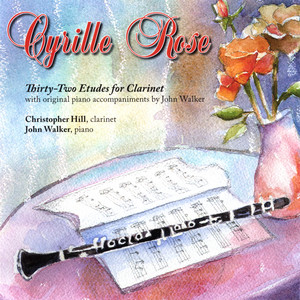 | Etude No. 25 in c | Cyrille Rose, John Walker, Christopher Hill and John Walker | B♭ Minor | 0 | 3A | 126 BPM | |
 | Kleine Dreigroschenmusik: III. Anstatt-dass Song | Kurt Weill, Munich Radio Orchestra, Gerd Müller-Lorenz | B Major | 0 | 1B | 102 BPM | |
 | The Story Of A Flemish Farm Suite: Night By The Sea - Farewell To The Flag | RTE Concert Orchestra, Ralph Vaughan Williams | F Minor | 0 | 4A | 107 BPM | |
 | Wie schön leuchtet der Morgenstern (II) | Max Drischner, John Walker | D Major | 1 | 10B | 63 BPM | |
 | Violin Concerto: IIb. Fugue, Pt. 4 (Live) | Maya Badian, Romanian National Radio Orchestra, Florin Paul, Ludovic Bács | B♭ Major | 5 | 6B | 96 BPM | |
 | Sérénité Nocturne | Etoilee | E Major | 3 | 12B | 178 BPM | |
| Rhapsodie sur des Noëls | Eugène Gigout, John Walker | G Minor | 0 | 6A | 70 BPM | |
 | Dolly Suite, Op. 56 (arr. H. Rabaud): III. Le Jardin de Dolly | Henri Rabaud, Gabriel Fauré, RTE Sinfonietta, John Georgiadis | E Major | 0 | 12B | 64 BPM | |
| Vom Himmel hoch, da komm' ich her, P. 478 | Johann Pachelbel, John Walker | A Major | 0 | 11B | 64 BPM | |
 | Serenade for 13 Wind Instruments in E flat major, Op. 7 | Richard Strauss, François Leleux | E♭ Major | 0 | 5B | 70 BPM | |
 | Piqueras: De Cai | Pascual Piqueras, Spanish Brass | A Minor | 2 | 8A | 129 BPM | |
 | Double Concerto for Clarinet, Viola and Orchestra in E Minor, Op. 88: II. Allegro moderato | Max Bruch, Alfred Scholz, Sinfonie Orchester Des Sudwestfunks Baden-Baden | G Major | 1 | 9B | 100 BPM | |
 | Poulenc: Clarinet Sonata, FP 184: I. Allegro tristamente | Francis Poulenc, Sabine Meyer | A Minor | 0 | 8A | 74 BPM | |
 | Londonderry Air | Percy Grainger, Frederick Fennell, Eastman Rochester Pops Orchestra | E Major | 2 | 12B | 86 BPM | |
 | Morceau de Concert, Op. 94 for Horn and Orchestra: 1. Allegro moderato | Camille Saint-Saëns, Hermann Baumann, Gewandhausorchester, Kurt Masur | F Minor | 0 | 4A | 116 BPM | |
 | Liturgy of St. John Chrysostom, Op. 31: No. 16, Praise Ye the Lord from Heaven | Sergei Rachmaninoff, Chancel Choir of Shadyside Presbyterian Church Pittsburgh, John Walker | B♭ Minor | 0 | 3A | 126 BPM | |
 | Symphonie-Passion, Op. 23: II. Nativité sur "Adeste fideles" | Marcel Dupré, John Walker | C Major | 1 | 8B | 80 BPM | |
 | Thirsty for Love | John Walker | G Major | 6 | 9B | 112 BPM |
- ISRC
- USCRB2400268
- Label
- L-M Records/RCA Records