- BPM
- 99
- Key
- A Major
- Camelot
- 11B
The Rake's Progress, Act II Scene 2: Recitative and Arioso. How strange! (Anne) by Igor Stravinsky, Jayne West, Jon Garrison, Arthur Woodley, John Cheek, Shirley Love, Wendy White, Melvin Lowery, Jeffrey Johnson, Gregg Smith Singers, Orchestra of St. Luke's, Robert Craft Song Details
Igor Stravinsky, Jayne West, Jon Garrison, Arthur Woodley, John Cheek, Shirley Love, Wendy White, Melvin Lowery, Jeffrey Johnson, Gregg Smith Singers, Orchestra of St. Luke's, Robert Craft's ' "The Rake's Progress, Act II Scene 2: Recitative and Arioso. How strange! (Anne)" was released on its scheduled release date, May 26, 2009. The duration of This song is about 3 minutes long, at 3:06. Based on our data, This song appears to be safe for all ages and is not considered explicit. This track is about the average length of a typical track. There are a total of 73 in the song's album "Stravinsky, I.: Rake's Progress (The) [Opera]". In this album, this song's track order is #34. Furthermore, we believe that the track originated from Hong Kong. In terms of popularity, The Rake's Progress, Act II Scene 2: Recitative and Arioso. How strange! (Anne) is currently unknown. Since there is more of a neutral sound being played, this makes the track somewhat danceable.
BPM and Tempo
With The Rake's Progress, Act II Scene 2: Recitative and Arioso. How strange! (Anne) by Igor Stravinsky, Jayne West, Jon Garrison, Arthur Woodley, John Cheek, Shirley Love, Wendy White, Melvin Lowery, Jeffrey Johnson, Gregg Smith Singers, Orchestra of St. Luke's, Robert Craft having a BPM of 99 with a half-time of 50 BPM and a double-time of 198 BPM, we would consider this track to have a Andante (at a walking pace) tempo marking. Because of this, we believe that the song has an overall slow tempo. The time signature for this track is 4/4.
Music Key
This song is in the music key of A Major. Or for those who are familiar with the camelot wheel, this song has a camelot key of 11B. So, the perfect camelot match for 11B would be either 11B or 12A. While, 12B can give you a low energy boost. For moderate energy boost, you would use 8B and a high energy boost can either be 1B or 6B. Though, if you want a low energy drop, you should looking for songs with either a camelot key of 11A or 10B will give you a low energy drop, 2B would be a moderate one, and 9B or 4B would be a high energy drop. Lastly, 8A allows you to change the mood.
Want to find the BPM and music key for other songs? Check out our BPM and Key Finder page!
- Popularity
- 0%
- Loudness
- -21.165 dB
- Acousticness
- 97%
- Danceability
- 41%
- Energy
- 18%
- Instrumentalness
- 0%
- Liveness
- 43%
- Loudness
- 65%
- Speechiness
- 6%
- Valence
- 54%
Recommendations
| Track | Artist | Key | Energy | Camelot | BPM | ||
|---|---|---|---|---|---|---|---|
 | Capriccio Espagnol: Variazioni | Nikolai Rimsky-Korsakov, London Philharmonic Orchestra, Alexander Lazarev, Lars Hjalmar Joakim | F Major | 1 | 7B | 81 BPM | |
 | 8 Slavonic Dances, Op. 72, B. 147: 2. Dumka. Allegretto grazioso | Antonín Dvořák, Czech Philharmonic, Jiří Bělohlávek | C Major | 2 | 8B | 97 BPM | |
 | Petrouchka / Tableau I: Fête populaire de la semaine grasse | Igor Stravinsky, Cleveland Orchestra, Pierre Boulez | D Minor | 2 | 7A | 116 BPM | |
 | Mavra (arr. S. Dushkin): Mavra: Russian Maiden's Song, "Parasha's Aria" (arr. S. Dushkin for violin and piano) | Samuel Dushkin, Igor Stravinsky, Livia Sohn, Benjamin Loeb | G Minor | 0 | 6A | 140 BPM | |
 | Preludes: Le nombre leger (The Light Number) | Olivier Messiaen, Håkon Austbø | B Major | 1 | 1B | 68 BPM | |
 | Introduction And Allegro For Harp, String Quartet, Flute And Clarinet | Maurice Ravel, Nash Ensemble, Skaila Kanga, Philippa Davies, Michael Collins | E♭ Minor | 1 | 2A | 70 BPM | |
 | Concerto for Orchestra, Sz. 116: IV. Intermezzo interrotto (Allegretto) | Béla Bartók, Chicago Symphony Orchestra, Pierre Boulez | D Major | 1 | 10B | 73 BPM | |
 | Symphony No. 2 In C Minor - "Resurrection" / 1st Movement - Allegro maestoso (Totenfeier): Allegro maestoso | Gustav Mahler, Wiener Philharmoniker, Gilbert Kaplan | C Minor | 1 | 5A | 80 BPM | |
 | Scheherezade, Op. 35: I. The Sea and Sinbad's Ship | Nikolai Rimsky-Korsakov, Pelin Halkacı Alkın, Sascha Goetzel, Borusan Istanbul Philharmonic Orchestra | E Minor | 1 | 9A | 70 BPM | |
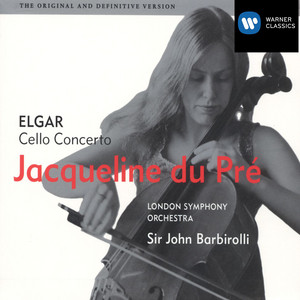 | Elgar: Cello Concerto in E Minor, Op. 85: II. Lento - Allegro molto | Edward Elgar, Jacqueline du Pré, London Symphony Orchestra, Sir John Barbirolli | G Major | 2 | 9B | 87 BPM | |
 | Histoire du soldat Suite (the Soldier's Tale Suite): VIII. Petit / Grand Chorale | Igor Stravinsky, Rolf Schulte, William Blount, Christopher Gekker, Michael Powell, Frank Morelli, John Feeney, Gordon Gottlieb, Robert Craft | B Minor | 1 | 10A | 61 BPM | |
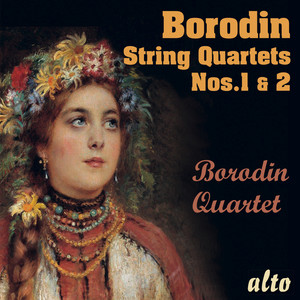 | String Quartet No.2 in D Major | Alexander Borodin, Borodin Quartet | D Major | 1 | 10B | 174 BPM | |
 | La Mer, L.109: 3. Dialogue Of The Wind And The Sea | Claude Debussy, Orchestre Symphonique de Montréal, Charles Dutoit | D♭ Major | 2 | 3B | 83 BPM | |
 | Short Ride in a Fast Machine | John Adams, Berliner Philharmoniker, Alan Gilbert | E Minor | 5 | 9A | 146 BPM | |
 | Aladdin Suite, Op. 34, FS 89: VI. Dance of the Prisoners | Carl Nielsen, South Jutland Symphony Orchestra, Niklas Willen | E Minor | 2 | 9A | 107 BPM | |
 | L'Arlésienne Suite No. 1, WD 40: IV. Carillon | Georges Bizet, Daniel Deffayet, Berliner Philharmoniker, Herbert von Karajan | E Major | 0 | 12B | 65 BPM | |
 | Violin Concerto in D Minor, Op. 47: II. Adagio di molto | Jean Sibelius, Anne-Sophie Mutter, Staatskapelle Dresden, André Previn | B♭ Major | 1 | 6B | 173 BPM | |
 | The Rite of Spring: Part One: Adoration of the Earth: Games of the Rival Tribes | Igor Stravinsky, Teodor Currentzis, musicAeterna | G Major | 4 | 9B | 80 BPM | |
 | Simple Symphony, Op. 4: Frolicsome Finale | Benjamin Britten, Royal Northern Sinfonia, Steuart Bedford | G Major | 2 | 9B | 155 BPM | |
| The Rite of Spring: Part One: Adoration of the Earth: Game of Abduction | Igor Stravinsky, Teodor Currentzis, musicAeterna | D Minor | 5 | 7A | 96 BPM | |
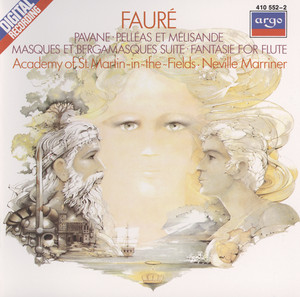 | Pelléas et Mélisande, Op.80: 3. Sicilienne | Gabriel Fauré, Academy of St. Martin in the Fields, Sir Neville Marriner | G Minor | 0 | 6A | 111 BPM | |
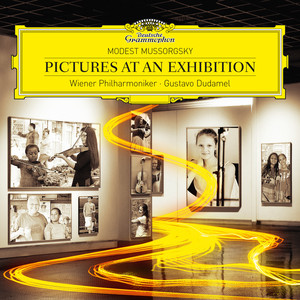 | Pictures at an Exhibition (Orch. Ravel): VIIIb. Cum mortuis in lingua mortua | Modest Mussorgsky, Wiener Philharmoniker, Gustavo Dudamel | F♯ Major | 0 | 2B | 69 BPM | |
 | La Mer, L. 109: I. De l'aube à midi sur la mer | Claude Debussy, Valery Gergiev, London Symphony Orchestra | F♯ Major | 0 | 2B | 90 BPM | |
 | Schoenberg: Verklärte Nacht, Op. 4: IV. Adagio (1943 Version) | Arnold Schoenberg, Daniel Barenboim, Chicago Symphony Orchestra | D Major | 1 | 10B | 82 BPM | |
 | Poulenc: Concerto for Two Pianos in D Minor, FP 61: I. Allegro ma non troppo | Francis Poulenc, James Conlon, Rotterdam Philharmonic Orchestra | E♭ Major | 1 | 5B | 103 BPM |
- ISRC
- HKI190908234
- Label
- L-M Records/RCA Records