- BPM
- 71
- Key
- C Major
- Camelot
- 8B
Strauss, R: Also sprach Zarathustra, Op. 30: Introduction by Richard Strauss, Staatskapelle Dresden, Rudolf Kempe Song Details
"Strauss, R: Also sprach Zarathustra, Op. 30: Introduction" by Richard Strauss, Staatskapelle Dresden, Rudolf Kempe had its release date on March 29, 2013. With This song being less than two minutes long, at 1:52, we are fairly confident that this song is not explicit and is safe for all ages. Based on the duration of this song, this song duration is much smaller than the average song duration. There is only one song in 100 Komponisten, die man gehört haben muss, so we believe that "Strauss, R: Also sprach Zarathustra, Op. 30: Introduction" is a single. Strauss, R: Also sprach Zarathustra, Op. 30: Introduction is not that popular right now. In our opinion, the overall tone is not very danceable and projects negative sounds, such as being sad, depressed, or angry.
BPM and Tempo
The tempo marking of Strauss, R: Also sprach Zarathustra, Op. 30: Introduction by Richard Strauss, Staatskapelle Dresden, Rudolf Kempe is Adagio (slowly with great expression), since this song has a tempo of 71 BPM. With that information, we can conclude that the song has a slow tempo. The time signature for this track is 4/4.
Music Key
This song has a musical key of C Major. This also means that this song has a camelot key of 8B. So, the perfect camelot match for 8B would be either 8B or 9A. While, 9B can give you a low energy boost. For moderate energy boost, you would use 5B and a high energy boost can either be 10B or 3B. Though, if you want a low energy drop, you should looking for songs with either a camelot key of 8A or 7B will give you a low energy drop, 11B would be a moderate one, and 6B or 1B would be a high energy drop. Lastly, 5A allows you to change the mood.
Want to find the BPM and music key for other songs? Check out our BPM and Key Finder page!
- Popularity
- 3%
- Loudness
- -17.015 dB
- Acousticness
- 64%
- Danceability
- 11%
- Energy
- 16%
- Instrumentalness
- 97%
- Liveness
- 10%
- Loudness
- 72%
- Speechiness
- 4%
- Valence
- 4%
Recommendations
| Track | Artist | Key | Energy | Camelot | BPM | ||
|---|---|---|---|---|---|---|---|
 | Cosas De La Batalla | Las Guerreras | A Minor | 3 | 8A | 101 BPM | |
 | Thaïs / Acte Deux: Méditation religieuse - Symphonie | Jules Massenet, Renaud Capuçon, Orchestre National Bordeaux Aquitaine, Yves Abel | D Major | 2 | 10B | 94 BPM | |
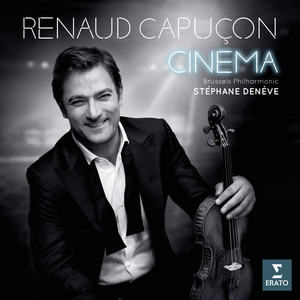 | Romance (From "The Adventures of Robin Hood") | Erich Wolfgang Korngold, Renaud Capuçon, Stéphane Denève, Brussels Philharmonic | G Major | 1 | 9B | 77 BPM | |
 | Romeo And Juliet: Love Theme | Nino Rota, PKF – Prague Philharmonia, Nick Ingman | G Minor | 1 | 6A | 81 BPM | |
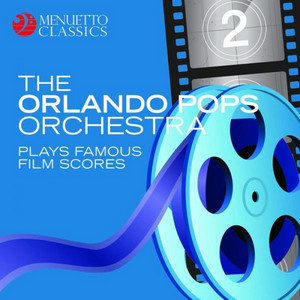 | Theme From "2001: A Space Odyssey" | Richard Strauss, Orlando Pops Orchestra | C Major | 3 | 8B | 117 BPM | |
 | Ein Heldenleben, Op. 40: I. Der Held - Live | Richard Strauss, Staatskapelle Berlin, Daniel Barenboim | A♭ Major | 1 | 4B | 91 BPM | |
 | Pavane in F-Sharp Minor, Op. 50 | Gabriel Fauré, Charles Gerhardt, National Philharmonic Orchestra | F♯ Minor | 1 | 11A | 75 BPM | |
 | Fauré: Pavane, Op. 50 | Gabriel Fauré, Paul Tortelier, English Chamber Orchestra | F Major | 0 | 7B | 137 BPM | |
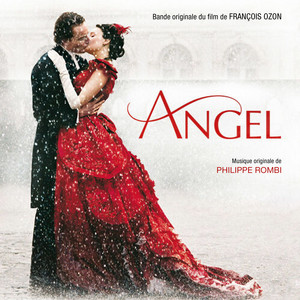 | Paradise Theme | Philippe Rombi | E♭ Minor | 1 | 2A | 94 BPM | |
 | Eine Alpensinfonie, Op. 64, TrV 233: XIII. Eine Alpensinfonie | Richard Strauss, Andrés Orozco-Estrada, Hr-sinfonieorchester | B♭ Minor | 0 | 3A | 82 BPM | |
 | Pirogov Suite, Op. 76a (Arr. L. Atovmyan for Orchestra): V. Finale | Dmitri Shostakovich, Bolshoi Theatre Orchestra, Maxim Shostakovich | E♭ Major | 2 | 5B | 107 BPM | |
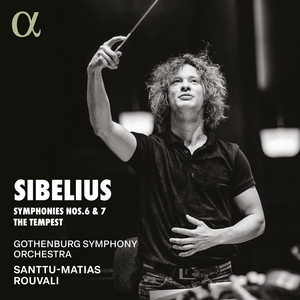 | The Tempest, Op. 109: III. Allegretto grazioso | Jean Sibelius, Santtu-Matias Rouvali, Gothenburg Symphony Orchestra | G Major | 3 | 9B | 110 BPM | |
 | Sinfonietta, JW VI/18: IV. Allegretto | Leoš Janáček, Czech Philharmonic, Karel Ančerl | A♭ Major | 2 | 4B | 154 BPM | |
 | La Cenerentola: Overture (Sinfonia) | Gioachino Rossini, Academy of St. Martin in the Fields, Sir Neville Marriner | E♭ Major | 1 | 5B | 74 BPM | |
 | La bohème: O soave fanciulla | Giacomo Puccini, Andre Kostelanetz, New York Philharmonic | G Major | 1 | 9B | 63 BPM | |
 | Scheherazade, Op. 35: The Young Prince and the Young Princess | Nikolai Rimsky-Korsakov, Royal Concertgebouw Orchestra, Herman Krebbers, Kirill Kondrashin | G Major | 0 | 9B | 134 BPM | |
 | La traviata / Act 1: Prelude | Giuseppe Verdi, Metropolitan Opera Orchestra, James Levine | D Minor | 0 | 7A | 137 BPM | |
 | Way of Dreams | Scottie Nash | C Major | 3 | 8B | 87 BPM | |
 | Mahler: Symphony No. 5 in C-Sharp Minor: IV. Adagietto (Sehr langsam) | Gustav Mahler, Sir John Barbirolli, New Philharmonia Orchestra | F Major | 0 | 7B | 87 BPM | |
 | Tannhäuser: Overture | Richard Wagner, Staatskapelle Dresden, Giuseppe Sinopoli | A♭ Major | 0 | 4B | 84 BPM | |
 | Symphony No. 3 in F Major, Op. 90: III. Poco allegretto | Johannes Brahms, London Philharmonic Orchestra, Marin Alsop | C Minor | 0 | 5A | 99 BPM | |
 | Valse triste, Op. 44 No. 1 | Jean Sibelius, Gothenburg Symphony Orchestra, Neeme Järvi | D♭ Major | 0 | 3B | 67 BPM | |
 | Grieg: Suite from Peer Gynt No. 1, Op. 46: III. Anitra's Dance | Edvard Grieg, Desire-Emile Inghelbrecht, Orchestre National Radiodiffusion Française | E Minor | 1 | 9A | 114 BPM | |
 | Variations on an Original Theme, Op. 36 "Enigma": 9. Nimrod (Adagio) | Edward Elgar, BBC Concert Orchestra, Barry Wordsworth | E♭ Major | 1 | 5B | 80 BPM | |
 | Scheherazade, Op. 35: No. 1, El mar y el barco de Simbad. Largo e maestoso - Allegro non troppo | Orquesta Sinfónica De Radio Ljubljana, Anton Nanut | E Major | 2 | 12B | 79 BPM |
- ISRC
- GBAYC8702103
- Label
- L-M Records/RCA Records