- BPM
- 140
- Key
- A Major
- Camelot
- 11B
Delius: Brigg Fair "An English Rhapsody": Variation I by Frederick Delius, Sir Thomas Beecham, Royal Philharmonic Orchestra Song Details
"Delius: Brigg Fair "An English Rhapsody": Variation I" by Frederick Delius, Sir Thomas Beecham, Royal Philharmonic Orchestra had its release date on February 7, 2011. With This song being less than a minute long, we are pretty confident that this song does not contain any foul language. That being said, this song is pretty short compared to other songs. There are a total of 88 in the song's album "Sir Thomas Beecham: The English Collection". In this album, this song's track order is #5. Furthermore, we believe that the track originated from United Kingdom. Based on our statistics, Delius: Brigg Fair "An English Rhapsody": Variation I's popularity is unknown right now. In our opinion, the overall tone is not very danceable and projects negative sounds, such as being sad, depressed, or angry.
BPM and Tempo
With Delius: Brigg Fair "An English Rhapsody": Variation I by Frederick Delius, Sir Thomas Beecham, Royal Philharmonic Orchestra having a BPM of 140 with a half-time of 70 BPM and a double-time of 280 BPM, we would consider this track to have a Allegro (fast, quick, and bright) tempo marking. Because of this, we believe that the song has an overall fast tempo. Looking at the BPM of this song, this song might go great with jogging or cycling. The time signature for this track is 1/4.
Music Key
A Major is the music key of this track. Or for those who are familiar with the camelot wheel, this song has a camelot key of 11B. So, the perfect camelot match for 11B would be either 11B or 12A. While, 12B can give you a low energy boost. For moderate energy boost, you would use 8B and a high energy boost can either be 1B or 6B. Though, if you want a low energy drop, you should looking for songs with either a camelot key of 11A or 10B will give you a low energy drop, 2B would be a moderate one, and 9B or 4B would be a high energy drop. Lastly, 8A allows you to change the mood.
Want to find the BPM and music key for other songs? Check out our BPM and Key Finder page!
- Popularity
- 0%
- Loudness
- -16.492 dB
- Acousticness
- 88%
- Danceability
- 16%
- Energy
- 12%
- Instrumentalness
- 92%
- Liveness
- 14%
- Loudness
- 73%
- Speechiness
- 4%
- Valence
- 4%
Recommendations
| Track | Artist | Key | Energy | Camelot | BPM | ||
|---|---|---|---|---|---|---|---|
 | Mahler: Blumine | Gustav Mahler, San Francisco Symphony, Michael Tilson Thomas | C Major | 1 | 8B | 100 BPM | |
 | Marche Caprice | Frederick Delius, Royal Scottish National Orchestra, David Lloyd-Jones | C Major | 1 | 8B | 124 BPM | |
 | Two English Idylls | George Butterworth, Academy of St. Martin in the Fields, Sir Neville Marriner | C Major | 1 | 8B | 89 BPM | |
 | Delius: 2 Pieces for Small Orchestra: No. 1, On Hearing the First Cuckoo in Spring | Frederick Delius, Northern Sinfonia Of England, Richard Hickox | C Major | 7 | 8B | 139 BPM | |
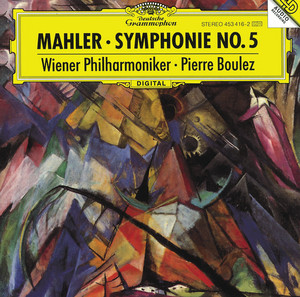 | Symphony No. 5: IV. Adagietto. Sehr langsam | Gustav Mahler, Wiener Philharmoniker, Pierre Boulez | F Major | 0 | 7B | 87 BPM | |
 | The Holy Boy | John Ireland, Richard Hickox, London Symphony Orchestra | G Minor | 0 | 6A | 101 BPM | |
 | Symphony No. 6 in B Minor, Op. 74 "Pathétique": IV. Finale. Adagio lamentoso | Pyotr Ilyich Tchaikovsky, Teodor Currentzis, musicAeterna | B Minor | 1 | 10A | 100 BPM | |
 | Pavane for Dead Princess | Maurice Ravel, David Robertson, Orchestre National De Lyon, Irina Mejoueva | G Major | 1 | 9B | 77 BPM | |
 | Suite: O, Waly Waly | John Rutter, Royal Ballet Sinfonia, David Lloyd-Jones | G Major | 0 | 9B | 95 BPM | |
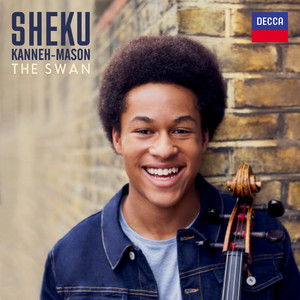 | Le Carnaval des Animaux, R. 125: 13. The Swan (Arr. Hodge for Cello, Harp & Ensemble) | Camille Saint-Saëns, Sheku Kanneh-Mason, Katherine Thomas, CBSO Cellos | G Major | 1 | 9B | 69 BPM | |
 | Debussy: Petite suite, CD 71, L. 65: I. En bateau (Orch. Büsser) | Claude Debussy, Jean-François Paillard, Orchestre de chambre Jean-François Paillard | G Major | 0 | 9B | 69 BPM | |
 | Delius: Irmelin, Prelude for Orchestra, RT VI/27 | Frederick Delius, London Symphony Orchestra, Sir John Barbirolli | D Major | 1 | 10B | 87 BPM | |
 | Florida Suite: I. Daybreak - Dance | Frederick Delius, English Northern Philharmonia, David Lloyd-Jones | A Major | 0 | 11B | 100 BPM | |
 | Album Leaf for Kateřina Kolářová in B Major, JB 1:20 | Bedřich Smetana, Jitka Čechová | B Major | 0 | 1B | 70 BPM | |
 | Lieder ohne Worte (Songs without Words), Book 2, Op. 30: No. 7 in E-Flat Major, Op. 30, No. 1, MWV U103 | Felix Mendelssohn, Péter Nagy | E♭ Major | 0 | 5B | 65 BPM | |
 | L'Arlésienne Suite No. 2 (Arr. Guiraud): III. Menuet | Georges Bizet, Orchestre Symphonique de Montréal, Charles Dutoit | E♭ Major | 0 | 5B | 128 BPM | |
 | Sonata In G Minor For Cello & Piano, Op. 19: 3. Andante | Sergei Rachmaninoff, Alisa Weilerstein, Inon Barnatan | F Major | 2 | 7B | 82 BPM | |
 | 14 Romances, Op. 34/14: No. 14, Vocalise (Arr. For Cello & Piano by Alexander Shtrimer) | Sergei Rachmaninoff, Mikayel Hakhnazaryan, Lia Hakhnazaryan | E Minor | 1 | 9A | 105 BPM | |
 | Valse lente | Germaine Tailleferre, Dario Müller | G Major | 0 | 9B | 66 BPM | |
 | Henry V - Suite (arr. Mathieson): IV. Touch her soft lips and part | William Walton, Philharmonia Orchestra | C Major | 0 | 8B | 71 BPM | |
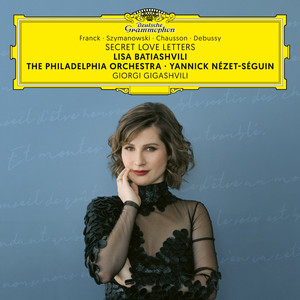 | Beau soir, L. 6 (L. 84) (Arr. Heifetz for Violin and Piano) | Claude Debussy, Lisa Batiashvili, Yannick Nézet-Séguin | F Minor | 1 | 4A | 79 BPM | |
 | Liebestraum No. 3 in A-Flat Major, S. 541 / 3 | Franz Liszt, Lang Lang | A♭ Major | 0 | 4B | 137 BPM | |
 | Petite Suite de Concert, Op. 77: III. Un sonnet d'amour | Samuel Coleridge-Taylor, Chineke! Orchestra, Anthony Parnther | D Major | 0 | 10B | 62 BPM | |
| Fauré: Pavane, Op. 50 | Gabriel Fauré, San Francisco Symphony, Michael Tilson Thomas | F♯ Minor | 0 | 11A | 62 BPM | |
 | Adoration (Arr. for Cello & Orchestra by Julian Riem) | Florence Beatrice Price, Raphaela Gromes, Lucerne Festival Strings, Daniel Dodds | G Major | 1 | 9B | 86 BPM |
- ISRC
- GBAYC1001630
- Label
- L-M Records/RCA Records