- BPM
- 117
- Key
- D Minor
- Camelot
- 7A
Mathis Der Maler, 1st Tableau, Scene 4: Raus, Schwarzröcke, aus eurem Genistel (Sylvester/Brüder/Mathis) by Paul Hindemith, Rafael Kubelik, Bayerischer Rundfunk, Bavarian Radio Symphony Orchestra Song Details
Paul Hindemith, Rafael Kubelik, Bayerischer Rundfunk, Bavarian Radio Symphony Orchestra's 'Mathis Der Maler, 1st Tableau, Scene 4: Raus, Schwarzröcke, aus eurem Genistel (Sylvester/Brüder/Mathis)' had a release date set for April 1, 1995. The duration of This song is about two minutes long, specifically at 2:15. This song does not appear to have any foul language. Mathis Der Maler, 1st Tableau, Scene 4: Raus, Schwarzröcke, aus eurem Genistel (Sylvester/Brüder/Mathis)'s duration is considered a little bit shorter than the average duration of a typical track. The track order of this song in Paul Hindemith, Rafael Kubelik's "Hindemith: Mathis der Maler" album is number 11 out of 61. In terms of popularity, Mathis Der Maler, 1st Tableau, Scene 4: Raus, Schwarzröcke, aus eurem Genistel (Sylvester/Brüder/Mathis) is currently not that popular. Although the overall vibe is very danceable, it does project more negative sounds.
BPM and Tempo
We consider the tempo marking of Mathis Der Maler, 1st Tableau, Scene 4: Raus, Schwarzröcke, aus eurem Genistel (Sylvester/Brüder/Mathis) by Paul Hindemith, Rafael Kubelik, Bayerischer Rundfunk, Bavarian Radio Symphony Orchestra to be Moderato (at a moderate speed) because the track has a tempo of 117 BPM, a half-time of 58BPM, and a double-time of 234 BPM. Based on that, the speed of the song's tempo is moderate. Activities such as, walking, can go well with this song. The time signature for this track is 4/4.
Music Key
This song has a musical key of D Minor. Because this track belongs in the D Minor key, the camelot key is 7A. So, the perfect camelot match for 7A would be either 7A or 6B. While, a low energy boost can consist of either 7B or 8A. For moderate energy boost, you would use 4A and a high energy boost can either be 9A or 2A. However, if you are looking for a low energy drop, finding a song with a camelot key of 6A would be a great choice. Where 10A would give you a moderate drop, and 5A or 12A would be a high energy drop. Lastly, 10B allows you to change the mood.
Want to find the BPM and music key for other songs? Check out our BPM and Key Finder page!
- Popularity
- 1%
- Loudness
- -14.062 dB
- Acousticness
- 96%
- Danceability
- 63%
- Energy
- 27%
- Instrumentalness
- 0%
- Liveness
- 10%
- Loudness
- 77%
- Speechiness
- 6%
- Valence
- 35%
Recommendations
| Track | Artist | Key | Energy | Camelot | BPM | ||
|---|---|---|---|---|---|---|---|
 | Poulenc: Clarinet Sonata, FP 184: II. Romanza | Francis Poulenc, Sabine Meyer | G Minor | 0 | 6A | 67 BPM | |
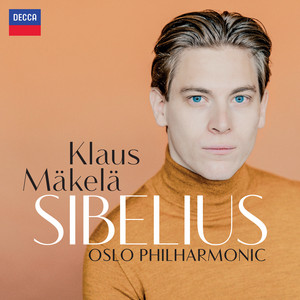 | Symphony No. 2 in D Major, Op. 43: III. Vivacissimo | Jean Sibelius, Oslo Philharmonic Orchestra, Klaus Mäkelä | F♯ Minor | 1 | 11A | 66 BPM | |
 | The Spectre's Bride, Op. 69, B. 135: Introduction | Antonín Dvořák, Prague Philharmonia, Petr Altrichter | C Major | 0 | 8B | 138 BPM | |
 | Sinfonietta, JW VI/18: II. The Castle, Brno. Andante – Allegretto | Leoš Janáček, Bavarian Radio Symphony Orchestra, Rafael Kubelík | A♭ Minor | 2 | 1A | 144 BPM | |
 | Symphony of Psalms, K52: II. Expectans expectavi Dominum (Psalm 40) | Igor Stravinsky, Berliner Philharmoniker, Pierre Boulez, Rundfunkchor Berlin | B♭ Minor | 0 | 3A | 83 BPM | |
 | Fauré: Élégie, Op. 24 (Orchestral Version) | Gabriel Fauré, Paavo Järvi, Eric Picard, Orchestre de Paris | A♭ Major | 0 | 4B | 89 BPM | |
 | Prelude in F Minor (Arr. for Wind Quintet by Kara LaMoure) | Nadia Boulanger, WindSync | C Major | 0 | 8B | 138 BPM | |
 | Simple Symphony, Op. 4: Sentimental Sarabande | Benjamin Britten, Royal Northern Sinfonia, Steuart Bedford | G Minor | 0 | 6A | 75 BPM | |
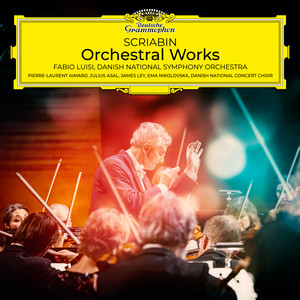 | Symphony No. 1 in E Major, Op. 26: III. Lento | Alexander Scriabin, Danish National Symphony Orchestra, Fabio Luisi | B♭ Minor | 2 | 3A | 86 BPM | |
 | Roussel: String Trio, Op. 58: II. Adagio | Albert Roussel, Trio à cordes de Paris | C Major | 0 | 8B | 138 BPM | |
 | The Tempest Suite No. 1, Op. 109, No. 2: I. The Oak Tree | Jean Sibelius, Lahti Symphony Orchestra, Okko Kamu | B♭ Major | 0 | 6B | 86 BPM | |
 | Cardillac, Op. 39, Act I (First Version, 1926): Mörder! Mörder! Verborgen! Wo? (Chor) | Paul Hindemith, Vienna State Opera Orchestra, Vienna State Opera Chorus, Cornelius Meister | C Major | 0 | 8B | 138 BPM | |
 | Concerto For Oboe And Strings: 2. Minuet & Musette | Ralph Vaughan Williams, Neil Black, English Chamber Orchestra, Daniel Barenboim | G Minor | 2 | 6A | 88 BPM | |
| Rêverie, Op. 24 | Alexander Scriabin, Danish National Symphony Orchestra, Fabio Luisi | B♭ Minor | 2 | 3A | 86 BPM | |
 | Sonate, Op. 71: II. Nocturne – Presque adagio | Charles Koechlin, Julien Hardy, Simon Zaoui | E♭ Major | 0 | 5B | 77 BPM | |
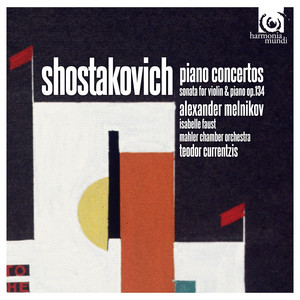 | Piano Concerto No. 2 Op. 102 in F Major: III. Allegro | Dmitri Shostakovich, Alexander Melnikov, Mahler Chamber Orchestra, Teodor Currentzis | C Major | 4 | 8B | 150 BPM | |
 | Music for Strings, Percussion & Celesta, Sz. 106: II. Allegro | Béla Bartók, Chicago Symphony Orchestra, Sir Georg Solti | D♭ Major | 2 | 3B | 142 BPM | |
 | Fantasia & Fugue in C Minor, Op. 86 (After J.S. Bach's BWV 537): Fantasia | Edward Elgar, Seattle Symphony Orchestra, Gerard Schwarz | F Minor | 1 | 4A | 143 BPM | |
 | Masques et bergamasques Suite, Op. 112: III. Gavotte. Allegro vivo | Gabriel Fauré, Seattle Symphony Orchestra, Ludovic Morlot | F♯ Minor | 0 | 11A | 80 BPM | |
 | Mathis der Maler Symphony: I. Engelkonzert | Paul Hindemith, Berliner Philharmoniker, Claudio Abbado | D Major | 1 | 10B | 106 BPM | |
 | Roussel: Le festin de l'araignée, Op. 17, Pt. 2: XIII. Funérailles de l'Éphémère | Albert Roussel, Jean Martinon, Orchestre National de l'O.R.T.F. | D♭ Major | 2 | 3B | 99 BPM | |
 | Piano Quartet in E-Flat Major, Op. 47: III. Andante cantabile | Robert Schumann, Isabelle Faust, Antoine Tamestit, Jean-Guihen Queyras, Alexander Melnikov | B♭ Major | 0 | 6B | 78 BPM | |
 | Valses nobles et sentimentales, M. 61a: V. Presque lent, dans un sentiment intime | Maurice Ravel, The Cleveland Orchestra, Pierre Boulez | A♭ Minor | 0 | 1A | 76 BPM | |
 | Piano Concerto in A Minor, Op. 7: III. Finale. Allegro non troppo - Allegro molto | Clara Schumann, Veronica Jochum, Bamberg Symphony, Joseph Silverstein | F Minor | 1 | 4A | 103 BPM | |
 | Svanevit Suite, Op. 54: III. Tärnorna med rosor | Jean Sibelius, Finnish Radio Symphony Orchestra, Nicholas Collon | C Major | 1 | 8B | 85 BPM |
- ISRC
- This song does not have an ISRC.
- Label
- L-M Records/RCA Records