- BPM
- 72
- Key
- A Major
- Camelot
- 11B
Johannes Brahms: Hungarian Dance no. 5 - Allegro in F sharp minor by Johannes Brahms, SRB Project Song Details
"Johannes Brahms: Hungarian Dance no. 5 - Allegro in F sharp minor" by Johannes Brahms, SRB Project had its release date on June 30, 2025. With This song being less than two minutes long, at 1:56, we are fairly confident that this song is not explicit and is safe for all ages. Based on the duration of this song, this song duration is much smaller than the average song duration. There is only one song in 어린이집 놀이음악, so we believe that "Johannes Brahms: Hungarian Dance no. 5 - Allegro in F sharp minor" is a single. Johannes Brahms: Hungarian Dance no. 5 - Allegro in F sharp minor is unknown right now. Although the tone can be danceable to some, this track does projects more of a negative sound rather than a postive one.
BPM and Tempo
The tempo marking of Johannes Brahms: Hungarian Dance no. 5 - Allegro in F sharp minor by Johannes Brahms, SRB Project is Adagio (slowly with great expression), since this song has a tempo of 72 BPM. With that information, we can conclude that the song has a slow tempo. The time signature for this track is 4/4.
Music Key
This song is in the music key of A Major. This also means that this song has a camelot key of 11B. So, the perfect camelot match for 11B would be either 11B or 12A. While, 12B can give you a low energy boost. For moderate energy boost, you would use 8B and a high energy boost can either be 1B or 6B. Though, if you want a low energy drop, you should looking for songs with either a camelot key of 11A or 10B will give you a low energy drop, 2B would be a moderate one, and 9B or 4B would be a high energy drop. Lastly, 8A allows you to change the mood.
Want to find the BPM and music key for other songs? Check out our BPM and Key Finder page!
- Popularity
- 0%
- Loudness
- -8.843 dB
- Acousticness
- 2%
- Danceability
- 52%
- Energy
- 31%
- Instrumentalness
- 0%
- Liveness
- 12%
- Loudness
- 85%
- Speechiness
- 3%
- Valence
- 18%
Recommendations
| Track | Artist | Key | Energy | Camelot | BPM | ||
|---|---|---|---|---|---|---|---|
 | Myrthen, Op. 25 - Version for Cello and Piano: XXIV. Du bist wie eine Blume | Robert Schumann, Kian Soltani, Aaron Pilsan | F Major | 0 | 7B | 116 BPM | |
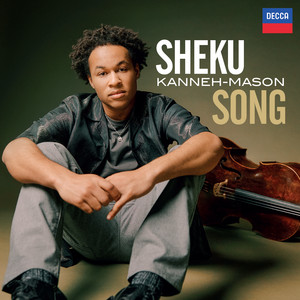 | Come, Sweet Death, BWV 478 (Arr. for 5 Cellos) | Sheku Kanneh-Mason, Hannah Roberts, Ben Davies, Desmond Neysmith, Max Ruisi | C Major | 0 | 8B | 122 BPM | |
 | Schluss | Fanny Mendelssohn, Heather Schmidt | E Major | 1 | 12B | 87 BPM | |
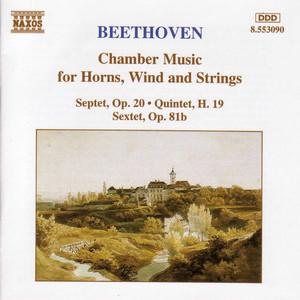 | Wind Quintet in E-Flat Major, Hess 19: II. Adagio maestoso | Ludwig van Beethoven, Ottó Rácz, Jozsef Vajda, Sándor Berki, János Keveházi, Jeno Kevehazi | E♭ Major | 0 | 5B | 62 BPM | |
 | I. Prélude. Andantino | César Franck, Jean-Pierre Armengaud | D Major | 0 | 10B | 66 BPM | |
 | Handel / Orch. Hale: Keyboard Suite No. 4 in D Minor, HWV 437: III. Sarabande | George Frideric Handel, Alexander Briger, Academy of St. Martin in the Fields | D Minor | 0 | 7A | 116 BPM | |
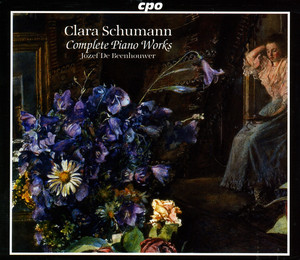 | 3 Preludes and Fugues, Op. 16: No. 2, Prelude and Fugue in B-Flat Major | Clara Schumann, Jozef De Beenhouwer | B♭ Major | 0 | 6B | 101 BPM | |
 | Piano Concerto in A minor, Op. 16: II. Adagio - Live | Edvard Grieg, Alice Sara Ott, Symphonieorchester des Bayerischen Rundfunks, Esa-Pekka Salonen | D Major | 2 | 10B | 121 BPM | |
 | Paradis: Sicilienne 파라디스 시실리안느 | 김준영 | E♭ Major | 0 | 5B | 137 BPM | |
 | Berceuse, Op. 16 | Gabriel Fauré, Cocomi, Niu Niu | A Minor | 1 | 8A | 129 BPM | |
 | Academic Festival Overture, Op. 80 | Johannes Brahms, Gewandhausorchester Leipzig, Riccardo Chailly | C Major | 2 | 8B | 77 BPM | |
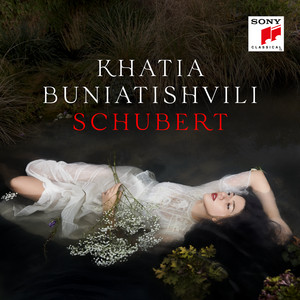 | Ständchen, S. 560 (Trans. from Schwanengesang No. 4, D. 957) | Franz Schubert, Franz Liszt, Khatia Buniatishvili | D Major | 0 | 10B | 67 BPM | |
 | Notturno for Strings and Harp | Arnold Schoenberg, Daniel Hope, Zürcher Kammerorchester, Jane Berthe | A♭ Major | 1 | 4B | 75 BPM | |
 | 21 Hungarian Dances, WoO 1: Hungarian Dance No. 6 in D-Flat Major | Johannes Brahms, Seattle Symphony Orchestra, Gerard Schwarz | D Major | 1 | 10B | 81 BPM | |
 | Brook Green Suite: II. Air | Gustav Holst, English Sinfonia, Howard Griffiths | E♭ Major | 0 | 5B | 128 BPM | |
 | String Quartet No. 2 in D Major: III. Notturno: Andante | Alexander Borodin, Budapest Haydn Quartet | A Major | 1 | 11B | 89 BPM | |
 | Violin Concerto No. 2 in B Minor, Op. 7, "La campanella": III. Rondo | Niccolò Paganini, Netherlands Symphony Orchestra, Rudolf Koelman, Jan Willem de Vriend | B Minor | 2 | 10A | 105 BPM | |
| String Quartet No. 2 in D Major: I. Allegro moderato | Alexander Borodin, Budapest Haydn Quartet | D Major | 1 | 10B | 75 BPM | |
 | Sonata in D Minor, K. 9 | Domenico Scarlatti, Ivo Pogorelich | D Minor | 0 | 7A | 94 BPM | |
 | Franck: Prélude, fugue et variation, Op. 18, FWV 30: Prélude | César Franck, Aldo Ciccolini | B Minor | 0 | 10A | 127 BPM | |
 | Clarinet Concerto in A major, K. 622: Clarinet Concerto in A major, K. 622: II. Adagio | Various Artists, David Shifrin, New York Chamber Symphony, Gerard Schwarz | C Major | 1 | 8B | 92 BPM | |
 | Paganini: 24 Caprices, Op. 1: No. 24 in A Minor | Niccolò Paganini, Itzhak Perlman | A Minor | 1 | 8A | 111 BPM | |
 | Les chemins de l'amour, FP. 106 | Francis Poulenc, Mischa Maisky, Daria Hovora | E Major | 1 | 12B | 67 BPM | |
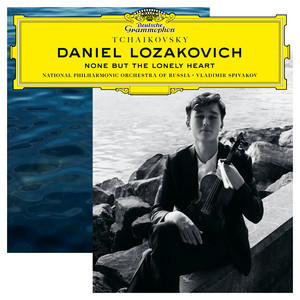 | Souvenir d'un lieu cher, Op. 42: III. Mélodie (Ed. Herrmann) | Pyotr Ilyich Tchaikovsky, Daniel Lozakovich, Stanislav Soloviev | E♭ Major | 1 | 5B | 178 BPM | |
 | Piano Concerto No. 2 in C Minor, Op. 18: I. Moderato | Sergei Rachmaninoff, Khatia Buniatishvili, Paavo Järvi, Czech Philharmonic | C Minor | 1 | 5A | 79 BPM |
- ISRC
- KRRAR2516845
- Label
- L-M Records/RCA Records