- BPM
- 101
- Key
- F♯ Minor
- Camelot
- 11A
Anonymous: Alma Redemptoris mater: by George Frideric Handel, Taverner Choir/Taverner Players/Andrew Parrott, Andrew Parrott Song Details
"Anonymous: Alma Redemptoris mater:" by George Frideric Handel, Taverner Choir/Taverner Players/Andrew Parrott, Andrew Parrott had its release date on January 1, 1989. With This song being less than two minutes long, at 1:53, we are fairly confident that this song is not explicit and is safe for all ages. Based on the duration of this song, this song duration is much smaller than the average song duration. The track order of this song in George Frideric Handel, Andrew Parrott's "Handel - Carmelite Vespers" album is number 16 out of 54. On top of that, United Kingdom appears to be the country where this track was created. In terms of popularity, Anonymous: Alma Redemptoris mater: is currently unknown. In our opinion, the overall tone is not very danceable and projects negative sounds, such as being sad, depressed, or angry.
BPM and Tempo
We consider the tempo marking of Anonymous: Alma Redemptoris mater: by George Frideric Handel, Taverner Choir/Taverner Players/Andrew Parrott, Andrew Parrott to be Andante (at a walking pace) because the track has a tempo of 101 BPM, a half-time of 50BPM, and a double-time of 202 BPM. Based on that, the speed of the song's tempo is slow. The time signature for this track is 3/4.
Music Key
This song is in the music key of F♯ Minor. This also means that this song has a camelot key of 11A. So, the perfect camelot match for 11A would be either 11A or 10B. While, a low energy boost can consist of either 11B or 12A. For moderate energy boost, you would use 8A and a high energy boost can either be 1A or 6A. However, if you are looking for a low energy drop, finding a song with a camelot key of 10A would be a great choice. Where 2A would give you a moderate drop, and 9A or 4A would be a high energy drop. Lastly, 2B allows you to change the mood.
Want to find the BPM and music key for other songs? Check out our BPM and Key Finder page!
- Popularity
- 0%
- Loudness
- -26.855 dB
- Acousticness
- 81%
- Danceability
- 19%
- Energy
- 4%
- Instrumentalness
- 0%
- Liveness
- 15%
- Loudness
- 55%
- Speechiness
- 5%
- Valence
- 4%
Recommendations
| Track | Artist | Key | Energy | Camelot | BPM | ||
|---|---|---|---|---|---|---|---|
 | Keyboard Sonata in B Minor, Wq. 55/3, H. 245: Cantabile | Carl Philipp Emanuel Bach, Christopher Hinterhuber | E Minor | 1 | 9A | 106 BPM | |
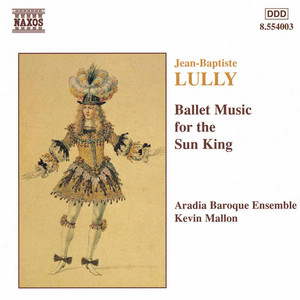 | Le bourgeois gentilhomme: Chaconne des Scaramouches, Frivelins et Arlequins | Jean-Baptiste Lully, Mary Enid Haines, Sharla Nafziger, Aradia Ensemble, Kevin Mallon | F♯ Major | 0 | 2B | 0 BPM | |
 | Symphony No. 3 in C Major, Op. 2, "the Chaplet": II. Vivace | William Boyce, Aradia Ensemble, Kevin Mallon | B Major | 0 | 1B | 82 BPM | |
 | Gideon, Pt. 3: Air. Let the Trumpet's Sound Inviting | George Frideric Handel, David Cordier, Barbara Hannigan, Stephan MacLeod, Linda Perillo, Knut Schoch, Nicola Wemyss, Junge Kantorei, Barockorchester Frankfurt, Joachim Carlos Martini | D Major | 1 | 10B | 77 BPM | |
 | Cello Concerto No. 6 in D Major, G. 479: II. Adagio | Luigi Boccherini, Steven Isserlis, Orchestra of the Age of Enlightenment | A Major | 0 | 11B | 71 BPM | |
 | Scarlatti, A: Concerto grosso in sette parti No. 1 in F Minor: II. Allegro | Alessandro Scarlatti, Europa Galante, Fabio Biondi | E Minor | 3 | 9A | 80 BPM | |
 | Les Indes galantes, RCT 44, Nouvelle Entrée, Scène 6: Chaconne | Jean-Philippe Rameau, Les Arts Florissants, William Christie | D♭ Major | 1 | 3B | 116 BPM | |
 | Concerto Per Oboe, Archi E Continuo In Re Minore: II. Adagio | Alessandro Marcello, Venice Baroque Orchestra | D♭ Minor | 0 | 12A | 79 BPM | |
 | Theodora, HWV 68, Act I Scene 5: Air. Angels, ever bright and fair (Theodora) | George Frideric Handel, Christina Wieland, Diana Schmid, Franz Vitzthum, Knut Schoch, Klaus Mertens, Junge Kantorei, Barockorchester Frankfurt, Joachim Carlos Martini | E Major | 1 | 12B | 94 BPM | |
 | Pièces de viole, Livre 3 - Suite No. 7 in G Major: No. 92. Prélude. Lentement | Marin Marais, Mieneke van der Velden, Glen Wilson | E♭ Minor | 0 | 2A | 120 BPM | |
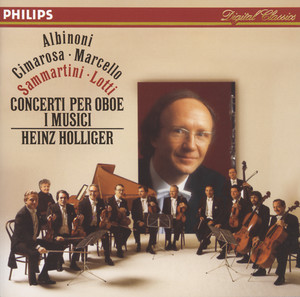 | Oboe Concerto in C: 1. Introduzione (Larghetto) | Domenico Cimarosa, Heinz Holliger, I Musici | C Minor | 1 | 5A | 172 BPM | |
 | "Marche de triomphe et Second air de trompette" in D Major: I. Marche de triomphe | Marc-Antoine Charpentier, Musica Antiqua Köln, Reinhard Goebel | D♭ Major | 6 | 3B | 87 BPM | |
 | Andante in F Minor (Arr. L. Lencses) | Gaetano Donizetti, Lajos Lencsés, Stuttgart Arcata Chamber Orchestra, Patrick Strub | F Minor | 1 | 4A | 63 BPM | |
 | Concerto grosso No. 3 in D Minor: IV. Allegro (After D. Scarlatti) | Charles Avison, Avison Ensemble, Pavlo Beznosiuk | F Major | 1 | 7B | 74 BPM | |
 | Keyboard Sonata in D Minor, Kk. 1 | Domenico Scarlatti, Ivo Pogorelich | D Minor | 1 | 7A | 107 BPM | |
 | Concerto Grosso In F Minor, Op. 1, No. 8: III. Andante | Pietro Locatelli, Tafelmusik Baroque Orchestra, Jeanne Lamon | A Minor | 1 | 8A | 99 BPM | |
 | Lo frate 'nnamorato: II. Andante | Giovanni Battista Pergolesi, Orchestra da Camera di Napoli, Enzo Amato | E Minor | 5 | 9A | 165 BPM | |
 | Le bourgeois gentilhomme, LWV 43: XI. Marche pour la cérémonie des turcs | Jean-Baptiste Lully, Le Concert Des Nations, Jordi Savall | A Major | 3 | 11B | 72 BPM | |
 | Symphony in B-Flat Major, Op. 2 No. 1: II. Moderato e dolce | William Boyce, Academy of St. Martin in the Fields, Sir Neville Marriner | G Minor | 1 | 6A | 84 BPM | |
 | Symphony in E-Flat Major, Op. 11, No. 3: III. Menuetto | Johann Stamitz, New Zealand Chamber Orchestra, Donald Armstrong | E♭ Major | 0 | 5B | 83 BPM | |
 | Albinoni: Oboe Concerto in D Minor, Op. 9 No. 2: II. Adagio | Tomaso Albinoni, Pierre Pierlot, Claudio Scimone, I Solisti Veneti | B♭ Major | 2 | 6B | 72 BPM | |
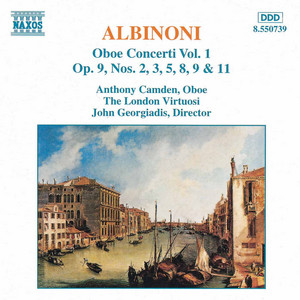 | Oboe Concerto in C Major, Op. 9, No. 5: I. Allegro | Tomaso Albinoni, Anthony Camden, London Virtuosi, John Georgiadis | C Major | 3 | 8B | 108 BPM | |
| Scarlatti, D: Sinfonia No. 7 in C Major: II. Adagio e staccato | Domenico Scarlatti, Fabio Biondi, Europa Galante | F♯ Major | 0 | 2B | 36 BPM | |
 | Stabat Mater en fa mineur pour soprano, alto & orgue: Quando corpus morietur Amen | Giovanni Battista Pergolesi, Orchestre Paul Kuentz, Barbara Schlick, Christa Menke | B♭ Minor | 1 | 3A | 129 BPM | |
 | Handel / Arr. Mackerras & Rothwell: Oboe Concerto No. 2a in B-Flat Major, HWV 301: III. Siciliano | George Frideric Handel, Evelyn Rothwell, Valda Aveling, Hallé, Sir John Barbirolli | B♭ Major | 2 | 6B | 83 BPM |
- ISRC
- GBAYC8701605
- Label
- L-M Records/RCA Records