- BPM
- 73
- Key
- C Minor
- Camelot
- 5A
Symphony No. 9 in E Minor: III. Scherzo. Allegro pesante by Ralph Vaughan Williams, Bryden Thomson, London Symphony Orchestra Song Details
"Symphony No. 9 in E Minor: III. Scherzo. Allegro pesante" by Ralph Vaughan Williams, Bryden Thomson, London Symphony Orchestra had its release date on August 1, 1989. This song is about six minutes long, preciously at 5:44, making this song fairly long compared to other songs. This song is part of Vaughan Williams: Complete Symphonies by Ralph Vaughan Williams, Bryden Thomson, London Symphony Orchestra, Yvonne Kenny, Catherine Bott, Brian Rayner Cook, Roderick elms, London Symphony Chorus. The song's track number on the album is #8 out of 37 tracks. Based on our data, United Kingdom was the country where this track was produced or recorded. Symphony No. 9 in E Minor: III. Scherzo. Allegro pesante is unknown right now. In our opinion, the overall tone is not very danceable and projects negative sounds, such as being sad, depressed, or angry.
BPM and Tempo
Since Symphony No. 9 in E Minor: III. Scherzo. Allegro pesante by Ralph Vaughan Williams, Bryden Thomson, London Symphony Orchestra has a tempo of 73 beats per a minute, the tempo markings of this song would be Adagio (slowly with great expression). With Symphony No. 9 in E Minor: III. Scherzo. Allegro pesante being at 73 BPM, the half-time would be 36 BPM with a double-time of 146 BPM.In addition, we consider the tempo speed to be pretty slow for this song. The time signature for this track is 4/4.
Music Key
This song has a musical key of C Minor. Which also means that the camelot key for this song is 5A. So, the perfect camelot match for 5A would be either 5A or 4B. While, a low energy boost can consist of either 5B or 6A. For moderate energy boost, you would use 2A and a high energy boost can either be 7A or 12A. However, if you are looking for a low energy drop, finding a song with a camelot key of 4A would be a great choice. Where 8A would give you a moderate drop, and 3A or 10A would be a high energy drop. Lastly, 8B allows you to change the mood.
Want to find the BPM and music key for other songs? Check out our BPM and Key Finder page!
- Popularity
- 0%
- Loudness
- -19.432 dB
- Acousticness
- 95%
- Danceability
- 7%
- Energy
- 7%
- Instrumentalness
- 87%
- Liveness
- 20%
- Loudness
- 68%
- Speechiness
- 4%
- Valence
- 5%
Recommendations
| Track | Artist | Key | Energy | Camelot | BPM | ||
|---|---|---|---|---|---|---|---|
 | Tu mancavi a tormentarmi, crudelissima speranza (Arr. L. Stokowski) | Antonio Cesti, Brussels Philharmonic, Richard Egarr | E Major | 1 | 12B | 87 BPM | |
 | Prélude to the Afternoon of a Faun | Claude Debussy, Hanspeter Gmür, Nuremberg Symphony Orchestra | C Major | 9 | 8B | 85 BPM | |
 | Fauré: Élégie, Op. 24 (Orchestral Version) | Gabriel Fauré, Paavo Järvi, Eric Picard, Orchestre de Paris | A♭ Major | 0 | 4B | 89 BPM | |
 | A Sea Symphony: II. On the Beach at Night Alone (Largo sostenuto) | Ralph Vaughan Williams, Hallé, Sir Mark Elder | G Minor | 0 | 6A | 84 BPM | |
 | Warsaw Concerto | Richard Addinsell, Jean-Yves Thibaudet, BBC Symphony Orchestra, Hugh Wolff | B Major | 1 | 1B | 76 BPM | |
 | Dolly Suite, Op. 56: I. Berceuse | Gabriel Fauré, Katia Labèque, Marielle Labèque | E Major | 0 | 12B | 63 BPM | |
 | Symphony No. 3 In C Minor, Op. 78 "Organ Symphony": 1. Adagio - Allegro moderato - Poco adagio | Camille Saint-Saëns, Simon Preston, Berliner Philharmoniker, James Levine | A♭ Major | 1 | 4B | 118 BPM | |
 | The Firebird (L'oiseau De Feu) - Suite (1919): Finale | Igor Stravinsky, Orchestre de l'Opéra National de Paris, Myung-Whun Chung | E Major | 2 | 12B | 78 BPM | |
 | Candide: Overture | Leonard Bernstein, New York Philharmonic | E♭ Major | 4 | 5B | 82 BPM | |
 | Symphony No. 3, "Pastoral Symphony": III. Moderato pesante | Ralph Vaughan Williams, Brendan O'Brien, Patricia Rozario, Bournemouth Symphony Orchestra, Kees Bakels | C Major | 0 | 8B | 88 BPM | |
 | Appalachian Spring: VI. Meno mosso | Aaron Copland, Leonard Bernstein, New York Philharmonic | A♭ Major | 0 | 4B | 143 BPM | |
 | In the Fen Country - Symphonic Impression | Ralph Vaughan Williams, New Queen's Hall Orchestra, Barry Wordsworth | F Major | 0 | 7B | 64 BPM | |
 | Piano Concerto No. 2 in C Minor, Op. 18: I. Moderato | Sergei Rachmaninoff, Yevgeny Sudbin, BBC Symphony Orchestra, Sakari Oramo | C Minor | 1 | 5A | 82 BPM | |
 | Sospiri, Op. 70 | Edward Elgar, Academy of St. Martin in the Fields, Sir Neville Marriner | F Major | 1 | 7B | 177 BPM | |
 | Simple Symphony, Op. 4: III. Sentimental Sarabande | Benjamin Britten, Camerata Nordica, Terje Tonnesen | G Minor | 0 | 6A | 85 BPM | |
 | A Moorside Suite, H. 173: Nocturne | Gustav Holst, Royal Northern Sinfonia, David Lloyd-Jones | B Minor | 0 | 10A | 80 BPM | |
 | Albinoni: Adagio in G Minor | Tomaso Albinoni, Sir Neville Marriner, Academy of St. Martin in the Fields | C Minor | 1 | 5A | 90 BPM | |
 | Five Variants of "Dives and Lazarus" | Ralph Vaughan Williams, Iona Brown, Kenneth Heath, Skaila Kanga, Academy of St. Martin in the Fields, Sir Neville Marriner | B Minor | 1 | 10A | 87 BPM | |
 | Suite No. 3, P. 172: I. Italiana: Andantino | Ottorino Respighi, RTÉ National Symphony Orchestra | B♭ Major | 1 | 6B | 94 BPM | |
 | Adoration (Arr. Gray for Violin & Orchestra) | Florence Beatrice Price, Randall Goosby, Philadelphia Orchestra, Yannick Nézet-Séguin | D Major | 3 | 10B | 74 BPM | |
 | Peer Gynt Suite No. 1, Op. 46: II. The Death of Åse - Recorded 1982 | Edvard Grieg, Berliner Philharmoniker, Herbert von Karajan | G Major | 0 | 9B | 45 BPM | |
 | Elegie I. In Memoriam: Adagio | Lodewijk Mortelmans, Brussels Philharmonic, Silveer Vandenbroeck | F Major | 0 | 7B | 134 BPM | |
 | Thaïs / Acte Deux: Meditation | Jules Massenet, Michel Schwalbé, Berliner Philharmoniker, Herbert von Karajan | B♭ Major | 3 | 6B | 99 BPM | |
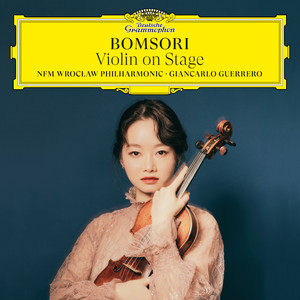 | Thaïs: Méditation | Jules Massenet, Bomsori, NFM Wrocław Philharmonic, Giancarlo Guerrero | D Major | 0 | 10B | 84 BPM | |
 | Ancient Airs & Dances, Suite III, P. 172: I. Italiana (Anonymous) | Ottorino Respighi, Filarmonica della Scala, Riccardo Chailly | B♭ Major | 1 | 6B | 172 BPM |
- ISRC
- GBLWD9103303
- Label
- L-M Records/RCA Records