- BPM
- 118
- Key
- B♭ Major
- Camelot
- 6B
The Nutcracker, Op. 71, TH 14, Act II Scene 14: Coda by Pyotr Ilyich Tchaikovsky, London Symphony Orchestra, Sir Charles Mackerras Song Details
Pyotr Ilyich Tchaikovsky, London Symphony Orchestra, Sir Charles Mackerras's 'The Nutcracker, Op. 71, TH 14, Act II Scene 14: Coda' had a release date set for November 1, 1986. With This song being less than two minutes long, at 1:22, we are fairly confident that this song is not explicit and is safe for all ages. Based on the duration of this song, this song duration is much smaller than the average song duration. There are a total of 25 in the song's album "Tchaikovsky: The Nutcracker, Op. 71, TH 14 (Complete Ballet Score) [Original Motion Picture Soundtrack]". In this album, this song's track order is #23. Furthermore, we believe that the track originated from United States. In terms of popularity, The Nutcracker, Op. 71, TH 14, Act II Scene 14: Coda is currently not that popular. In our opinion, the overall tone is not very danceable and projects negative sounds, such as being sad, depressed, or angry.
BPM and Tempo
With The Nutcracker, Op. 71, TH 14, Act II Scene 14: Coda by Pyotr Ilyich Tchaikovsky, London Symphony Orchestra, Sir Charles Mackerras having a BPM of 118 with a half-time of 59 BPM and a double-time of 236 BPM, we would consider this track to have a Moderato (at a moderate speed) tempo marking. Because of this, we believe that the song has an overall moderate tempo. Looking at the BPM of this song, this song might go great with walking. The time signature for this track is 3/4.
Music Key
This song has a musical key of B♭ Major. Or for those who are familiar with the camelot wheel, this song has a camelot key of 6B. So, the perfect camelot match for 6B would be either 6B or 7A. While, 7B can give you a low energy boost. For moderate energy boost, you would use 3B and a high energy boost can either be 8B or 1B. Though, if you want a low energy drop, you should looking for songs with either a camelot key of 6A or 5B will give you a low energy drop, 9B would be a moderate one, and 4B or 11B would be a high energy drop. Lastly, 3A allows you to change the mood.
Want to find the BPM and music key for other songs? Check out our BPM and Key Finder page!
- Popularity
- 2%
- Loudness
- -21.673 dB
- Acousticness
- 93%
- Danceability
- 22%
- Energy
- 12%
- Instrumentalness
- 88%
- Liveness
- 22%
- Loudness
- 64%
- Speechiness
- 4%
- Valence
- 22%
Recommendations
| Track | Artist | Key | Energy | Camelot | BPM | ||
|---|---|---|---|---|---|---|---|
 | Jazz Suite No. 2: IV. Waltz I | Dmitri Shostakovich, Royal Concertgebouw Orchestra, Riccardo Chailly | B♭ Major | 2 | 6B | 178 BPM | |
 | Waltz Suite, Op. 110: VI. Happiness (From Cinderella, Op. 87) | Sergei Prokofiev, Orquestra Sinfônica do Estado de São Paulo, Marin Alsop | D Major | 1 | 10B | 141 BPM | |
 | Carnival of the Animals, R. 125: Aviary | Camille Saint-Saëns, Philippe Entremont, Gaby Casadesus, Yo-Yo Ma, Michel Cerruti, Michel Cals, Régis Pasquier, Yan Pascal Tortelier, Gabin Lauridon, Gerard Causse, Alain Marion, Michel Arrignon | F Major | 1 | 7B | 162 BPM | |
 | Peer Gynt Suite No. 1, Op. 46: I. Morning Mood | Edvard Grieg, Berliner Philharmoniker, Herbert von Karajan | E Major | 0 | 12B | 141 BPM | |
 | The Planets, Op. 32: 7. Neptune, the Mystic | Gustav Holst, Berliner Philharmoniker, Herbert von Karajan, RIAS Kammerchor | A♭ Minor | 0 | 1A | 58 BPM | |
 | Pictures at an Exhibition (Orch. Ravel): II. The Old Castle | Modest Mussorgsky, Wiener Philharmoniker, Gustavo Dudamel | A♭ Major | 0 | 4B | 82 BPM | |
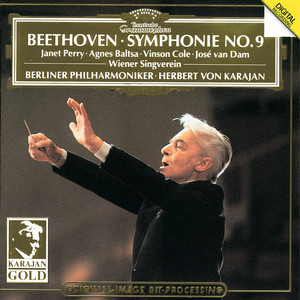 | Symphony No.9 In D Minor, Op.125 - "Choral" - Excerpt From 4th Movement: 4. Presto | Ludwig van Beethoven, Berliner Philharmoniker, Herbert von Karajan | D Major | 1 | 10B | 74 BPM | |
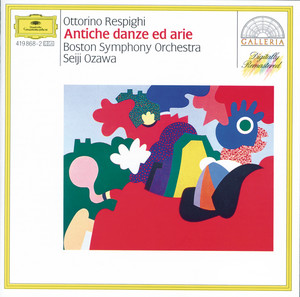 | Ancient Airs & Dances, Suite III, P. 172: IV. Passacaglia (Roncalli) | Ottorino Respighi, Boston Symphony Orchestra, Seiji Ozawa | G Minor | 3 | 6A | 116 BPM | |
 | Prince Igor: Polovtsian Dances (Version for Chorus) | Alexander Borodin, Kiev Chamber Choir, Ukraine National Radio Symphony Orchestra, Theodore Kuchar | A Major | 2 | 11B | 110 BPM | |
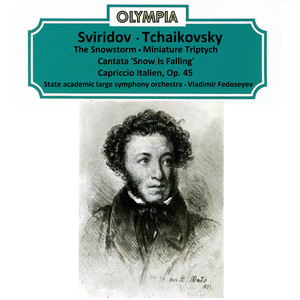 | The Snowstorm: II. Waltz | Georgy Sviridov, Vladimir Fedoseyev, State Academic Large Symphony Orchestra | A Major | 2 | 11B | 70 BPM | |
 | Laurencia, Pas de Six, Act II: 7. Laurencia's First Variation | Evergreen Symphony Orchestra, Kevin Galiè, Anna-Marie Holmes | G Major | 0 | 9B | 101 BPM | |
 | IV. Finale (Tema Russo) | Pyotr Ilyich Tchaikovsky, Wiener KammerOrchester, Philippe Entremont | D♭ Major | 1 | 3B | 79 BPM | |
 | Schwanensee, Ballettsuite op. 20 a - IV. Pas d'action | Symphonic Festival Orchestra, Denise Cloutier | E♭ Minor | 0 | 2A | 105 BPM | |
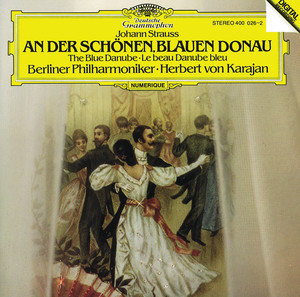 | An der schönen blauen Donau, Waltz, Op. 314 | Johann Strauss II, Berliner Philharmoniker, Herbert von Karajan | D Major | 0 | 10B | 95 BPM | |
| Die Fledermaus: Overture | Johann Strauss II, Berliner Philharmoniker, Herbert von Karajan | B Minor | 1 | 10A | 97 BPM | |
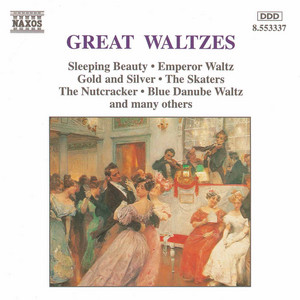 | Gold Und Silber (Gold And Silver), Op. 79 | Slovak Radio Symphony Orchestra, Franz Lehár | C Major | 1 | 8B | 81 BPM | |
 | Rachmaninov: Rhapsody on a Theme of Paganini, Op. 43: Variation XVIII | Sergei Rachmaninoff, Nikolai Lugansky, Sakari Oramo, City Of Birmingham Symphony Orchestra | D♭ Major | 1 | 3B | 61 BPM | |
 | Die Worte des Erlösers am Kreuze, Hob. XX:1: IX. Il Terremoto | Joseph Haydn, Metamorphose String Orchestra, Pavel Lyubomudrov | G Major | 5 | 9B | 155 BPM | |
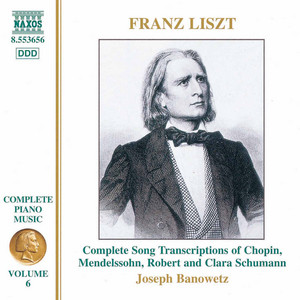 | Chopin - 6 Chants Polonais, S480/R145: No. 2. Fruhling(Wiosna, Spring) | Joseph Banowetz, Franz Liszt | G Major | 1 | 9B | 108 BPM | |
 | Violin Concerto No. 1 in A minor, BWV 1041: I. (Allegro moderato) | Johann Sebastian Bach, Daniel Lozakovich, Chamber Orchestra of the Bavarian Radio, Radoslaw Szulc, Olga Watts | A Minor | 4 | 8A | 91 BPM | |
 | String Quartet No. 1 in D Major, Op. 11: II. Andante cantabile | Pyotr Ilyich Tchaikovsky, New Haydn Quartet | B♭ Major | 0 | 6B | 89 BPM | |
 | Peer Gynt Suite No. 1, Op. 46: II. Åse's Death | Edvard Grieg, Wiener Philharmoniker, Zubin Mehta | G Major | 0 | 9B | 99 BPM | |
 | 21 Hungarian Dances for Orchestra, WoO 1: No. 5, Allegro (Arr. A. Parlow) | Johannes Brahms, Magyar Szimfonikus Zenekarok, Istvan Bogar | G Minor | 2 | 6A | 144 BPM | |
 | The Sleeping Beauty, Op. 66, Act I: No. 6, Valse "Garland Dance" | Pyotr Ilyich Tchaikovsky, Royal Concertgebouw Orchestra, Antal Doráti | B♭ Major | 2 | 6B | 102 BPM | |
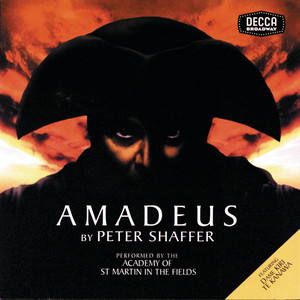 | Symphony No. 25 in G Minor, K. 183: I. Allegro con brio | Wolfgang Amadeus Mozart, Academy of St. Martin in the Fields, Sir Neville Marriner | G Minor | 2 | 6A | 80 BPM |
- ISRC
- USTE10323137
- Label
- L-M Records/RCA Records