- BPM
- 131
- Key
- B Major
- Camelot
- 1B
ブラームス:交響曲第2番二長調 op.73-第4楽章 by NBC交響楽団 Song Details
"ブラームス:交響曲第2番二長調 op.73-第4楽章" by NBC交響楽団 had its release date on October 16, 2021. Since This song is still less than 10 minute long, it is still considered a pretty long duration song compared to the average song length. This song does not appear to be explicit due to the lack of the "E" tag. There is only one song in 20世紀不滅の名演奏家 アルトゥーロ・トスカニーニ, so we believe that "ブラームス:交響曲第2番二長調 op.73-第4楽章" is a single. Based on our statistics, ブラームス:交響曲第2番二長調 op.73-第4楽章's popularity is unknown right now. In our opinion, the overall tone is not very danceable and projects negative sounds, such as being sad, depressed, or angry.
BPM and Tempo
The tempo marking of ブラームス:交響曲第2番二長調 op.73-第4楽章 by NBC交響楽団 is Allegro (fast, quick, and bright), since this song has a tempo of 131 BPM. With that information, we can conclude that the song has a fast tempo. This song can go great with walking. The time signature for this track is 4/4.
Music Key
This song has a musical key of B Major. This also means that this song has a camelot key of 1B. So, the perfect camelot match for 1B would be either 1B or 2A. While, 2B can give you a low energy boost. For moderate energy boost, you would use 10B and a high energy boost can either be 3B or 8B. Though, if you want a low energy drop, you should looking for songs with either a camelot key of 1A or 12B will give you a low energy drop, 4B would be a moderate one, and 11B or 6B would be a high energy drop. Lastly, 10A allows you to change the mood.
Want to find the BPM and music key for other songs? Check out our BPM and Key Finder page!
- Popularity
- 0%
- Loudness
- -27.55 dB
- Acousticness
- 80%
- Danceability
- 16%
- Energy
- 9%
- Instrumentalness
- 18%
- Liveness
- 11%
- Loudness
- 54%
- Speechiness
- 4%
- Valence
- 3%
Recommendations
| Track | Artist | Key | Energy | Camelot | BPM | ||
|---|---|---|---|---|---|---|---|
 | Le rouet d'Omphale, Op. 31 | Camille Saint-Saëns, Philharmonia Orchestra, Charles Dutoit | D Major | 1 | 10B | 125 BPM | |
 | Tristan und Isolde / Act 1: Prelude - Langsam und smachtend | Richard Wagner, Wiener Philharmoniker, Sir Georg Solti | E Major | 1 | 12B | 85 BPM | |
 | Suite No. 1, P. 109: IV. Passo Mezzo E Mascherada: Allegro Vivo | Ottorino Respighi, RTÉ National Symphony Orchestra | D Major | 2 | 10B | 137 BPM | |
 | Sinfonie Nr. 3 c-Moll, Op. 78, "Orgelsinfonie": 2. Maestoso - Allegro - Più allegro - Molto allegro - Pesante (Ein Schweinchen names Babe): II. Maestoso - Allegro - Piu allegro - Molto allegro - Pesante | Camille Saint-Saëns, Imrich Szabo, Slovak Radio Symphony Orchestra, Stephen Gunzenhauser | G Major | 2 | 9B | 101 BPM | |
 | Capriccio espagnol, Op. 34: II. Variations | Nikolai Rimsky-Korsakov, Seattle Symphony Orchestra, Gerard Schwarz | F Major | 0 | 7B | 92 BPM | |
 | Bachianas Brasileiras No. 4: IV. Danza: Miudinho | Heitor Villa-Lobos, Nashville Symphony Orchestra, Kenneth Schermerhorn | C Major | 2 | 8B | 109 BPM | |
 | Bangalter: Mythologies: VII. Treize Nuits | Thomas Bangalter, Romain Dumas, Orchestre National Bordeaux Aquitaine | A Major | 1 | 11B | 101 BPM | |
 | The Planets, Op. 32: II. Venus, the Bringer of Peace | Gustav Holst, Radio Sinfonieorchester Stuttgart des SWR, Sir Roger Norrington | F Minor | 0 | 4A | 174 BPM | |
 | Night Shift | Richard Meyer, Kings High School Symphony Orchestra | B Minor | 2 | 10A | 118 BPM | |
 | Das Rheingold: Scene 1: Vorspiel | Richard Wagner, Albert Dohmen, Ralf Lukas, Clemens Bieber, Arnold Bezuyen, Andrew Shore, Gerhard Siegel, Kwangchul Youn, Hans-Peter Konig, Michelle Breedt, Edith Haller, Christa Mayer, Fionnuala McCarthy, Ulrike Helzel, Simone Schroder, Bayreuth Festival Orchestra, Christian Thielemann | A♭ Major | 0 | 4B | 69 BPM | |
 | Escape from the Maze | Yuji Nomi | C Major | 2 | 8B | 158 BPM | |
 | Pictures At An Exhibition: Gnomus | Modest Mussorgsky, Chicago Symphony Orchestra, Carlo Maria Giulini | B Major | 0 | 1B | 99 BPM | |
 | Gilderoy Lockhart - From "Harry Potter and the Chamber of Secrets" | The City of Prague Philharmonic Orchestra | D Major | 1 | 10B | 101 BPM | |
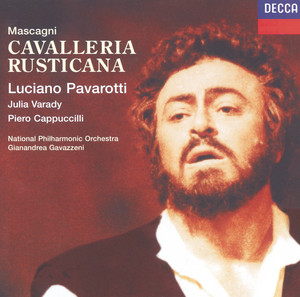 | Cavalleria rusticana: Preludio | Pietro Mascagni, National Philharmonic Orchestra, Gianandrea Gavazzeni | F Major | 2 | 7B | 88 BPM | |
 | Symphony No. 4 in E-Flat Major, "Sinfonie naive": II. Adagio — | Franz Berwald, Swedish Radio Symphony Orchestra, Esa-Pekka Salonen | G Major | 0 | 9B | 115 BPM | |
 | Rossini: Il Barbiere di Siviglia: Overture | Gioachino Rossini, Beverly Sills, Nicolai Gedda, Sherrill Milnes, Renato Capecchi, Ruggero Raimondi, Michael Rippon, John Alldis Choir, Joseph Galiano, London Symphony Orchestra, James Levine, Fedora Barbieri | E Major | 2 | 12B | 88 BPM | |
 | Adagio for Strings, Op. 11 | Samuel Barber, Berliner Philharmoniker, Semyon Bychkov | B♭ Minor | 0 | 3A | 66 BPM | |
 | Ancient Airs & Dances, Suite III, P. 172: IV. Passacaglia (Roncalli) | Ottorino Respighi, Berliner Philharmoniker, Herbert von Karajan | G Minor | 1 | 6A | 119 BPM | |
 | Ecole militaire 3 | Henri Seroka | C Major | 0 | 8B | 107 BPM | |
 | Symphony No. 4 in D Minor, Op. 120 (1851 Version): II. Romanze. Ziemlich langsam | Robert Schumann, Leonard Bernstein, New York Philharmonic | D Major | 1 | 10B | 82 BPM | |
 | Finlandia, Op. 26 | Jean Sibelius, Thomas Søndergård, BBC National Orchestra Of Wales | A♭ Major | 2 | 4B | 70 BPM | |
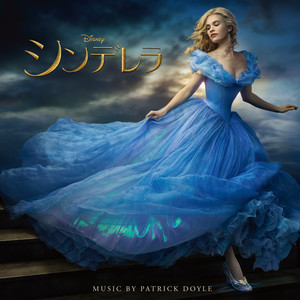 | Pumpkins and Mice | Patrick Doyle | G Major | 1 | 9B | 77 BPM | |
 | Orpheus In The Underworld (Orphée aux enfers): Overture | Jacques Offenbach, Berliner Philharmoniker, Herbert von Karajan | G Major | 1 | 9B | 82 BPM | |
 | Adagio Allegro Molto | Orquesta Filarmónica de Viena | E Minor | 2 | 9A | 115 BPM | |
![Spartacus, Act II: Parting of Spartacus and Phrygia (arr. Y. Grigorovich) [1968 Bolshoi Version] by Aram Khachaturian, RIAS Kammerchor, Deutsches Symphonie-Orchester Berlin, Michail Jurowski](https://i.scdn.co/image/ab67616d00001e02c21d253eed4ccdd547b4b94d) | Spartacus, Act II: Parting of Spartacus and Phrygia (arr. Y. Grigorovich) [1968 Bolshoi Version] | Aram Khachaturian, RIAS Kammerchor, Deutsches Symphonie-Orchester Berlin, Michail Jurowski | E Major | 2 | 12B | 123 BPM |
- ISRC
- TCJPP2188295
- Label
- L-M Records/RCA Records