- BPM
- 69
- Key
- A♭ Major
- Camelot
- 4B
Das Rheingold: Scene 1: Vorspiel by Richard Wagner, Albert Dohmen, Ralf Lukas, Clemens Bieber, Arnold Bezuyen, Andrew Shore, Gerhard Siegel, Kwangchul Youn, Hans-Peter Konig, Michelle Breedt, Edith Haller, Christa Mayer, Fionnuala McCarthy, Ulrike Helzel, Simone Schroder, Bayreuth Festival Orchestra, Christian Thielemann Song Details
"Das Rheingold: Scene 1: Vorspiel" by Richard Wagner, Albert Dohmen, Ralf Lukas, Clemens Bieber, Arnold Bezuyen, Andrew Shore, Gerhard Siegel, Kwangchul Youn, Hans-Peter Konig, Michelle Breedt, Edith Haller, Christa Mayer, Fionnuala McCarthy, Ulrike Helzel, Simone Schroder, Bayreuth Festival Orchestra, Christian Thielemann had its release date on January 11, 2009. With this song being about 5 minutes long, at This song is fairly a long song compared to the average song length. This song does not have an "Explicit" tag, making it safe for all ages. This song is part of Wagner: Der Ring des Nibelungen by Richard Wagner, Christian Thielemann. The song's track number on the album is #1 out of 255 tracks. Based on our data, United Kingdom was the country where this track was produced or recorded. Das Rheingold: Scene 1: Vorspiel is not that popular right now. In our opinion, the overall tone is not very danceable and projects negative sounds, such as being sad, depressed, or angry.
BPM and Tempo
Since Das Rheingold: Scene 1: Vorspiel by Richard Wagner, Albert Dohmen, Ralf Lukas, Clemens Bieber, Arnold Bezuyen, Andrew Shore, Gerhard Siegel, Kwangchul Youn, Hans-Peter Konig, Michelle Breedt, Edith Haller, Christa Mayer, Fionnuala McCarthy, Ulrike Helzel, Simone Schroder, Bayreuth Festival Orchestra, Christian Thielemann has a tempo of 69 beats per a minute, the tempo markings of this song would be Adagio (slowly with great expression). With Das Rheingold: Scene 1: Vorspiel being at 69 BPM, the half-time would be 34 BPM with a double-time of 138 BPM.In addition, we consider the tempo speed to be pretty slow for this song. The time signature for this track is 3/4.
Music Key
This song has a musical key of A♭ Major. Or for those who are familiar with the camelot wheel, this song has a camelot key of 4B. So, the perfect camelot match for 4B would be either 4B or 5A. While, 5B can give you a low energy boost. For moderate energy boost, you would use 1B and a high energy boost can either be 6B or 11B. Though, if you want a low energy drop, you should looking for songs with either a camelot key of 4A or 3B will give you a low energy drop, 7B would be a moderate one, and 2B or 9B would be a high energy drop. Lastly, 1A allows you to change the mood.
Want to find the BPM and music key for other songs? Check out our BPM and Key Finder page!
- Popularity
- 11%
- Loudness
- -28.741 dB
- Acousticness
- 99%
- Danceability
- 8%
- Energy
- 2%
- Instrumentalness
- 96%
- Liveness
- 12%
- Loudness
- 52%
- Speechiness
- 5%
- Valence
- 3%
Recommendations
| Track | Artist | Key | Energy | Camelot | BPM | ||
|---|---|---|---|---|---|---|---|
![Spartacus, Act III: Adagio of Spartacus and Phrygia (arr. Y. Grigorovich) [1968 Bolshoi Version] by Aram Khachaturian, RIAS Kammerchor, Deutsches Symphonie-Orchester Berlin, Michail Jurowski](https://i.scdn.co/image/ab67616d00001e02c21d253eed4ccdd547b4b94d) | Spartacus, Act III: Adagio of Spartacus and Phrygia (arr. Y. Grigorovich) [1968 Bolshoi Version] | Aram Khachaturian, RIAS Kammerchor, Deutsches Symphonie-Orchester Berlin, Michail Jurowski | E Major | 2 | 12B | 123 BPM | |
 | Salut d'amour, Op. 12 (version for orchestra) | Edward Elgar, Slovak Radio Symphony Orchestra, Adrian Leaper | B♭ Major | 1 | 6B | 82 BPM | |
 | I Capuleti e i Montecchi: Eccomi in lieta vesta: Sinfonia - Live | Vincenzo Bellini, Wiener Symphoniker, Fabio Luisi | D Major | 2 | 10B | 72 BPM | |
 | Delibes: Lakmé: Prelude (Maestoso) | Léo Delibes, Orchestre du Théâtre National de I'Opéra-Comique/Alain Lombard, Alain Lombard, Orchestre Du Theatre National De L'Opera Comique | D♭ Major | 2 | 3B | 138 BPM | |
 | Samson et Dalila, Op. 47, R. 288 / Act 1: Dieu! Dieu d'Israël! | Camille Saint-Saëns, Orchestre de Paris, Daniel Barenboim, Choeur de l'Orchestre de Paris, Arthur Oldham | B Major | 3 | 1B | 94 BPM | |
 | Le nozze di Figaro, K. 492: Overture | Wolfgang Amadeus Mozart, Orchester der Deutschen Oper Berlin, Karl Böhm | D Major | 2 | 10B | 142 BPM | |
 | Parsifal: Act III, Scene XI, "Hoechsten Heiles Wunder!" | Richard Wagner, René Pape, Violeta Urmana, Gary Lehman, Evgeng Nikitin, Alezei Tanovitski, Nikolai Putilin, Valery Gergiev, Mariinsky Orchestra | A♭ Major | 0 | 4B | 79 BPM | |
 | Götterdämmerung, WWV 86D, Prologue: Siegfrieds Rheinfahrt | Richard Wagner, Hong Kong Philharmonic Orchestra, Jaap Van Zweden | E♭ Major | 2 | 5B | 127 BPM | |
 | Eugene Onegin, Op. 24: Act III Scene 1: Polonaise | Pyotr Ilyich Tchaikovsky, Slovak Radio Symphony Orchestra, Ondrej Lenard | F Major | 3 | 7B | 88 BPM | |
 | Enigma Variations, Op. 36: Var. 5. Moderato "R.P.A." | Edward Elgar, BBC Symphony Orchestra, Leonard Bernstein | C Minor | 0 | 5A | 83 BPM | |
 | "Pomp and Circumstance," Op.39: March, No.4 in G | Edward Elgar, Royal Philharmonic Orchestra, Norman Del Mar | G Major | 3 | 9B | 101 BPM | |
 | Also sprach Zarathustra, Op. 30: V. Das Grablied | Richard Strauss, Berliner Philharmoniker, Herbert von Karajan | F♯ Minor | 1 | 11A | 93 BPM | |
 | Stravinsky: The Rite of Spring, Pt. 1 "Adoration of the Earth": Introduction - Augurs of Spring - Dances of the Young Girls - Ritual of Abduction | Igor Stravinsky, Sir Simon Rattle, City Of Birmingham Symphony Orchestra | A Major | 1 | 11B | 103 BPM | |
 | The Rite of Spring: Part Two: The Sacrifice: Sacrificial Dance (The Chosen One) | Igor Stravinsky, Teodor Currentzis, musicAeterna | D Minor | 5 | 7A | 136 BPM | |
 | Lohengrin: Treulich gefuhrt ziehet dahin | John Horton Murray, Margaret Jane Wray, Bolshoi Theatre Chorus, Russian State Symphony Orchestra, John McGlinn | B♭ Major | 0 | 6B | 70 BPM | |
 | Tchaikovsky: Symphony No. 5 in E Minor, Op. 64: III. Valse. Allegro moderato | Pyotr Ilyich Tchaikovsky, Daniel Barenboim, Chicago Symphony Orchestra | A Major | 1 | 11B | 146 BPM | |
 | Symphony No. 2 in C minor - "Resurrection" / 5th Movement: Pesante | Gustav Mahler, Wiener Philharmoniker, Gilbert Kaplan | E♭ Major | 5 | 5B | 61 BPM | |
 | Also sprach Zarathustra, Op.30, TrV 176: Von den Freuden und Leidenschaften | Richard Strauss, Berliner Philharmoniker, Herbert von Karajan | C Minor | 5 | 5A | 150 BPM | |
 | Die Meistersinger von Nürnberg, WWV 96 / Act 3: "Verachtet mir die Meister nicht" | Richard Wagner, Norman Bailey, Kurt Moll, Michel Sénéchal, Adalbert Kraus, Martin Egel, Bernd Weikl, Gerd Nienstedt, Max Schönherr, Wolf Appel, Herbert Berger-Tuna, Kurt Rydl, Rudolf A Hartmann, René Kollo, Adolf Dallapozza, Hannelore Bode, Julia Hamari, Gumpoldskirchner Spatzen, Wiener Staatsopernchor, Wiener Philharmoniker, Sir Georg Solti | F Major | 4 | 7B | 179 BPM | |
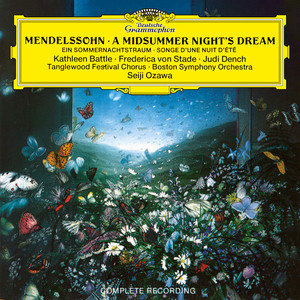 | Midsummer Night's Dream, Op. 61: No. 9, Wedding March | Felix Mendelssohn, Boston Symphony Orchestra, Seiji Ozawa | C Major | 2 | 8B | 74 BPM | |
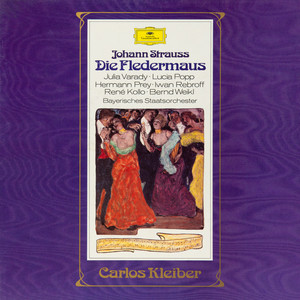 | Die Fledermaus: Overture | Johann Strauss II, Bavarian State Orchestra, Carlos Kleiber | D Major | 2 | 10B | 109 BPM | |
 | Violin Concerto in D Minor, Op. 47: III. Allegro, ma non tanto | Jean Sibelius, Anne-Sophie Mutter, Staatskapelle Dresden, André Previn | D Major | 2 | 10B | 112 BPM | |
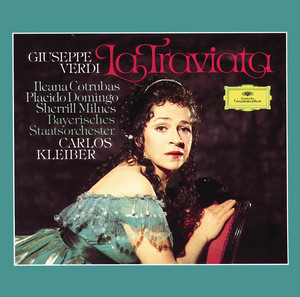 | La traviata, Act III: Prelude | Giuseppe Verdi, Bavarian State Orchestra, Carlos Kleiber | A♭ Major | 0 | 4B | 135 BPM | |
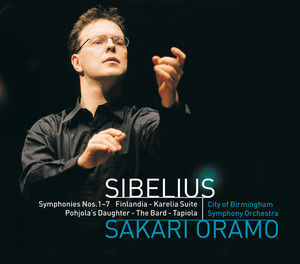 | Sibelius: Finlandia, Op. 26 | Jean Sibelius, Sakari Oramo, City Of Birmingham Symphony Orchestra | A♭ Major | 1 | 4B | 150 BPM | |
 | Sirenen Lieder, Polka mazur, Op. 13 (Arr. for Orchestra by Wolfgang Dörner) | Josephine Weinlich, Wiener Philharmoniker, Yannick Nézet-Séguin | D Major | 3 | 10B | 89 BPM |
- ISRC
- GB6CE0900002
- Label
- L-M Records/RCA Records