- BPM
- 60
- Key
- C Major
- Camelot
- 8B
Variations on a theme by Haydn, Op. 56a "St. Anthony Variations": Var. V by Johannes Brahms, Pittsburgh Symphony Orchestra, Marek Janowski Song Details
"Variations on a theme by Haydn, Op. 56a "St. Anthony Variations": Var. V" by Johannes Brahms, Pittsburgh Symphony Orchestra, Marek Janowski had its release date on August 1, 2007. With This song being less than a minute long, we are pretty confident that this song does not contain any foul language. That being said, this song is pretty short compared to other songs. The song is number 6 out of 14 in Brahms: Variations on a Theme by Haydn & Symphony No. 1 by Johannes Brahms, Pittsburgh Symphony Orchestra, Marek Janowski. Going off of the ISRC code of this track, we detected that the origin of this track is from Netherlands. Variations on a theme by Haydn, Op. 56a "St. Anthony Variations": Var. V is not that popular right now. In our opinion, the overall tone is not very danceable and projects negative sounds, such as being sad, depressed, or angry.
BPM and Tempo
The tempo marking of Variations on a theme by Haydn, Op. 56a "St. Anthony Variations": Var. V by Johannes Brahms, Pittsburgh Symphony Orchestra, Marek Janowski is Lento (slowly), since this song has a tempo of 60 BPM. With that information, we can conclude that the song has a slow tempo. The time signature for this track is 4/4.
Music Key
This song is in the music key of C Major. This also means that this song has a camelot key of 8B. So, the perfect camelot match for 8B would be either 8B or 9A. While, 9B can give you a low energy boost. For moderate energy boost, you would use 5B and a high energy boost can either be 10B or 3B. Though, if you want a low energy drop, you should looking for songs with either a camelot key of 8A or 7B will give you a low energy drop, 11B would be a moderate one, and 6B or 1B would be a high energy drop. Lastly, 5A allows you to change the mood.
Want to find the BPM and music key for other songs? Check out our BPM and Key Finder page!
- Popularity
- 2%
- Loudness
- -20.73 dB
- Acousticness
- 91%
- Danceability
- 14%
- Energy
- 9%
- Instrumentalness
- 93%
- Liveness
- 10%
- Loudness
- 65%
- Speechiness
- 4%
- Valence
- 8%
Recommendations
| Track | Artist | Key | Energy | Camelot | BPM | ||
|---|---|---|---|---|---|---|---|
 | Symphony No. 3 in D Minor, WAB 103 (1873 Version): III. Scherzo. Ziemlich schnell – Trio. Gleiches Zeitmaß – Scherzo da capo | Anton Bruckner, Berliner Philharmoniker, Herbert Blomstedt | F Major | 2 | 7B | 136 BPM | |
 | Falla: El sombrero de tres picos, Pt. 1: Danza de la molinera | Manuel de Falla, Sir Neville Marriner, Academy of St. Martin in the Fields | F♯ Major | 0 | 2B | 80 BPM | |
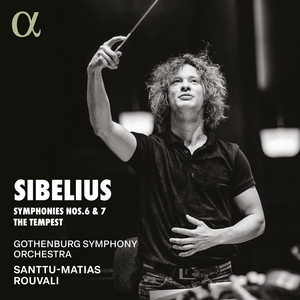 | Symphony No. 6 in D Major, Op. 104: III. Poco vivace | Jean Sibelius, Santtu-Matias Rouvali, Gothenburg Symphony Orchestra | G Major | 3 | 9B | 110 BPM | |
 | Eugene Onegin, Op. 24, TH 5: Polonaise | Pyotr Ilyich Tchaikovsky, BBC Scottish Symphony Orchestra, Alpesh Chauhan | G Major | 2 | 9B | 96 BPM | |
 | Tempus fugit: I. Part 1 | Magnus Lindberg, NDR Elbphilharmonie Orchester, Alan Gilbert | A Major | 2 | 11B | 123 BPM | |
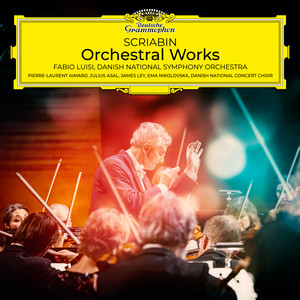 | Rêverie, Op. 24 | Alexander Scriabin, Danish National Symphony Orchestra, Fabio Luisi | B♭ Minor | 2 | 3A | 86 BPM | |
 | Violin Concerto No. 2 in D Minor, Op. 61: II. Andantino sostenuto | Karol Szymanowski, Warmia Symphonic Orchestra, Silvano Frontalini, Beatrice Antonionini | A♭ Major | 4 | 4B | 103 BPM | |
 | Concerto Grosso: III. Toccata | Maya Badian, Cristian Balea, Ilie Dornescu, Romanian National Orchestra, Ludovic Bacs | C Major | 2 | 8B | 157 BPM | |
 | 21 Hungarian Dances, WoO 1 (arr. J. Joachim for violin and piano): No. 4 in B Minor (original in F Minor) | Joseph Joachim, Johannes Brahms, Marat Bisengaliev, John Lenehan | B Minor | 1 | 10A | 103 BPM | |
 | Brahms: Symphony No. 2 in D Major, Op. 73: III. Allegretto grazioso. Quasi andantino | Johannes Brahms, Sir Simon Rattle, Berliner Philharmoniker | D♭ Major | 2 | 3B | 140 BPM | |
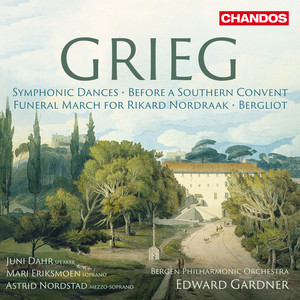 | Symphonic Dances, Op. 64: IV. Andante – Allegro molto e risoluto | Edvard Grieg, Bergen Philharmonic Orchestra, Edward Gardner | E Minor | 0 | 9A | 128 BPM | |
 | Piano Concerto No. 3, Sz. 119: I. Allegretto | Béla Bartók, Vladimir Ashkenazy, London Philharmonic Orchestra, Sir Georg Solti | F♯ Minor | 2 | 11A | 82 BPM | |
 | Variations on a Theme by Haydn, Op. 56a: Variation II: Più vivace | Johannes Brahms, Wiener Philharmoniker, Carlo Maria Giulini | A♭ Minor | 0 | 1A | 114 BPM | |
 | Symphony No.2 in E flat, Op.63: 3. Rondo. Presto | Edward Elgar, Staatskapelle Berlin, Daniel Barenboim | G Major | 2 | 9B | 138 BPM | |
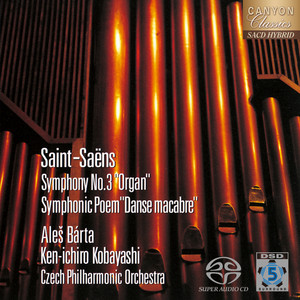 | サン=サーンス:交響曲 第3番 ハ短調 作品78 「オルガン付」 1 (Part1) Adagio-Allegro Moderato | Czech Philharmonic Chamber Orchestra, Ken-Ichiro Kobayashi | A♭ Major | 1 | 4B | 108 BPM | |
 | Symphony No. 1, GMW 11: IIa. Kräftig bewegt, doch nicht zu schnel | Gustav Mahler, Tonhalle-Orchester Zürich, Paavo Järvi | B Minor | 1 | 10A | 68 BPM | |
 | Variations on a Rococo Theme, Op. 33: Var. 7 e Coda - Allegro vivo | Pyotr Ilyich Tchaikovsky, Pablo Ferrandez, Martin Fröst, Swedish Chamber Orchestra | A Major | 3 | 11B | 80 BPM | |
 | Schubert: Symphony No. 2 in B-Flat Major, D. 125: III. Menuetto. Allegro vivace | Franz Schubert, Herbert von Karajan, Berliner Philharmoniker | F♯ Major | 0 | 2B | 80 BPM | |
| Symphony No. 1 in E Major, Op. 26: I. Lento | Alexander Scriabin, Danish National Symphony Orchestra, Fabio Luisi | B♭ Minor | 2 | 3A | 86 BPM | |
 | Romeo and Juliet Suite No. 2, Op. 64ter: II. The Young Juliet (Live) | Sergei Prokofiev, Riccardo Muti, Chicago Symphony Orchestra | C Major | 0 | 8B | 77 BPM | |
 | Transfigured Night, Op. 4: Molto rallentando | Arnold Schoenberg, Berliner Philharmoniker, Kirill Petrenko | F♯ Major | 1 | 2B | 96 BPM | |
 | Brian: Symphony No. 7 in C Major: I. Allegro moderato | Havergal Brian, Royal Liverpool Philharmonic Orchestra, Sir Charles Mackerras | F♯ Major | 0 | 2B | 80 BPM | |
 | Symphony No. 3 in C Major, Op. 21: III. Allegretto Moderato | Hakon Borresen, Aalborg Symphony Orchestra, Owain Arwel Hughes | A♭ Major | 0 | 4B | 75 BPM | |
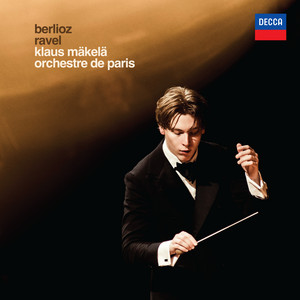 | Symphonie fantastique, H. 48: V. Songe d'une nuit de sabbat | Hector Berlioz, Orchestre de Paris, Klaus Mäkelä | D Major | 1 | 10B | 87 BPM | |
 | Eine Alpensinfonie, Op. 64, TrV 233: XXI. Ausklang | Richard Strauss, Berliner Philharmoniker, Seiji Ozawa | B♭ Major | 3 | 6B | 147 BPM |
- ISRC
- NLE420700606
- Label
- L-M Records/RCA Records