- BPM
- 110
- Key
- D♭ Minor
- Camelot
- 12A
String Quartet No. 12 in G-Sharp Minor: II. Vivace by Julius Röntgen, The Zilliacus Quartet, Cecilia Zilliacus, Julia-Maria Kretz, Ylvali McTigert Zilliacus, Kati Raitinen Song Details
Julius Röntgen, The Zilliacus Quartet, Cecilia Zilliacus, Julia-Maria Kretz, Ylvali McTigert Zilliacus, Kati Raitinen's ' "String Quartet No. 12 in G-Sharp Minor: II. Vivace" was released on its scheduled release date, March 10, 2023. With This song being less than two minutes long, at 1:50, we are fairly confident that this song is not explicit and is safe for all ages. Based on the duration of this song, this song duration is much smaller than the average song duration. There are a total of 12 in the song's album "The Zilliacus Quartet: Grieg, Maier, Röntgen - String Quartets". In this album, this song's track order is #10. Furthermore, we believe that the track originated from Sweden. In terms of popularity, String Quartet No. 12 in G-Sharp Minor: II. Vivace is currently unknown. Since there is more of a neutral sound being played, this makes the track somewhat danceable.
BPM and Tempo
With String Quartet No. 12 in G-Sharp Minor: II. Vivace by Julius Röntgen, The Zilliacus Quartet, Cecilia Zilliacus, Julia-Maria Kretz, Ylvali McTigert Zilliacus, Kati Raitinen having a BPM of 110 with a half-time of 55 BPM and a double-time of 220 BPM, we would consider this track to have a Moderato (at a moderate speed) tempo marking. Because of this, we believe that the song has an overall moderate tempo. The time signature for this track is 4/4.
Music Key
This song is in the music key of D♭ Minor. Or for those who are familiar with the camelot wheel, this song has a camelot key of 12A. So, the perfect camelot match for 12A would be either 12A or 11B. While, a low energy boost can consist of either 12B or 1A. For moderate energy boost, you would use 9A and a high energy boost can either be 2A or 7A. However, if you are looking for a low energy drop, finding a song with a camelot key of 11A would be a great choice. Where 3A would give you a moderate drop, and 10A or 5A would be a high energy drop. Lastly, 3B allows you to change the mood.
Want to find the BPM and music key for other songs? Check out our BPM and Key Finder page!
- Popularity
- 0%
- Loudness
- -15.585 dB
- Acousticness
- 98%
- Danceability
- 43%
- Energy
- 23%
- Instrumentalness
- 55%
- Liveness
- 38%
- Loudness
- 74%
- Speechiness
- 5%
- Valence
- 40%
Recommendations
| Track | Artist | Key | Energy | Camelot | BPM | ||
|---|---|---|---|---|---|---|---|
 | Holocaust - In memoriam: II. To Victory | Maya Badian, Romanian National Orchestra, Ludovic Bacs | G Minor | 2 | 6A | 73 BPM | |
 | Piano Concerto in A Minor, Op. 7: III. Finale. Allegro non troppo | Clara Schumann, Howard Shelley, Tasmanian Symphony Orchestra | A♭ Major | 0 | 4B | 72 BPM | |
 | Piano Quartet No. 1 in C Minor, Op. 15: I. Allegro molto moderato | Gabriel Fauré, Trio Wanderer, Antoine Tamestit | F♯ Minor | 0 | 11A | 84 BPM | |
 | Bassoon Sonata: II. Un poco agitato | Julius Röntgen, Peter Gaasterland, Ariane Karres | F♯ Major | 1 | 2B | 133 BPM | |
 | String Quartet No. 12 in G-Sharp Minor: III. Lento | Julius Röntgen, The Zilliacus Quartet, Cecilia Zilliacus, Julia-Maria Kretz, Ylvali McTigert Zilliacus, Kati Raitinen | G Major | 2 | 9B | 141 BPM | |
 | Adriana Lecouvreur, Act 2: Intermezzo | Francesco Cilea, Opera Australia Orchestra, Andrea Molino | F Major | 0 | 7B | 124 BPM | |
 | Piano Trio in C Minor: III. Adagio | Nikolai Rimsky-Korsakov, Trio Karénine | A Major | 4 | 11B | 124 BPM | |
 | 8 Pieces, Op. 83: I. Andante | Max Bruch, Philon Trio | F♯ Minor | 0 | 11A | 78 BPM | |
 | Shostakovich: String Quartet No. 10 in A-Flat Major, Op. 118: III. Adagio | Dmitri Shostakovich, Brodsky Quartet | A Major | 1 | 11B | 78 BPM | |
 | Prélude, Choral et Fugue, FWV 21: Fugue. Tempo I° | César Franck, Nikolai Lugansky | D Major | 1 | 10B | 68 BPM | |
 | 3 Romances, Op. 22: No. 1, Andante molto | Clara Schumann, Fabio Biondi, Luigi Di Llio | B♭ Major | 1 | 6B | 77 BPM | |
 | Aus Jotunheim, Suite über Norwegische Volksweisen: III. Andante con moto | Julius Röntgen, Markus Maskuniitty, Martin Sturfalt | E♭ Major | 0 | 5B | 77 BPM | |
 | Ethereal Reverie | Sebastian Verneau | D Major | 3 | 10B | 153 BPM | |
 | Trio in D Minor, Op. 11: III. Lied | Fanny Mendelssohn, Kaleidoscope Chamber Collective | D Major | 0 | 10B | 91 BPM | |
 | Cello Sonata in E Minor, RV 40 - Arr. D'Indy for Cello and Orchestra: II. Allegro | Antonio Vivaldi, Pierre Fournier, Stuttgart Chamber Orchestra, Karl Münchinger | F Major | 4 | 7B | 115 BPM | |
 | Liederkreis, Op. 39: No. 5, Mondnacht (Arr. Rot for Cello and Orchestra) | Robert Schumann, Kian Soltani, Camerata Salzburg, Gregory Ahss | E Major | 0 | 12B | 113 BPM | |
 | Violin Sonata No. 2 in G Major, Op. 13: III. Allegro animato | Edvard Grieg, Frederic Chiu, Pierre Amoyal | D♭ Major | 3 | 3B | 110 BPM | |
| 8 Pieces, Op. 83: III. Andante con moto – Andante | Max Bruch, Philon Trio | F♯ Minor | 0 | 11A | 63 BPM | |
 | Roumanian Folk Dances for Orchestra, BB 76 (Sz. 68): 4. Horn Dance (from Bisztra) | Béla Bartók, Chicago Symphony Orchestra, Sir Georg Solti | D Major | 1 | 10B | 170 BPM | |
 | Bassoon Scherzo No 1 F# Minor | Nikolas Eleftheriou | F♯ Minor | 0 | 11A | 125 BPM | |
 | Symphony No. 5 in D Minor, Op. 47: II. Allegretto | Dmitri Shostakovich, Frankfurt Radio Symphony Orchestra, Alain Altinoglu | B♭ Major | 2 | 6B | 125 BPM | |
 | Haydn: String Quartet in C Major, Op. 76 No. 3, Hob. III:77 "Emperor": II. (c) Variation II | Joseph Haydn, Quatuor Arod | C Minor | 2 | 5A | 82 BPM | |
 | Fantaisie sur des motifs de l'opéra "Guillaume Tell" de Rossini (Arr. for 3 Cellos): III. Moderato - Allegro | Alexandre Batta, Gioachino Rossini, Sol Gabetta, Victor Julien-Laferrière, Luca Magariello | D Major | 5 | 10B | 76 BPM | |
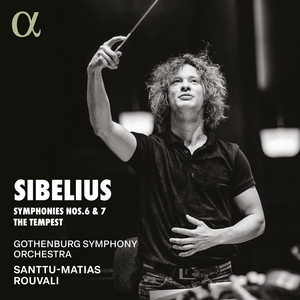 | Symphony No. 6 in D Major, Op. 104: IV. Allegro molto - Allegro assai - Doppio più lento | Jean Sibelius, Santtu-Matias Rouvali, Gothenburg Symphony Orchestra | G Major | 3 | 9B | 110 BPM | |
 | Swedish Tunes & Dances: No. 6, Allegro | Amanda Rontgen-Maier, Julius Röntgen, Gregory Maytan, Ann-Sofi Klingberg | E Minor | 1 | 9A | 119 BPM |
- ISRC
- SETSA2320710
- Label
- L-M Records/RCA Records