- BPM
- 80
- Key
- C Major
- Camelot
- 8B
After Reading Shakespeare: III. Lear by Ned Rorem, Sharon Robinson Song Details
"After Reading Shakespeare: III. Lear" by Ned Rorem, Sharon Robinson had its release date on December 12, 2006. The duration of This song is about 3 minutes long, at 3:25. Based on our data, This song appears to be safe for all ages and is not considered explicit. This track is about the average length of a typical track. There are a total of 17 in the song's album "Rorem: Double Concerto / After Reading Shakespeare". In this album, this song's track order is #11. Furthermore, we believe that the track originated from Hong Kong. After Reading Shakespeare: III. Lear is unknown right now. In our opinion, the overall tone is not very danceable and projects negative sounds, such as being sad, depressed, or angry.
BPM and Tempo
With After Reading Shakespeare: III. Lear by Ned Rorem, Sharon Robinson having a BPM of 80 with a half-time of 40 BPM and a double-time of 160 BPM, we would consider this track to have a Andante (at a walking pace) tempo marking. Because of this, we believe that the song has an overall slow tempo. The time signature for this track is 1/4.
Music Key
This song has a musical key of C Major. Or for those who are familiar with the camelot wheel, this song has a camelot key of 8B. So, the perfect camelot match for 8B would be either 8B or 9A. While, 9B can give you a low energy boost. For moderate energy boost, you would use 5B and a high energy boost can either be 10B or 3B. Though, if you want a low energy drop, you should looking for songs with either a camelot key of 8A or 7B will give you a low energy drop, 11B would be a moderate one, and 6B or 1B would be a high energy drop. Lastly, 5A allows you to change the mood.
Want to find the BPM and music key for other songs? Check out our BPM and Key Finder page!
- Popularity
- 0%
- Loudness
- -22.199 dB
- Acousticness
- 98%
- Danceability
- 24%
- Energy
- 9%
- Instrumentalness
- 82%
- Liveness
- 6%
- Loudness
- 63%
- Speechiness
- 7%
- Valence
- 15%
Recommendations
| Track | Artist | Key | Energy | Camelot | BPM | ||
|---|---|---|---|---|---|---|---|
 | String Quartet, M. 35: II. Assez vif, très rythmé | Maurice Ravel, Ayako Tanaka, Hungwei Huang, Svetlin Roussev, Woongwhee Moon | F Major | 1 | 7B | 150 BPM | |
 | Quatuor pour la fin du Temps: VIII. Louange à l'immortalité de Jésus | Olivier Messiaen, Lucas Debargue | E Major | 0 | 12B | 76 BPM | |
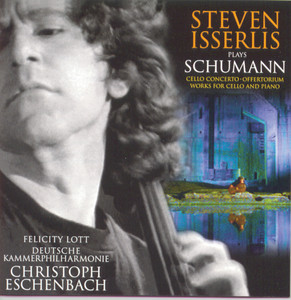 | Fünf Stücke im Volkston for Cello and Piano, Op. 102: II. Langsam | Robert Schumann, Steven Isserlis, Christoph Eschenbach | F Major | 0 | 7B | 87 BPM | |
 | Reflection No. 2 | Camille Thomas, Julien Brocal | F Major | 0 | 7B | 102 BPM | |
 | Música callada I: No. 6, Lento | Federico Mompou, Stephen Hough | G Major | 0 | 9B | 70 BPM | |
 | Suita Concertante-Encounters IV for Viola Clarinet and Chamber Orchestra: II. Allegro | Menachem Wiesenberg, Yuval Gotlibovich, Chen Halevi, Thomas Rösner, Beethoven Philarmonie Orchestra | A Minor | 2 | 8A | 137 BPM | |
 | Duruflé: Requiem, Op. 9: VIII. Lux æterna | Maurice Duruflé, Michel Plasson, Orchestre Du Capitole De Toulouse, Marie-Claire Alain, Orfeon Donostiarra | B♭ Major | 0 | 6B | 123 BPM | |
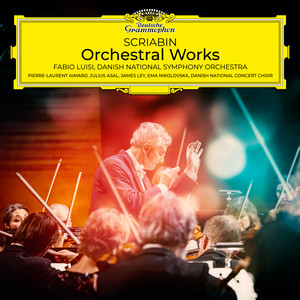 | Symphony No. 1 in E Major, Op. 26: II. Allegro dramatico | Alexander Scriabin, Danish National Symphony Orchestra, Fabio Luisi | B♭ Minor | 2 | 3A | 86 BPM | |
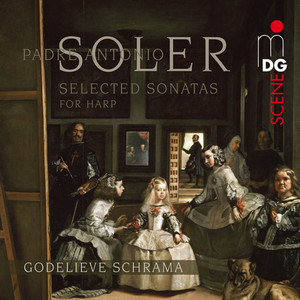 | Harpsichord Sonata No. 18: Cantabile (arr. for Harp) | Antonio Soler, Godelieve Schrama | C Minor | 1 | 5A | 106 BPM | |
 | Soir - Matin, Op. 76: I. Soir. Andante cantabile | Mel Bonis, Trio Wanderer | F Major | 0 | 7B | 102 BPM | |
 | L’arlésienne Suite No. 1, Op. 23bis, WD 40: III. Adagietto | Georges Bizet, Jesús López-Cobos, Cincinnati Symphony Orchestra | F Major | 1 | 7B | 60 BPM | |
 | Symphony No. 5 in A Minor, Op. 90 "Sinfonia brevis": III. Intermezzo | Erkki Melartin, Turku Philharmonic Orchestra, Ari Rasilainen | E Minor | 2 | 9A | 134 BPM | |
 | Elegie I. In Memoriam: Adagio | Lodewijk Mortelmans, Belgian Radio and Television Philharmonic Orchestra, Silveer Vandenbroeck | E♭ Major | 0 | 5B | 77 BPM | |
 | Chansons pour les oiseaux: No. 3, L'oiseau bleu | Louis Beydts, Julie Roset, Susan Manoff | G Major | 6 | 9B | 103 BPM | |
 | Berceuse (Version for Cello and Piano): Berceuse (Version for Cello and Piano) | Frank Bridge, Gerald Peregrine, Antony Ingham | B♭ Major | 0 | 6B | 68 BPM | |
 | Lyadov: 8 Russian Folksongs, Op. 58: No. 6, Cradle Song | Anatoly Lyadov, Andreyev Imperial Russian Orchestra, Dmitri Hochlov | A Minor | 1 | 8A | 113 BPM | |
 | 5 Stücke im Volkston, Op. 102 (Arr. for Oboe & Piano by Stephan Korody-Kreutzer): No. 2, Langsam | Robert Schumann, Nicholas Daniel, Julius Drake | F Major | 0 | 7B | 65 BPM | |
 | Neuf mélodies retrouvées: No. 5, Naïs | Reynaldo Hahn, Julie Roset, Susan Manoff | F Major | 0 | 7B | 102 BPM | |
 | Symphony No. 3: Largo | Bournemouth Symphony Orchestra, Ned Rorem | G Major | 0 | 9B | 78 BPM | |
 | Catullus: On the Burial of his Brother | Ned Rorem, The Prince Consort | F Major | 0 | 7B | 125 BPM | |
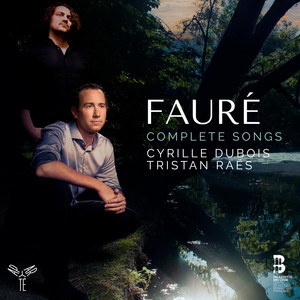 | Mai, Op. 1 No. 2 | Gabriel Fauré, Cyrille Dubois, Tristan Raës | C Major | 0 | 8B | 66 BPM | |
 | Symphony No. 5: IV. Adagietto. Sehr langsam (Arr. Farrington for Chamber Ensemble) | Gustav Mahler, Esther Yoo, Elen Hâf Rideal, Abigail Fenna, Liz Varlow, Chantal Woodhouse, Roberto Sorrentino, Benjamin Cunningham, David Gordon, Suzy Willison-Kawalec | F Major | 0 | 7B | 102 BPM | |
 | The Bronze Horseman (Arr. J. Lenehan): II. Andante | Helen Habershon, Andrew Fuller, John Lenehan | A Minor | 1 | 8A | 89 BPM | |
 | Nocturne No. 13 in B Minor, Op. 119 | Gabriel Fauré, Kun-Woo Paik | E Minor | 1 | 9A | 68 BPM | |
 | Les Danses de Ravel (After Le Tombeau de Couperin): I. Prélude | Franck Tortiller, Quatuor Debussy | E Minor | 2 | 9A | 75 BPM |
- ISRC
- HKI190643711
- Label
- L-M Records/RCA Records