- BPM
- 73
- Key
- F Minor
- Camelot
- 4A
Bellini: Norma, Act 1: "Vieni in Roma" (Pollione, Adalgisa) by Vincenzo Bellini, Orchestra Del Teatro Alla Scala, Milano, Tullio Serafin, Christa Ludwig, Franco Corelli Song Details
"Bellini: Norma, Act 1: "Vieni in Roma" (Pollione, Adalgisa)" by Vincenzo Bellini, Orchestra Del Teatro Alla Scala, Milano, Tullio Serafin, Christa Ludwig, Franco Corelli had its release date on 1961. With this song being around four minutes long, at 3:47, the duration of this song is pretty average compared to other songs. This track is safe for children and doesn't appear to contain any foul language, since the "Explicit" tag was not present in this track. The song is number 15 out of 44 in Bellini: Norma by Vincenzo Bellini, Maria Callas, Franco Corelli, Christa Ludwig, Nicola Zaccaria, Coro e Orchestra del Teatro alla Scala, Milano, Tullio Serafin, Orchestra Del Teatro Alla Scala, Milano. Going off of the ISRC code of this track, we detected that the origin of this track is from United Kingdom. Bellini: Norma, Act 1: "Vieni in Roma" (Pollione, Adalgisa) is not that popular right now. In our opinion, the overall tone is not very danceable and projects negative sounds, such as being sad, depressed, or angry.
BPM and Tempo
The tempo marking of Bellini: Norma, Act 1: "Vieni in Roma" (Pollione, Adalgisa) by Vincenzo Bellini, Orchestra Del Teatro Alla Scala, Milano, Tullio Serafin, Christa Ludwig, Franco Corelli is Adagio (slowly with great expression), since this song has a tempo of 73 BPM. With that information, we can conclude that the song has a slow tempo. The time signature for this track is 4/4.
Music Key
The music key of this track is F Minor. Because this track belongs in the F Minor key, the camelot key is 4A. So, the perfect camelot match for 4A would be either 4A or 3B. While, a low energy boost can consist of either 4B or 5A. For moderate energy boost, you would use 1A and a high energy boost can either be 6A or 11A. However, if you are looking for a low energy drop, finding a song with a camelot key of 3A would be a great choice. Where 7A would give you a moderate drop, and 2A or 9A would be a high energy drop. Lastly, 7B allows you to change the mood.
Want to find the BPM and music key for other songs? Check out our BPM and Key Finder page!
- Popularity
- 16%
- Loudness
- -15.725 dB
- Acousticness
- 98%
- Danceability
- 30%
- Energy
- 18%
- Instrumentalness
- 0%
- Liveness
- 19%
- Loudness
- 74%
- Speechiness
- 14%
- Valence
- 12%
Recommendations
| Track | Artist | Key | Energy | Camelot | BPM | ||
|---|---|---|---|---|---|---|---|
 | Bizet: Carmen: Qui sait de quel demon j'allais etre la proie! - Act One | Georges Bizet, Plácido Domingo, Kiri Te Kanawa, Sir Georg Solti | G Major | 2 | 9B | 77 BPM | |
 | Norma (1997 Digital Remaster), ACT 1, Scene 2: Perfido!...Or basti (Norma/Adalgisa/Pollione) | Vincenzo Bellini, Maria Callas, Christa Ludwig, Franco Corelli, Orchestra Del Teatro Alla Scala, Milano, Tullio Serafin, Orchestra Del Teatro Alla Scala Di Milan | E♭ Major | 1 | 5B | 84 BPM | |
 | La Cenerentola / Act 2: Ah, signor, s'è ver che in petto | Gioachino Rossini, Cecilia Bartoli, Alessandro Corbelli, William Matteuzzi, Fernanda Costa, Gloria Banditelli, Enzo Dara, Orchestra del Teatro Comunale di Bologna, Riccardo Chailly | A Major | 2 | 11B | 139 BPM | |
 | Gounod: Faust, Act 1: "Rien ! En vain j'interroge" (Faust) | Charles Gounod, Michel Plasson, Richard Leech, Orchestre Du Capitole De Toulouse | A Minor | 1 | 8A | 94 BPM | |
 | L'elisir d'amore: Prendi per me sei libero | Gaetano Donizetti, Olga Peretyatko, Miguel Gomez-Martinez | F Major | 4 | 7B | 143 BPM | |
 | Die Entführung aus dem Serail / Act 1: "Wer ein Liebchen hat gefunden" - "Verwünscht seist du samt deinem Liede!" | Wolfgang Amadeus Mozart, Gösta Winbergh, Martti Talvela, Heinz Zednik, Wiener Philharmoniker, Sir Georg Solti | G Minor | 2 | 6A | 82 BPM | |
 | Norma / Act 2 Scene 1: "Si, fino all’ore estreme" (Critical Ed. Maurizio Biondi and Riccardo Minasi) | Vincenzo Bellini, Cecilia Bartoli, Sumi Jo, Orchestra La Scintilla, Giovanni Antonini | F Major | 5 | 7B | 135 BPM | |
 | Puccini: Turandot, Act 1: "Popolo di Pekino!" (Mandarino, Coro, Liù) | Giacomo Puccini, Tullio Serafin, Coro Del Teatro Alla Scala Di Milano, Elisabeth Schwarzkopf, Giulio Mauri, Orchestra Del Teatro Alla Scala, Milano | F♯ Major | 2 | 2B | 78 BPM | |
 | I Puritani / Act 3: Vieni, vieni fra questa braccia | Vincenzo Bellini, Luciano Pavarotti, Dame Joan Sutherland, London Symphony Orchestra, Richard Bonynge | C Major | 2 | 8B | 90 BPM | |
 | Donizetti: Lucia di Lammermoor, Act II Scene 2: Chi mi frena in tal momento (Edgardo, Enrico, Lucia, Raimondo, Alisa, Arturo, Chorus) | Gaetano Donizetti, Orchestra del Teatro Bellini di Catania, Fabrizio Maria Carminati, Mattia Olivieri, Riccardo Zanellato, Lisette Oropesa, Stefan Pop, Irene Savignano, Coro del Teatro Massimo Bellini di Catania, Didier Pieri | D Major | 2 | 10B | 141 BPM | |
 | Simon Boccanegra / Prologue: Oh, de'Fieschi implacata, orrida razza (Simone, Fiesco, Paolo, Pietro, Coro) | Giuseppe Verdi, Piero Cappuccilli, Nicolai Ghiaurov, José van Dam, Giovanni Foiani, Orchestra Del Teatro Alla Scala, Milano, Claudio Abbado, Coro Del Teatro Alla Scala Di Milano, Romano Gandolfi | A Minor | 3 | 8A | 102 BPM | |
 | Carmen / Act 3: Introduction: "Ecoute, compagnon, écoute!" | Georges Bizet, Christine Barbaux, Jane Berbié, Agnes Baltsa, José Carreras, Gino Quilico, Heinz Zednik, Berliner Philharmoniker, Herbert von Karajan, Choeur de l'Opéra de Paris, Jean Laforge | C Minor | 0 | 5A | 99 BPM | |
 | Lucia di Lammermoor / Act 2: "Ebben? - Di tua speranza" | Gaetano Donizetti, Dame Joan Sutherland, Nicolai Ghiaurov, Orchestra of the Royal Opera House, Covent Garden, Richard Bonynge | A Minor | 1 | 8A | 174 BPM | |
 | The Mikado / Act 1: 19. The hour of gladness is dead and gone | Arthur Sullivan, Valerie Masterson, Lyndsie Holland, Colin Wright, The D'Oyly Carte Opera Chorus, Royal Philharmonic Orchestra, Royston Nash | E Major | 2 | 12B | 91 BPM | |
 | Norma / Act 1: "Casta Diva" | Vincenzo Bellini, Joan Sutherland, London Symphony Chorus, London Symphony Orchestra, Richard Bonynge | G Major | 0 | 9B | 85 BPM | |
 | Lucia di Lammermoor / Act 3: Spargi d'amaro pianto | Gaetano Donizetti, Nadine Sierra, Capella Cracoviensis, Orchestra Sinfonica Nazionale della Rai, Riccardo Frizza | E♭ Major | 1 | 5B | 89 BPM | |
 | Il Barbiere di Siviglia: Ah, ah! che bella vita! - Highlights | Gioachino Rossini, Samuel Ramey, Enzo Dara, Marilyn Horne, Leo Nucci, Paolo Barbacini, Riccardo Chailly | C Major | 1 | 8B | 101 BPM | |
 | Puccini: La bohème, Act 1: "Si può?....Chi è là?" (Benoît/Marcello/Schaunard/Colline/Rodolfo) | Giacomo Puccini, Carlo Badioli, Antonino Votto, Orchestra Del Teatro Alla Scala, Milano | F♯ Minor | 2 | 11A | 109 BPM | |
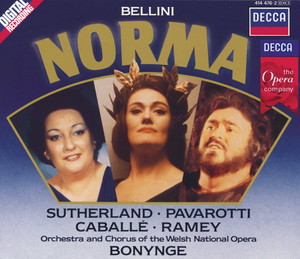 | Norma / Act 1: Ah! bello a me ritorna | Vincenzo Bellini, Dame Joan Sutherland, Samuel Ramey, Welsh National Opera Chorus, Welsh National Opera Orchestra, Richard Bonynge | F Major | 2 | 7B | 78 BPM | |
 | Ravel: Don Quichotte à Dulcinée, M. 84: No. 3, Chanson à boire | Maurice Ravel, Kent Nagano, José van Dam, Orchestre De L'Opéra National De Lyon | C Minor | 2 | 5A | 98 BPM | |
 | Der fliegende Holländer, Act II: Ach, wo weilt sie | Richard Wagner, Janis Martin, Isola Jones, Chicago Symphony Chorus, Chicago Symphony Orchestra, Sir Georg Solti | B♭ Major | 2 | 6B | 109 BPM | |
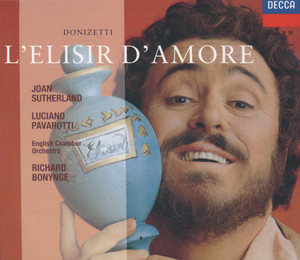 | L'elisir d'amore / Act 2: "La donna è un animale...Venti scudi" | Gaetano Donizetti, Dominic Cossa, Luciano Pavarotti, English Chamber Orchestra, Richard Bonynge | A Major | 1 | 11B | 74 BPM | |
| Puccini: La bohème, Act 4: "In un coupé?....Con pariglia e livree" (Marcello/Rodolfo) | Giacomo Puccini, Rolando Panerai, Antonino Votto, Orchestra Del Teatro Alla Scala, Milano | G Minor | 2 | 6A | 109 BPM | |
| Il Barbiere di Siviglia: Mi par d'esser con la testa - Highlights | Gioachino Rossini, Samuel Ramey, Enzo Dara, Marilyn Horne, Leo Nucci, Paolo Barbacini, Orchestra Del Teatro Alla Scala, Milano, Riccardo Chailly | F♯ Major | 5 | 2B | 86 BPM | |
 | Cavalleria rusticana: Part I: Il cavallo scalpita (Alfio, Chorus, Lucia, Santuzza) | Pietro Mascagni, Maria Callas, Giuseppe Di Stefano, Rolando Panerai, Anna Maria Canali, Ebe Ticozzi, Vittore Veneziani, Milan La Scala Chorus, Orchestra Del Teatro Alla Scala, Milano, Tullio Serafin | C Major | 3 | 8B | 116 BPM |
- ISRC
- GBAYC9701122
- Label
- L-M Records/RCA Records