- BPM
- 174
- Key
- F♯ Major
- Camelot
- 2B
The Young Person's Guide to the Orchestra, Op. 34 (Variations and Fugue on a Theme of Purcell): March 27 and 28, 1974 by Benjamin Britten, Eugene Ormandy, Philadelphia Orchestra Song Details
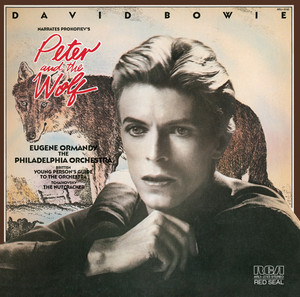
"The Young Person's Guide to the Orchestra, Op. 34 (Variations and Fugue on a Theme of Purcell): March 27 and 28, 1974" by Benjamin Britten, Eugene Ormandy, Philadelphia Orchestra had its release date on May 2, 1978. With This song being less than a minute long, we are pretty confident that this song does not contain any foul language. That being said, this song is pretty short compared to other songs. The song is number 21 out of 41 in David Bowie narrates Prokofiev's Peter and the Wolf & The Young Person's Guide to the Orchestra by David Bowie, Eugene Ormandy. Going off of the ISRC code of this track, we detected that the origin of this track is from United States. The popularity of The Young Person's Guide to the Orchestra, Op. 34 (Variations and Fugue on a Theme of Purcell): March 27 and 28, 1974 is currently below average in popularity right now. In our opinion, the overall tone is not very danceable and projects negative sounds, such as being sad, depressed, or angry.
BPM and Tempo
The tempo marking of The Young Person's Guide to the Orchestra, Op. 34 (Variations and Fugue on a Theme of Purcell): March 27 and 28, 1974 by Benjamin Britten, Eugene Ormandy, Philadelphia Orchestra is Vivace (lively and fast), since this song has a tempo of 174 BPM. With that information, we can conclude that the song has a fast tempo. The time signature for this track is 5/4.
Music Key
F♯ Major is the music key of this track. This also means that this song has a camelot key of 2B. So, the perfect camelot match for 2B would be either 2B or 3A. While, 3B can give you a low energy boost. For moderate energy boost, you would use 11B and a high energy boost can either be 4B or 9B. Though, if you want a low energy drop, you should looking for songs with either a camelot key of 2A or 1B will give you a low energy drop, 5B would be a moderate one, and 12B or 7B would be a high energy drop. Lastly, 11A allows you to change the mood.
Want to find the BPM and music key for other songs? Check out our BPM and Key Finder page!
- Popularity
- 22%
- Loudness
- -27.287 dB
- Acousticness
- 54%
- Danceability
- 9%
- Energy
- 6%
- Instrumentalness
- 90%
- Liveness
- 68%
- Loudness
- 55%
- Speechiness
- 4%
- Valence
- 4%
Recommendations
| Track | Artist | Key | Energy | Camelot | BPM | ||
|---|---|---|---|---|---|---|---|
 | Symphonie fantastique, H. 48: Vc. Songe d'une nuit du Sabbat. Ronde du Sabbat | Hector Berlioz, Chicago Symphony Orchestra, Claudio Abbado | G Major | 4 | 9B | 123 BPM | |
 | Copland: Symphony No. 3: III. Andantino quasi allegretto - | Aaron Copland, San Francisco Symphony, Michael Tilson Thomas | E Minor | 0 | 9A | 71 BPM | |
 | Schoenberg: Suite in the Old Style for String Orchestra: II. Adagio | Arnold Schoenberg, Mario Venzago, Deutsche Kammerphilharmonie Bremen | G Major | 1 | 9B | 101 BPM | |
 | Eine Alpensinfonie, Op. 64, TrV 233: IX. Auf der Alm | Richard Strauss, Berliner Philharmoniker, Seiji Ozawa | E♭ Major | 1 | 5B | 105 BPM | |
| Eine Alpensinfonie, Op. 64, TrV 233: XVII. Elegie | Richard Strauss, Berliner Philharmoniker, Seiji Ozawa | D Major | 0 | 10B | 70 BPM | |
 | Petrouchka: Chez Petrouchka | Ferenc Fricsay, Berliner Philharmoniker | E Minor | 3 | 9A | 89 BPM | |
 | Sinfonietta, FP 141: II. Molto vivace | Francis Poulenc, RTÉ National Symphony Orchestra, Jean-Luc Tingaud | B♭ Major | 1 | 6B | 79 BPM | |
 | Symphony No. 2 in D Major, Op. 43: III. Vivacissimo | Jean Sibelius, Oslo Philharmonic Orchestra, Klaus Mäkelä | F♯ Minor | 1 | 11A | 66 BPM | |
 | Lutoslawski : Concerto for Orchestra : II Cappricio notturno e Arioso (Vivace) | Witold Lutosławski, Daniel Barenboim, Chicago Symphony Orchestra | B♭ Minor | 1 | 3A | 158 BPM | |
 | En blanc et noir: II. Lent. Sombre (Arr. R. Holloway for orchestra) | Claude Debussy, フランス国立リヨン管弦楽団, 準・メルクル | E♭ Major | 1 | 5B | 92 BPM | |
 | Symphony No. 3: I. Langsom, breit, ruhig | Einojuhani Rautavaara, Royal Scottish National Orchestra, Hannu Lintu | C Minor | 1 | 5A | 82 BPM | |
 | The Young Person's Guide to the Orchestra, Op. 34 (Variations and Fugue on a Theme of Purcell): Fugue: Full Orchestra (Allegro molto) | Benjamin Britten, Eugene Ormandy, Philadelphia Orchestra | D Major | 4 | 10B | 143 BPM | |
 | Czech Suite, Op. 39: IV. Romance | Antonín Dvořák, Janacek Philharmonic Orchestra, Theodore Kuchar | F♯ Major | 1 | 2B | 86 BPM | |
 | Swan Lake, Op. 20: No. 3 Scène | Pyotr Ilyich Tchaikovsky, Orchestra of the Royal Opera House, Covent Garden, Mark Ermler | A Major | 2 | 11B | 83 BPM | |
 | Concerto for 2 Pianos and Orchestra: III. Fuga chromatica - Allegro | Ralph Vaughan Williams, Tal & Groethuysen, Douglas Boyd | D Minor | 3 | 7A | 77 BPM | |
 | Ives / Orch. Brant: A Concord Symphony: III. The Alcotts | Charles Ives, Henry Brant, San Francisco Symphony, Michael Tilson Thomas | E♭ Major | 1 | 5B | 91 BPM | |
 | Symphony No. 3: II. Allegro molto | Aaron Copland, New York Philharmonic, Leonard Bernstein | G Minor | 1 | 6A | 65 BPM | |
 | Aladdin Suite, Op. 34, FS 89: IV. Chinese Dance | Carl Nielsen, South Jutland Symphony Orchestra, Niklas Willen | E Minor | 1 | 9A | 96 BPM | |
 | Appalachian Spring Suite: III. The Bride and Her Intended. Moderato | Aaron Copland, Los Angeles Philharmonic, Zubin Mehta | D♭ Minor | 0 | 12A | 170 BPM | |
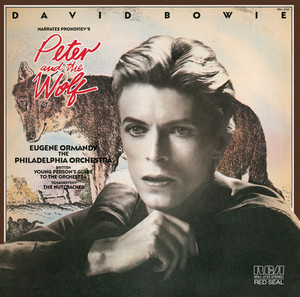 | The Young Person's Guide to the Orchestra, Op. 34 (Variations and Fugue on a Theme of Purcell): Variation XI: Trumpets (Vivace) | Benjamin Britten, Eugene Ormandy, Philadelphia Orchestra | F Major | 7 | 7B | 74 BPM | |
 | Strauss, R: An Alpine Symphony, Op. 64: III. The Ascent | Richard Strauss, André Previn, Philadelphia Orchestra | E♭ Major | 2 | 5B | 129 BPM | |
 | Peter and the Wolf, Op. 67: The Bird | David Bowie, Eugene Ormandy | C Major | 1 | 8B | 134 BPM | |
 | Ein Heldenleben, Op. 40, TrV 190: Des Helden Widersacher (the Hero's Enemies) - | Richard Strauss, Chicago Symphony Orchestra, Bernard Haitink | G Major | 0 | 9B | 84 BPM | |
 | The Young Person's Guide to the Orchestra: Fugue: Full Orchestra (Allegro molto) | Benjamin Britten, Eugene Ormandy | D Major | 6 | 10B | 117 BPM | |
 | Children's Corner (arr. A. Caplet for orchestra): Serenade for the Doll | Andre Caplet, Claude Debussy, Rheinland-Pfalz State Philharmonic Orchestra, Leif Segerstam | D♭ Minor | 0 | 12A | 131 BPM |
- ISRC
- USSM11304083
- Label
- L-M Records/RCA Records