- BPM
- 74
- Key
- F Major
- Camelot
- 7B
The Young Person's Guide to the Orchestra, Op. 34 (Variations and Fugue on a Theme of Purcell): Variation XI: Trumpets (Vivace) by Benjamin Britten, Eugene Ormandy, Philadelphia Orchestra Song Details
Benjamin Britten, Eugene Ormandy, Philadelphia Orchestra's ' "The Young Person's Guide to the Orchestra, Op. 34 (Variations and Fugue on a Theme of Purcell): Variation XI: Trumpets (Vivace)" was released on its scheduled release date, May 2, 1978. With This song being less than a minute long, we are pretty confident that this song does not contain any foul language. That being said, this song is pretty short compared to other songs. The song is number 30 out of 41 in David Bowie narrates Prokofiev's Peter and the Wolf & The Young Person's Guide to the Orchestra by David Bowie, Eugene Ormandy. Going off of the ISRC code of this track, we detected that the origin of this track is from United States. The Young Person's Guide to the Orchestra, Op. 34 (Variations and Fugue on a Theme of Purcell): Variation XI: Trumpets (Vivace) is below average in popularity right now. The overall mood can be danceable to some, especially with it's high amount of postive energy.
BPM and Tempo
The tempo marking of The Young Person's Guide to the Orchestra, Op. 34 (Variations and Fugue on a Theme of Purcell): Variation XI: Trumpets (Vivace) by Benjamin Britten, Eugene Ormandy, Philadelphia Orchestra is Adagio (slowly with great expression), since this song has a tempo of 74 BPM. With that information, we can conclude that the song has a slow tempo. The time signature for this track is 4/4.
Music Key
F Major is the music key of this track. This also means that this song has a camelot key of 7B. So, the perfect camelot match for 7B would be either 7B or 8A. While, 8B can give you a low energy boost. For moderate energy boost, you would use 4B and a high energy boost can either be 9B or 2B. Though, if you want a low energy drop, you should looking for songs with either a camelot key of 7A or 6B will give you a low energy drop, 10B would be a moderate one, and 5B or 12B would be a high energy drop. Lastly, 4A allows you to change the mood.
Want to find the BPM and music key for other songs? Check out our BPM and Key Finder page!
- Popularity
- 20%
- Loudness
- -19.908 dB
- Acousticness
- 78%
- Danceability
- 46%
- Energy
- 70%
- Instrumentalness
- 82%
- Liveness
- 73%
- Loudness
- 67%
- Speechiness
- 5%
- Valence
- 64%
Recommendations
| Track | Artist | Key | Energy | Camelot | BPM | ||
|---|---|---|---|---|---|---|---|
 | Suite algérienne, Op. 60: IV. Marche militaire française | Camille Saint-Saëns, Eugene Ormandy, Philadelphia Orchestra | C Major | 3 | 8B | 118 BPM | |
 | Symphony in C Major, Op. 46: II. Sehr langsam - | Hans Pfitzner, Seattle Symphony Orchestra, Gerard Schwarz | F Major | 0 | 7B | 87 BPM | |
 | Symphony No. 7 in E Minor: III. Scherzo. Schattenhaft | Gustav Mahler, Polish National Radio Symphony Orchestra, Michael Halasz | D Minor | 0 | 7A | 80 BPM | |
 | Peter and the Wolf, Op. 67 (Remastered): The Bird Diverts the Wolf | Sergei Prokofiev, Eugene Ormandy, David Bowie, Philadelphia Orchestra | C Major | 2 | 8B | 134 BPM | |
 | Sibelius: Symphony No. 6 in D Minor, Op. 104: I. Allegro molto moderato | Jean Sibelius, Herbert von Karajan, Berliner Philharmoniker | F♯ Major | 1 | 2B | 116 BPM | |
 | Marche funèbre d'une marionnette | Charles Gounod, Eugene Ormandy, Philadelphia Orchestra | D Major | 0 | 10B | 135 BPM | |
 | Le carnaval des animaux, R. 125: IX. Le coucou au fond des bois - X. Volière - XI. Pianistes | Camille Saint-Saëns, Alfons Kontarsky, Aloys Kontarsky, Wiener Philharmoniker, Karl Böhm | B♭ Minor | 1 | 3A | 114 BPM | |
 | 4 Orchestral Pieces, Sz. 51: III. Intermezzo. Moderato | Béla Bartók, Chicago Symphony Orchestra, Pierre Boulez | D Major | 1 | 10B | 73 BPM | |
 | The Carnival of the Animals: Kangaroos | Camille Saint-Saëns, Academy Of London, Richard Stamp | D♭ Major | 0 | 3B | 111 BPM | |
 | Britten: The Young Person's Guide to the Orchestra (Variations and Fugue on a Theme of Purcell), Op. 34: Fugue (Allegro molto) | Benjamin Britten, Sir Simon Rattle, City Of Birmingham Symphony Orchestra | A Minor | 1 | 8A | 74 BPM | |
 | La source, ou Naila: Suite No. 2: Suite No. 2: Scene dansee | Léo Delibes, Slovak Radio Symphony Orchestra, Andrew Mogrelia | C Major | 1 | 8B | 102 BPM | |
 | Symphony No. 2 in D Major, Op. 73: II. Adagio non troppo - L'istesso tempo, ma grazioso | Johannes Brahms, Philadelphia Orchestra, Wolfgang Sawallisch | D Major | 1 | 10B | 96 BPM | |
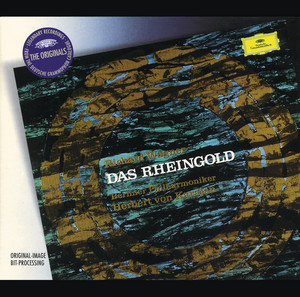 | Das Rheingold, WWV 86A / Dritte Szene: "Dort die Kröte! Greife sie rasch!" | Richard Wagner, Gerhard Stolze, Zoltan Kelemen, Berliner Philharmoniker, Herbert von Karajan | G Major | 2 | 9B | 125 BPM | |
 | Ligeti : Romanian Concerto : III Adagio, ma non troppo | György Ligeti, Jonathan Nott, Berliner Philharmoniker | F Major | 0 | 7B | 73 BPM | |
 | The Three-Cornered Hat: Suite No. 2 - Three Dances, II. The Miller's Dance - Farruca | Manuel de Falla, Philadelphia Orchestra, Raphael Frühbeck de Burgos | G Major | 2 | 9B | 78 BPM | |
 | Die Walküre, WWV 86B, Act I: In the Sound Code, We "See" His Loving Gaze | Richard Wagner, Berliner Philharmoniker, Lorin Maazel | G Minor | 0 | 6A | 91 BPM | |
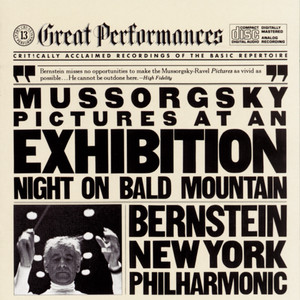 | Pictures at an Exhibition: Promenade IV | Modest Mussorgsky, Leonard Bernstein, New York Philharmonic | D Minor | 0 | 7A | 72 BPM | |
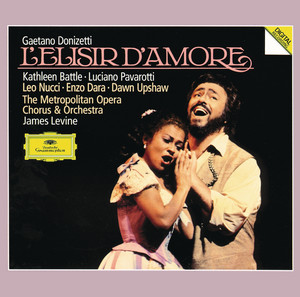 | L'elisir d'amore: Overture (Preludio) | Gaetano Donizetti, Metropolitan Opera Orchestra, James Levine | D Major | 0 | 10B | 139 BPM | |
 | Schoenberg: 5 Orchestral Pieces, Op. 16: No. 1 Vorgefühle (Forebodings) | Arnold Schoenberg, Daniel Barenboim, Chicago Symphony Orchestra | D♭ Major | 3 | 3B | 75 BPM | |
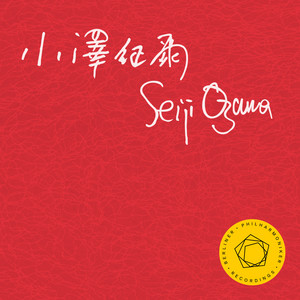 | Eine Alpensinfonie, Op. 64, TrV 233: IX. Auf der Alm | Richard Strauss, Berliner Philharmoniker, Seiji Ozawa | E♭ Major | 1 | 5B | 105 BPM | |
 | Variations on a Theme by Haydn, Op. 56a: Var. 3. Con moto - Recorded 1964 | Johannes Brahms, Berliner Philharmoniker, Herbert von Karajan | E♭ Minor | 1 | 2A | 107 BPM | |
 | Symphony No. 3 in C Minor, Op. 78 "Organ": II. Allegro moderato | Camille Saint-Saëns, Eugene Ormandy, Philadelphia Orchestra | F Minor | 1 | 4A | 84 BPM | |
 | Don Quixote, Op. 35: VI. Var. 3, Dialogue Between Knight and Servant. Mäßiges Zeitmaß | Richard Strauss, Pierre Fournier, Giusto Cappone, Berliner Philharmoniker, Herbert von Karajan | F♯ Major | 1 | 2B | 116 BPM | |
 | Khachaturian: Suite No. 1 from Spartacus: III. Variation of Aegina - Bacchanalia | Aram Khachaturian, Alexander Lazarev, The Bolshoi Symphony Orchestra | E♭ Minor | 2 | 2A | 129 BPM | |
 | Verklärte Nacht, Op. 4 (Version for String Orchestra): V. Adagio (Bar 370) | Arnold Schoenberg, Berliner Philharmoniker, Herbert von Karajan | D♭ Minor | 0 | 12A | 67 BPM |
- ISRC
- USSM11304092
- Label
- L-M Records/RCA Records